
When farm challenges grow, smart tools need to grow with them.
Updated
January 8, 2026 6:32 PM
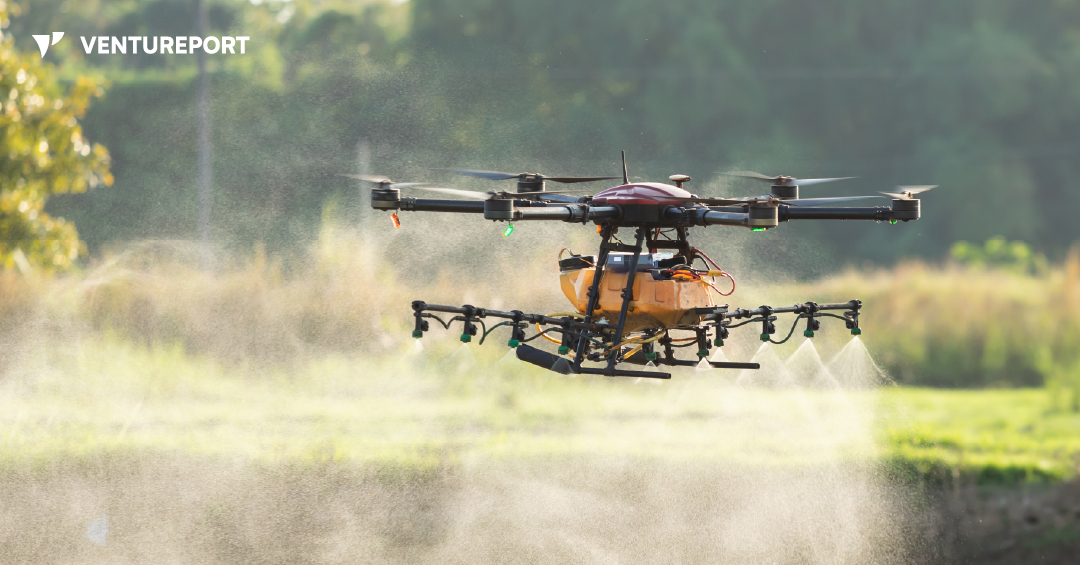
A drone spraying water over an agricultural field. PHOTO: FREEPIK
Farms today are under pressure. Fields are getting bigger, workers are harder to find and many jobs still rely on long hours of manual labor. XAG’s new P150 Max agricultural drone is designed for exactly this reality. Instead of replacing farmers, it takes over the heavy, repetitive fieldwork that slows them down, making farm operations more efficient and more precise.
The P150 Max is built around one simple idea: a single machine that can handle multiple farming tasks. Most farm drones focus only on spraying or mapping, but this one is fully modular. With a quick switch of attachments, it can spray crops, spread seeds or fertilizer, map fields or transport supplies. This flexibility helps farmers keep up with changing tasks throughout the day without needing different machines, improving both productivity and cost-efficiency.
A key challenge in agriculture is that fields are rarely smooth or predictable. Tractors can get stuck, smaller drones can’t carry much and some areas—like orchards or hilly plots—are simply hard to reach. The P150 Max fills that gap with an 80-kilogram payload and fast flight speed, letting it cover more ground per trip. Fewer takeoffs mean less downtime and more work completed before weather or daylight cuts operations short.
When it’s time to spray, the drone uses a smart spraying system that allows farmers to adjust droplet size based on the crop’s needs. This matters because precise spraying reduces waste and improves targeting. With an output of up to 46 liters per minute, the drone can serve both large open fields and dense orchards where consistent coverage is traditionally difficult.
The spreading system applies the same logic. Instead of dropping seeds or fertilizer unevenly, the vertical mechanism spreads material smoothly and resists wind drift. This ensures uniform application across irregular or hard-to-reach land—an ongoing challenge for modern farms aiming for higher yield and better resource use.
Another everyday issue for farmers is understanding and surveying the land before working on it. The P150 Max helps here with a built-in mapping tool that covers up to 20 hectares per flight and instantly converts the images into detailed maps. With AI detecting obstacles like trees or irrigation lines, the drone can plan safe and efficient autonomous routes, reducing manual planning time.
Beyond spraying and spreading, the drone can transport tools, produce and farm supplies using a sling attachment. This is particularly helpful after heavy rain, when vehicles cannot easily move across muddy or flooded fields.
Under all these functions is XAG’s upgraded flight control system, which provides centimeter-level accuracy even when network signals are weak. Integrated sensors—including 4D radar and a wide-angle camera—help the drone recognize hazards such as poles and wires. Farmers can manage all operations through the XAG One app or a handheld controller, both of which automatically generate the best route based on field shape and terrain.
Since long field days require long operating hours, the fast-charging battery system can recharge in about seven minutes using a dedicated kit. This supports continuous drone use throughout the day with minimal interruptions.
After years of testing, the XAG P150 Max is essentially an effort to make practical, scalable farm automation more accessible. By combining spraying, spreading, mapping and transport into one heavy-duty platform, it offers a way to ease labor shortages while keeping operations efficient and sustainable. Instead of focusing on one task, the drone aims to take over the time-consuming physical work so farmers can focus on decisions, planning and crop management.
Keep Reading
The new workplace literacy is here, and it’s digital.
Updated
January 8, 2026 6:36 PM
.jpg)
A group of office worker attending a presentation in a meeting room. PHOTO: UNSPLASH
The modern workplace is powered by technology, and success increasingly depends on how well employees can use it. Digital fluency—the ability to confidently and effectively use digital tools to achieve goals—is no longer a bonus skill; it’s a necessity. It goes beyond basic technical know-how, encompassing the ability to adapt to new technologies, integrate them into workflows, and use them to solve problems and drive innovation.
Yet, despite its importance, many organizations struggle to build digital fluency across their teams. Barriers such as limited access to technology, outdated training programs, resistance to change, and gaps in leadership support often stand in the way. These challenges can leave businesses lagging behind competitors who are better prepared to leverage the potential of the digital age.
Understanding and addressing these barriers is critical for creating a workforce that thrives in today’s fast-changing world. Below, we explore the key obstacles to digital fluency and provide actionable strategies to overcome them.
One of the challenges to digital fluency is the gap between the technology available and employees’ ability to use it effectively. Technology evolves rapidly, but many organizations lag behind in providing relevant, up-to-date training. Employees may receive a one-time introduction to new tools but lack ongoing opportunities to build confidence or master advanced features.
This issue is compounded by the fact that training often takes a one-size-fits-all approach, failing to address the diverse skill levels within a workforce. For example, while some employees may only need a basic overview of a tool, others may require in-depth knowledge to integrate it into their roles effectively. Without tailored and continuous training, even the most advanced tools can go under utilized, leading to frustration and resistance.
Even with proper training, employees may hesitate to adopt new technologies. Resistance to change is a deeply rooted challenge that goes beyond technical skills—it’s tied to fear of failure, skepticism about the value of new tools, or discomfort with disrupting existing workflows.
For example, employees who have been using the same systems for years may feel overwhelmed by the idea of learning something new. They may worry that new technologies will complicate their work rather than simplify it. In some cases, they may even feel their jobs are threatened by automation or digital tools.
This resistance isn’t limited to employees—it can also exist at the leadership level. If leaders themselves are hesitant to adopt new approaches, it creates a top-down culture that stifles innovation.
The lack of organizational alignment is another significant barrier. Digital tools often roll out unevenly across departments, leading to fragmented adoption. For instance, one team might embrace a new project management tool, while another continues to rely on spreadsheets. This inconsistency creates silos, disrupts collaboration, and makes it harder for organizations to achieve the full benefits of digital transformation.
Generational differences can further exacerbate this issue. Younger employees, who are often more comfortable with technology, may adopt new tools quickly, while older employees may struggle to keep up. This divide can lead to frustration on both sides and uneven levels of digital proficiency across the organization.
Leadership plays a critical role in driving digital transformation, but in many organizations, this support is inconsistent or absent. Some leaders fail to prioritize digital fluency as a strategic initiative, while others may not fully understand the tools themselves, making it difficult to set an example for their teams.
Without clear direction from leadership, employees may not see digital fluency as a priority. This lack of alignment can lead to half-hearted adoption, where technology is seen as an optional add-on rather than a fundamental part of the organization’s success.
These barriers don’t exist in isolation—they are deeply interconnected. For example, outdated training practices can fuel resistance to change, while fragmented adoption across teams is often a symptom of weak leadership support. Together, they create a cycle that limits an organization’s ability to adapt, innovate, and thrive in a fast-changing world.
Addressing these challenges is critical for building a workforce that is confident, capable, and ready to embrace the future. By breaking down these barriers, organizations can unlock the full potential of their teams and position themselves for long-term success.
Training should not be an afterthought or a one-time event—it must be a continuous and personalized process. Employees come with diverse skill levels, and a one-size-fits-all training program often fails to address these differences. Organizations should adopt a multi-pronged approach to training, offering workshops for hands-on learners, e-learning modules for self-paced learning, and one-on-one coaching for employees who need more targeted support.
For example, companies like AT&T have invested heavily in workforce retraining initiatives, providing employees with a structured path to build digital skills overtime. These programs not only improve employee confidence but also help organizations fully leverage their digital tools.
Moreover, training programs should evolve to keep up with technological advancements. Employees need regular refreshers to stay current, as even the most advanced tools can become obsolete or under utilized without proper guidance. By making training a core part of the organizational culture, companies can empower employees to adapt to new tools with ease and confidence.
Resistance to change is a major barrier to digital fluency, often fueled by employees’ fear of failure or inefficiency when using new tools. To address this, organizations should foster a culture where employees feel safe experimenting with technologies in low-stakes environments, such as “sandbox environments” that allow for practice without affecting real workflows. When employees are encouraged to test new tools and processes in a low-stakes environment, they become more comfortable with technology over time.
Recognizing and rewarding employees who embrace new tools or suggest innovative ways to use them reinforces this mindset. Early adopters can serve as champions for digital fluency, encouraging others to engage with and explore new technologies.
By normalizing experimentation, organizations can shift employees from resisting change to confidently adopting digital tools as opportunities for growth.
To avoid fragmented adoption, organizations must ensure that digital tools are implemented consistently across teams. This requires clear communication, cross-departmental collaboration, and alignment on how tools will be used to achieve shared goals.
Mentorship programs can help bridge generational divides, pairing younger employees with older colleagues to share knowledge and skills.
Leaders play a pivotal role in overcoming barriers to digital fluency. They don’t just drive the adoption of digital tools—they shape how employees perceive and engage with them. When leaders actively embrace technology, they demonstrate its value and set a standard for others to follow.
Leadership involvement must go beyond symbolic gestures. Employees are far more likely to adopt new tools or processes when they see their leaders using them effectively in day-to-day work. For example, a manager who uses a team collaboration platform to streamline communications or leverages data visualization tools in meetings signals the practical benefits of these technologies. This hands-on engagement builds trust and encourages others to follow suit.
Equally important is leaders’ ability to connect digital tools to broader organizational goals. Employees need to understand how these tools contribute to solving real problems, improving workflows, or driving innovation. When leaders clearly communicate the "why" behind digital initiatives, it helps employees see digital fluency as a shared mission rather than an abstract directive.
Digital fluency isn’t just about mastering tools—it’s about creating a workplace where adaptability, curiosity, and collaboration thrive. It’s about empowering employees to see technology not as a hurdle but as an opportunity to innovate, grow, and solve problems in new ways.
At its heart, digital fluency is a shared effort, requiring leaders who inspire, teams that align, and cultures that embrace experimentation and learning. When organizations commit to breaking down barriers—whether through better training, stronger leadership, or fostering collaboration—they unlock the full potential of their people and their tools.
The future belongs to organizations that don’t just adopt technology but embed it into their culture, enabling their teams to thrive in an ever-changing digital landscape. The question now is not whether we can keep up with change, but how far we can go when we embrace it fully.