
When farm challenges grow, smart tools need to grow with them.
Updated
January 8, 2026 6:32 PM
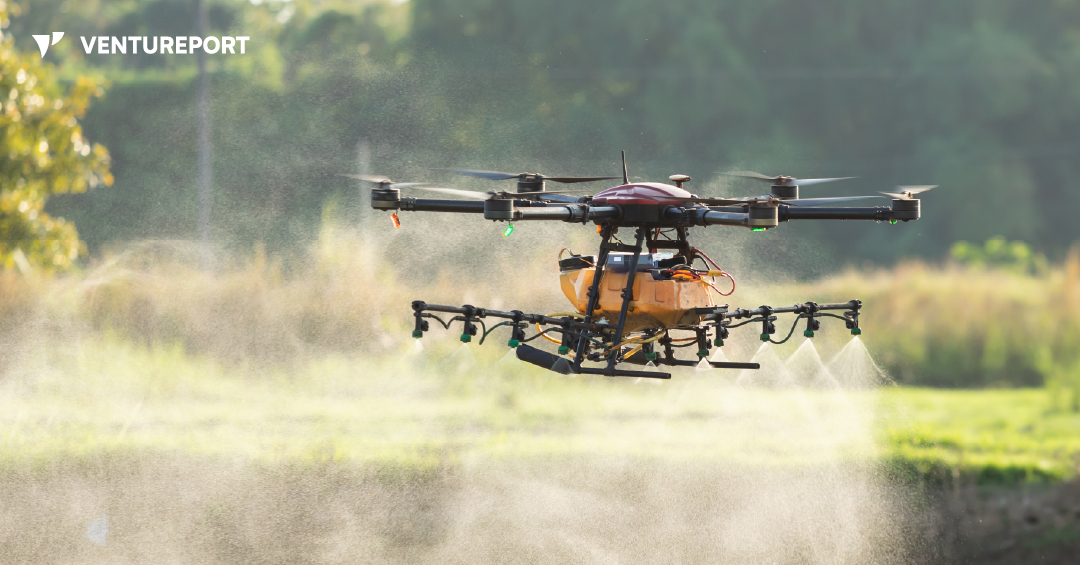
A drone spraying water over an agricultural field. PHOTO: FREEPIK
Farms today are under pressure. Fields are getting bigger, workers are harder to find and many jobs still rely on long hours of manual labor. XAG’s new P150 Max agricultural drone is designed for exactly this reality. Instead of replacing farmers, it takes over the heavy, repetitive fieldwork that slows them down, making farm operations more efficient and more precise.
The P150 Max is built around one simple idea: a single machine that can handle multiple farming tasks. Most farm drones focus only on spraying or mapping, but this one is fully modular. With a quick switch of attachments, it can spray crops, spread seeds or fertilizer, map fields or transport supplies. This flexibility helps farmers keep up with changing tasks throughout the day without needing different machines, improving both productivity and cost-efficiency.
A key challenge in agriculture is that fields are rarely smooth or predictable. Tractors can get stuck, smaller drones can’t carry much and some areas—like orchards or hilly plots—are simply hard to reach. The P150 Max fills that gap with an 80-kilogram payload and fast flight speed, letting it cover more ground per trip. Fewer takeoffs mean less downtime and more work completed before weather or daylight cuts operations short.
When it’s time to spray, the drone uses a smart spraying system that allows farmers to adjust droplet size based on the crop’s needs. This matters because precise spraying reduces waste and improves targeting. With an output of up to 46 liters per minute, the drone can serve both large open fields and dense orchards where consistent coverage is traditionally difficult.
The spreading system applies the same logic. Instead of dropping seeds or fertilizer unevenly, the vertical mechanism spreads material smoothly and resists wind drift. This ensures uniform application across irregular or hard-to-reach land—an ongoing challenge for modern farms aiming for higher yield and better resource use.
Another everyday issue for farmers is understanding and surveying the land before working on it. The P150 Max helps here with a built-in mapping tool that covers up to 20 hectares per flight and instantly converts the images into detailed maps. With AI detecting obstacles like trees or irrigation lines, the drone can plan safe and efficient autonomous routes, reducing manual planning time.
Beyond spraying and spreading, the drone can transport tools, produce and farm supplies using a sling attachment. This is particularly helpful after heavy rain, when vehicles cannot easily move across muddy or flooded fields.
Under all these functions is XAG’s upgraded flight control system, which provides centimeter-level accuracy even when network signals are weak. Integrated sensors—including 4D radar and a wide-angle camera—help the drone recognize hazards such as poles and wires. Farmers can manage all operations through the XAG One app or a handheld controller, both of which automatically generate the best route based on field shape and terrain.
Since long field days require long operating hours, the fast-charging battery system can recharge in about seven minutes using a dedicated kit. This supports continuous drone use throughout the day with minimal interruptions.
After years of testing, the XAG P150 Max is essentially an effort to make practical, scalable farm automation more accessible. By combining spraying, spreading, mapping and transport into one heavy-duty platform, it offers a way to ease labor shortages while keeping operations efficient and sustainable. Instead of focusing on one task, the drone aims to take over the time-consuming physical work so farmers can focus on decisions, planning and crop management.
Keep Reading
Humanoids are moving from research labs into real industries — and capital is finally catching up.
Updated
January 8, 2026 6:31 PM
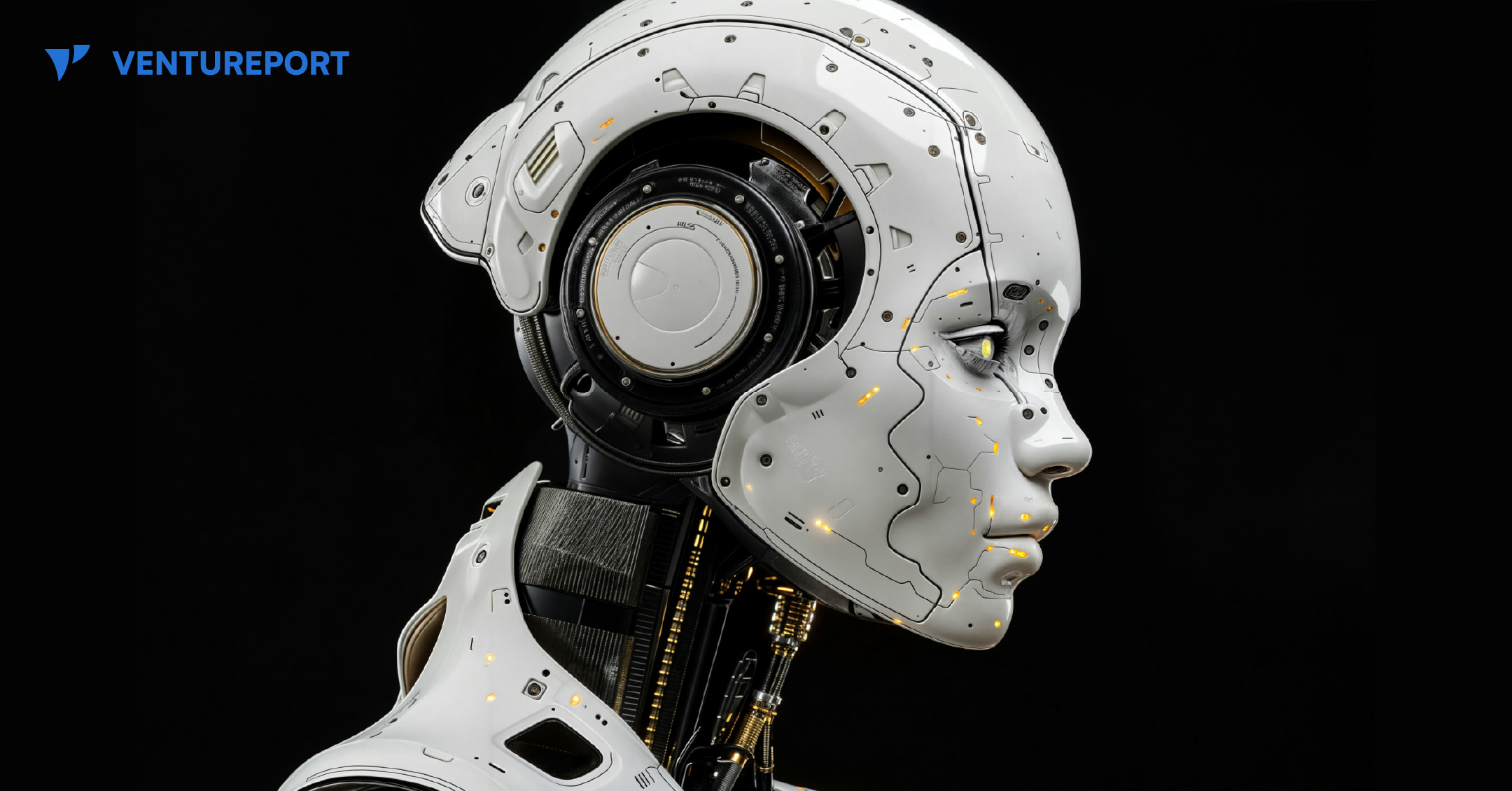
A face of a humanoid robot, side view on black background. PHOTO: UNSPLASH
Humanoid robots are shifting from sci-fi speculation to engineering reality, and the pace of progress is prompting investors to reassess how the next decade of physical automation will unfold. ALM Ventures has launched a new US$100 million early-stage fund aimed squarely at this moment—one where advances in robot control, embodied AI and spatial intelligence are beginning to converge into something commercially meaningful.
ALM Ventures Fund I, is designed for the earliest stages of company formation, targeting seed and pre-seed teams building the foundations of humanoid deployment. It’s a concentrated fund that seeks to take early ownership in a sector that many now consider the next major technological frontier.
For Founder and General Partner Modar Alaoui, the timing is not accidental. “After years of research, humanoids are finally entering a phase where performance, reliability and cost are converging toward commercial viability”, he said. “What the category needs now is focused capital and deep technical diligence to turn prototypes into scalable, enduring companies”.
That framing captures a shift happening across robotics: the field is moving out of the lab and into early commercial readiness. Improvements in perception systems, model-based reasoning and motion control are accelerating the transition. Advances in simulation are also lowering the complexity and cost of integrating humanoid platforms into real environments. As these systems become more capable, the gap between research prototypes and market-ready products is narrowing.
ALM Ventures is positioning itself at this inflection point. Fund I’s thesis centers on the core technologies required to scale humanoids safely and economically. This includes next-generation robot platforms, spatial reasoning engines, embodied intelligence models, world-modeling systems and the infrastructure needed for early deployment. Rather than chasing every robotics trend, the fund is concentrating on the essential layers that will determine whether humanoids can work reliably outside controlled settings.
The firm isn’t starting from zero. During the fund’s formation, ALM Ventures made ten early investments that directly align with its investment focus. The portfolio includes companies building at different layers of the humanoid stack, such as Sanctuary AI, Weave Robotics, Emancro, High Torque Robotics, MicroFactory, Mbodi, Adamo, Haptica Robotics, UMA and O-ID. The list reflects a broad but intentional spread, from hardware to intelligence to manufacturing approaches, all oriented toward enabling scalable physical AI.
Beyond capital, ALM Ventures has been shaping the ecosystem through its global Humanoids Summit series in Silicon Valley, London and Tokyo. The series gives the firm early visibility into emerging technologies, pre-incorporation teams and the senior leaders steering the global robotics landscape. That vantage point has helped the firm identify where commercialization is truly taking root and where bottlenecks still exist.
The rise of humanoids is often compared to the early days of self-driving cars: a long arc of research suddenly meeting an acceleration point. What separates this moment is that advances in embodied AI and spatial intelligence are giving robots a more intuitive understanding of the physical world, making them easier to deploy, teach and scale. ALM Ventures’ Fund I is an attempt to capture that transition while shaping the companies that could define the next technological era.
With US$100 million dedicated to the earliest builders in the space, ALM Ventures is signaling its belief that humanoids are not just another robotics cycle—they may be the next major platform shift in AI.