
Inside a partnership showing how open-source platforms and startups are scaling autonomous driving beyond the lab.
Updated
January 8, 2026 6:30 PM
.jpg)
A Robotaxi prototype developed by TIER IV. PHOTO: TIER IV
Autonomous driving is often discussed in terms of futuristic cars and distant timelines. This investment is about something more immediate. Japan-based TIER IV has invested in Turing Drive, a Taiwan startup that builds autonomous driving systems designed for controlled, everyday environments such as factories, ports, airports and industrial campuses. The investment establishes a capital and business alliance between the two companies, with a shared focus on developing autonomous driving technology and expanding operations across Asia.
Rather than targeting open roads and city traffic, Turing Drive’s work centres on places where vehicles follow fixed routes and move at low speeds. These include logistics hubs, manufacturing facilities and commercial sites where automation is already part of daily operations. According to the release, Turing Drive has deployments across Taiwan, Japan and other regions and works closely with vehicle manufacturers to integrate autonomous systems into special-purpose vehicles.
The investment also connects Turing Drive more closely with Autoware, an open-source autonomous driving software ecosystem supported by TIER IV. Turing Drive joined the Autoware Foundation in September 2024 and develops its systems using this shared software framework. TIER IV’s own Pilot.Auto platform, which is built around Autoware, is used across applications such as factory transport, public transit, freight movement and autonomous mobility services.
Through the alliance, TIER IV plans to work with Turing Drive to further develop autonomous driving systems for these controlled environments, while strengthening its presence in Taiwan and the broader Asia-Pacific region. The collaboration brings together software development and on-the-ground deployment experience within markets where autonomous driving is already being tested in real operational settings.
“This partnership with Turing Drive represents a significant step forward in accelerating the deployment of autonomous driving across Asia”, said TIER IV CEO Shinpei Kato. “At TIER IV, our mission has always been to make autonomous driving accessible to all. By collaborating with Turing Drive, which has demonstrated remarkable achievements in real-world deployments in Taiwan, we aim to deliver autonomous driving that enables a safer, more sustainable and more inclusive society”.
“We are thrilled to establish this strategic alliance with TIER IV, a global leader in open-source autonomous driving”, said Weilung Chen, chairman of Turing Drive. “In Taiwan, autonomous driving deployment is gaining significant momentum, particularly across logistics hubs, ports, airports and industrial campuses. By combining our field expertise with TIER IV's world-class Pilot.Auto platform, we aim to accelerate the development of practical, commercially viable mobility services powered by autonomous driving”. Overall, the investment highlights how autonomous driving in Asia is being shaped by operational needs and gradual integration, rather than headline-grabbing demonstrations.
Keep Reading
The hidden cost of scaling AI: infrastructure, energy, and the push for liquid cooling.
Updated
January 8, 2026 6:31 PM
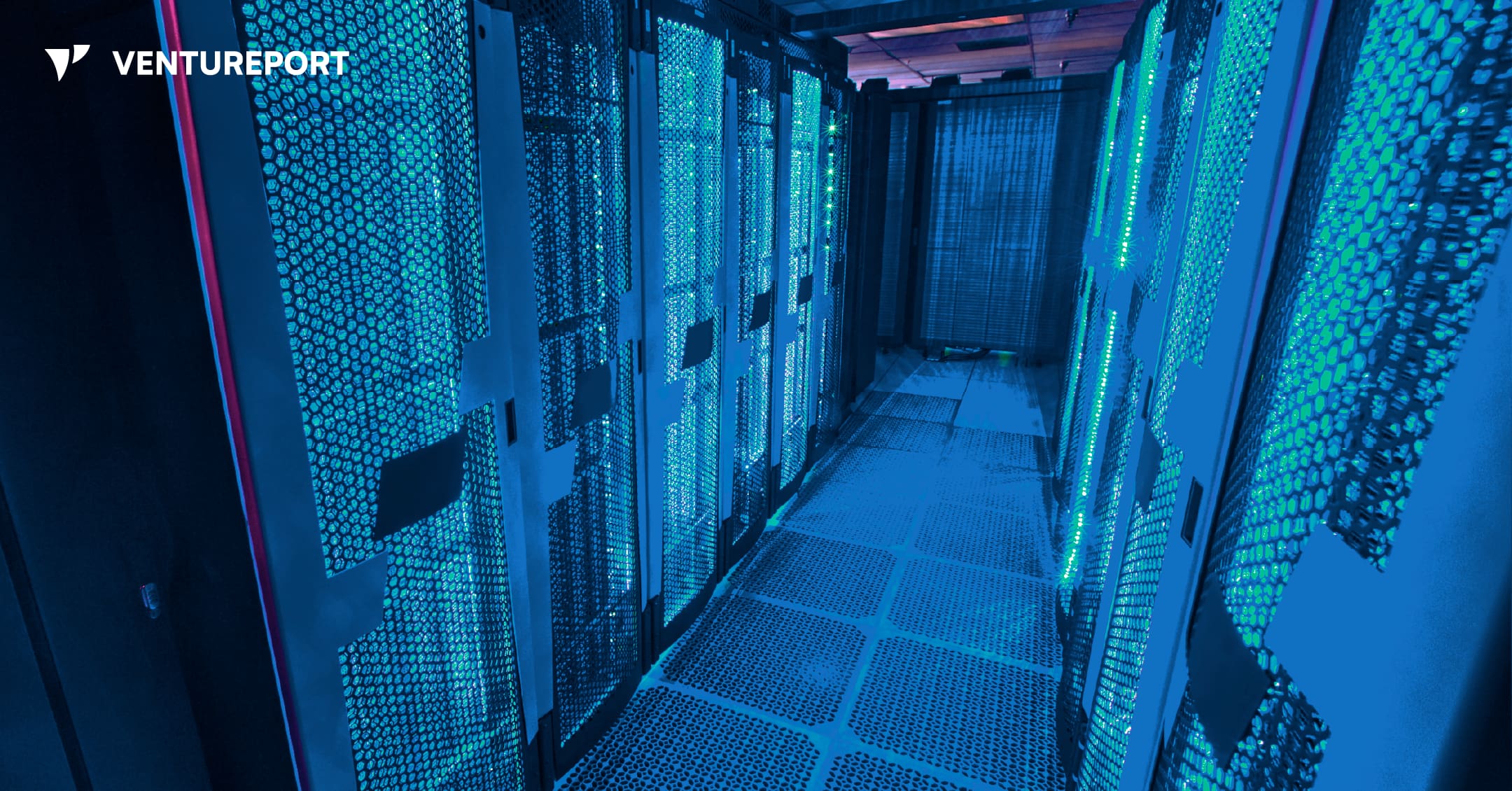
The inside of a data centre, with rows of server racks. PHOTO: FREEPIK
As artificial intelligence models grow larger and more demanding, the quiet pressure point isn’t the algorithms themselves—it’s the AI infrastructure that has to run them. Training and deploying modern AI models now requires enormous amounts of computing power, which creates a different kind of challenge: heat, energy use and space inside data centers. This is the context in which Supermicro and NVIDIA’s collaboration on AI infrastructure begins to matter.
Supermicro designs and builds large-scale computing systems for data centers. It has now expanded its support for NVIDIA’s Blackwell generation of AI chips with new liquid-cooled server platforms built around the NVIDIA HGX B300. The announcement isn’t just about faster hardware. It reflects a broader effort to rethink how AI data center infrastructure is built as facilities strain under rising power and cooling demands.
At a basic level, the systems are designed to pack more AI chips into less space while using less energy to keep them running. Instead of relying mainly on air cooling—fans, chillers and large amounts of electricity, these liquid-cooled AI servers circulate liquid directly across critical components. That approach removes heat more efficiently, allowing servers to run denser AI workloads without overheating or wasting energy.
Why does that matter outside a data center? Because AI doesn’t scale in isolation. As models become more complex, the cost of running them rises quickly, not just in hardware budgets, but in electricity use, water consumption and physical footprint. Traditional air-cooling methods are increasingly becoming a bottleneck, limiting how far AI systems can grow before energy and infrastructure costs spiral.
This is where the Supermicro–NVIDIA partnership fits in. NVIDIA supplies the computing engines—the Blackwell-based GPUs designed to handle massive AI workloads. Supermicro focuses on how those chips are deployed in the real world: how many GPUs can fit in a rack, how they are cooled, how quickly systems can be assembled and how reliably they can operate at scale in modern data centers. Together, the goal is to make high-density AI computing more practical, not just more powerful.
The new liquid-cooled designs are aimed at hyperscale data centers and so-called AI factories—facilities built specifically to train and run large AI models continuously. By increasing GPU density per rack and removing most of the heat through liquid cooling, these systems aim to ease a growing tension in the AI boom: the need for more computers without an equally dramatic rise in energy waste.
Just as important is speed. Large organizations don’t want to spend months stitching together custom AI infrastructure. Supermicro’s approach packages compute, networking and cooling into pre-validated data center building blocks that can be deployed faster. In a world where AI capabilities are advancing rapidly, time to deployment can matter as much as raw performance.
Stepping back, this development says less about one product launch and more about a shift in priorities across the AI industry. The next phase of AI growth isn’t only about smarter models—it’s about whether the physical infrastructure powering AI can scale responsibly. Efficiency, power use and sustainability are becoming as critical as speed.