
From driving social change to making luxury affordable — Lessons from The Body Shop India
Updated
January 16, 2026 12:00 PM
.jpg)
The Body Shop's storefront. PHOTO: ADOBE STOCK
The Body Shop, known worldwide for its ethical values and cruelty-free beauty products, has had very different results in two of its major markets. In the United States, challenges such as shifting retail trends and tougher competition led to the closure of most physical stores in early 2024. Meanwhile, in India, The Body Shop has risen to become one of its top five global markets. After reaching customers in more than 1,500 Indian cities through its omnichannel network, the company now plans to double its 200-store footprint over the next three to five years.
So what did The Body Shop do in India that proved harder to pull off in the U.S.? Below, we break down why The Body Shop struggled in the U.S., what’s driving The Body Shop India’s growth and what startup founders can learn from the contrast.
In March 2024, The Body Shop’s U.S. unit filed for Chapter 7 bankruptcy and stopped operating its roughly 50 stores. That move effectively ended its brick-and-mortar presence in the country.
A big part of the story is that the U.S. beauty market moved faster than The Body Shop did. Prestige beauty kept growing, and shoppers increasingly gravitated to retailers and brands that feel current and have a strong online presence. Paul Dodd, Chief Innovation Officer at e-commerce fulfilment partner Huboo, have pointed to The Body Shop’s slow approach to digital growth as a major factor behind its decline. With U.S. prestige beauty sales reaching about US$33.9 billion in 2024 and growing at 7% year over year, the demand is clearly there. The brands that stand out and get rewarded were the ones that matched how people now discover products and buy them.
The company also leaned too heavily on stores at a time when stores were getting harder to run. When foot traffic drops and rents rise, the pressure shows up quickly. Shoppers also had more places to go, including Sephora, Ulta, Amazon and direct-to-consumer sites. A similar pattern played out in Canada, where restructuring included store closures and halted e-commerce. It was another sign that North America had become an operational headache, not just a marketing challenge.
Then there’s the branding issue: its “ethical pioneer” position simply stopped being a moat in the U.S. market. Today, cruelty-free and vegan claims are now table stakes across many newer brands, and “clean beauty” messaging is everywhere. “Initially, the purpose-driven brand was revolutionary, so much so that competitors like Drunk Elephant have adopted a similar ethos,” says Dan Hocking, Chief Operating Officer at advertising agency TroubleMaker. “It was a concept that rightly earned success in the 80s and 90s, but The Body Shop didn’t adapt to changing consumer habits and preferences”. Meanwhile, competitors like Lush have kept people talking through stronger creator/influencer marketing, faster product cycles and more immersive in-store experiences.
Internal disruption likely made the turnaround even harder. Reporting on the U.S. bankruptcy points to instability, including the U.S. unit saying it did not have advance notice of decisions tied to the U.K. parent’s restructuring. When leadership decisions land without warning, it becomes harder to plan inventory, fund marketing and commit to a clear digital roadmap.
1. Expansion into tier 2 and 3 cities
For years, India’s beauty industry focused mainly on metropolitan cities. Today, however, increasing internet penetration, rising disposable incomes, exposure to global beauty trends and an appetite for ethical, sustainable brands have fuelled demand in smaller towns. That tailwind matters because India’s beauty and personal care market is expected to reach a gross merchandise value (GMV) of US$30 billion by 2027 and is projected to grow at roughly an 10% CAGR. There’s plenty of room for both premium and “affordable luxury” players that can meet consumer where they are.
The Body Shop has leaned into this shift. Harmeet Singh, Chief Brand Officer of The Body Shop Asia South, has said the brand is expanding into Tier 2 and Tier 3 cities with a focus on central and Northeast India. Reports also point to a clear advantage here: more than 200 stores across dozens of cities, plus online reach into over 1,500 cities. That foundation makes non-metro expansion feel like the next move, not a risky leap.
2. Omni-channel retail strategy for beauty shoppers
Unlike its U.S. front, The Body Shop India has put effort into digital and distribution. Besides its own online store, customers can find the brand on big beauty and retail platforms like Nykaa, Amazon, Flipkart, Tatacliq and Myntra. It has also built more direct routes to purchase through WhatsApp, social commerce, expert chats and live video consultations. For even faster access, it’s on quick-commerce apps like Blinkit and Swiggy.
This strategy is already showing up in the numbers. Nearly 30% of The Body Shop India’s business came from digital channels as of June 2025. Rahul Shanker, Chief Executive of The Body Shop India, has said the brand wants to lift online revenue to 45–50% of total sales by 2030.
This approach lines up with what’s happening in the market. NielsenIQ data found beauty e-commerce and quick-commerce sales in India rose 39% in value between June and November 2024, with offline growth over the same period being just 3%. The logic is simple: if the market is moving online, you want to be easy to buy online.
3. Inclusivity, accessibility and social impact
The Body Shop’s people-first approach shows up not just in its marketing, but in how it runs the business day to day. Inside the company, it has pushed gender sensitivity across teams. Out of 600 employees, it has 10 staff members who are part of the LGBTQA+ spectrum.
In stores, the brand has worked on improving accessibility. In 2024, The Body Shop India launched a Braille initiative for visually impaired customers. The programme introduced Braille category callouts in select locations so shoppers can navigate more independently.
On the sustainability side, the brand ties its message to its supply chain. An example is its long-term partnership with Plastics for Change, a Bengaluru-based social enterprise, to source “Community Fair Trade” recycled plastic for packaging. The collaboration has resulted in more predictable income, safer work and better access to social services and housing and education projects for the waste picker communities, which often include marginalized groups and women.
The same intent can also be seen in its physical retail. The Body Shop India has been converting stores into its “Activist Workshop” format, where everything is made from recycled materials, including store fixtures and interiors. By mid-2024, it had around 20 Activist Workshop stores in India.
4. Pricing that fits the Indian beauty market
In April 2025, The Body Shop India launched its “More Love for Less” campaign to make products more accessible. Through the campaign, the company lowered the prices of more than 60 best-sellers by 28–30%. The goal was to remove a clear barrier for many shoppers while maintaining the same quality.
The company has also positioned this as a pricing reset, not a short-term discount push. It’s meant to widen the funnel, especially among younger consumers aged 18–25, where price has been a major hurdle. That matters even more as the brand expands deeper into Tier 2 and Tier 3 cities, where value is often front and centre.
5. Local marketing that feels made for India
The Body Shop India has leaned into localized marketing in a way that feels specific, not generic. In late 2024, it launched “The India Edit”, a collection inspired by native ingredients like lotus, hibiscus, pomegranate and black grape. The tagline, “Only in India, for You,” makes the intent clear: India is not a copy-paste market. This approach matters because India is one of the most competitive beauty battlegrounds right now, with ongoing entry from global beauty brands. When everyone is fighting for attention, local storytelling helps The Body Shop stand out and feel closer to the customer.
The Body Shop’s story in the U.S. and India shows how differently a global beauty brand can perform depending on local strategy. In the U.S., it ran into a tough mix of fast-changing consumer habits, heavy competition and a liquidation process that left little room to rebuild. In India, the brand is riding big tailwinds in beauty retail growth, plus the shift to e-commerce and quick commerce. It has also put real effort into localization, pricing and omnichannel distribution.
If you’re trying to scale a consumer brand, there’s a clear takeaway here. Understand how your market shops, build strong digital distribution and make the brand feel local. The Body Shop India’s playbook is a useful example of how to do it.
Keep Reading
A breakdown of the mission aiming to turn space into the next layer of digital infrastructure.
Updated
January 8, 2026 6:32 PM
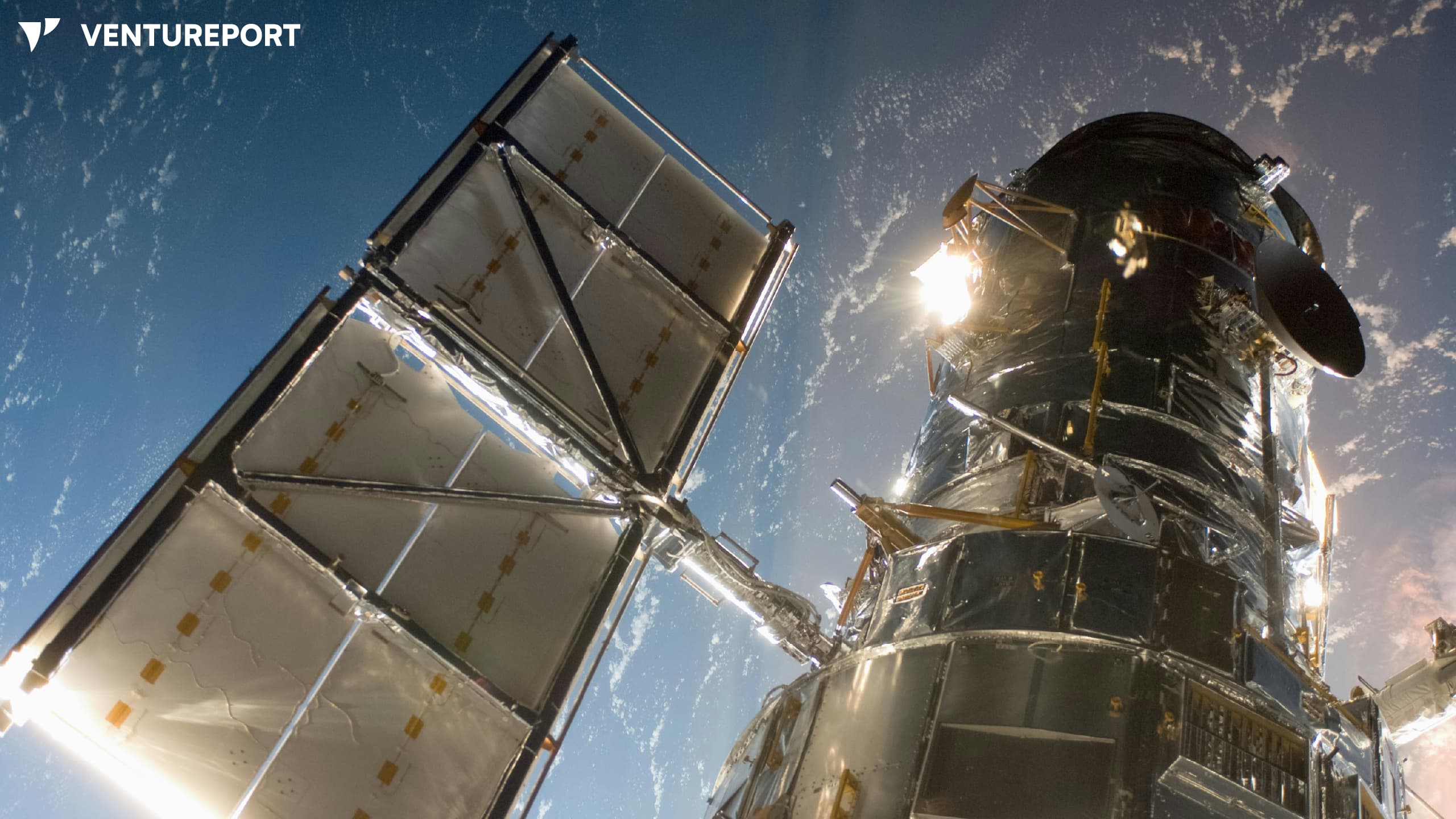
The Hubble Space Telescope, one of the fist space infrastructures. PHOTO: UNSPLASH
PowerBank Corporation and Smartlink AI, the company behind Orbit AI, are preparing to send a very different kind of satellite into space. Their upcoming mission, scheduled for December 2025, aims to test what they call the world’s first “Orbital Cloud” — a system that moves parts of today’s digital infrastructure off the ground and into orbit. While satellites already handle GPS, TV signals and weather data, this project tries to do something bigger: turn space itself into a platform for computing, artificial intelligence (AI) and secure blockchain-based digital transactions. In essence, it marks the beginning of space-based cloud computing.
To understand why this matters, it is helpful to examine the limitations of our current systems. As AI tools grow more advanced, they require massive data centers that consume enormous amounts of electricity, especially for cooling. These facilities depend on national power grids, face regulatory constraints and are concentrated in just a few regions. Meanwhile, global connectivity still struggles with inequalities, censorship, congestion and geopolitical bottlenecks. The Orbital Cloud is meant to plug these gaps by building a computing and communication layer above Earth — a solar-powered, space-cooled network in Low Earth Orbit (LEO) that no single nation or company fully controls.
Orbit AI’s approach brings together two new systems. The first, called DeStarlink, is a decentralized satellite network designed for global internet-style connectivity and resilient communication. The second, DeStarAI, is a set of AI-focused in-orbit data centers placed directly on satellites, using space’s naturally cold environment instead of the energy-hungry cooling towers used on Earth. When these two ideas merge, the result is a floating digital layer where information can be transmitted, processed and verified without touching terrestrial infrastructure — a key shift in how AI workloads and cloud computing may be handled in the future.
PowerBank enters the picture by supplying the electricity and temperature-control technology needed to keep these satellites running. In space, sunlight is constant and uninterrupted — no clouds, no storms, no nighttime periods where panels lie idle. PowerBank plans to provide high-efficiency solar arrays and adaptive thermal systems that help the satellites manage heat in orbit. This collaboration marks a shift for PowerBank, which is expanding from traditional solar and battery projects into the realm of digital infrastructure, AI energy systems and next-generation satellite technology.
Describing the ambition behind this move, Dr. Richard Lu, CEO of PowerBank, said: “The next frontier of human innovation isn't just in space exploration, it's in building the infrastructure of tomorrow above the Earth”. He pointed to a future market that could surpass US$700 billion, driven by orbital satellites, AI computing in space, blockchain verification and solar-powered data systems. Integrating solar energy with orbital computing, he said, could help create “a globally sovereign, AI-enabled digital layer in space, which is a system that can help power finance, communications and critical infrastructure”.
Orbit AI’s Co-Founder and CEO, Gus Liu, describes their satellites as deliberately autonomous and intelligent. “Orbit AI is creating the first truly intelligent layer in orbit — satellites that compute, verify and optimize themselves autonomously”, he said, “The Orbital Cloud turns space into a platform for AI, blockchain and global connectivity. By leveraging solar-powered compute payloads and decentralized verification nodes, we are opening an entirely new, potentially US$700+ billion-dollar market opportunity — one that combines energy, data and sovereignty to reshape industries from finance to government and Web3. PowerBank's expertise in advanced solar energy systems will be significant in supporting this initiative."
This vision is not isolated. Earlier this year, Jeff Bezos echoed a similar idea at Italian Tech Week, saying: “We will be able to beat the cost of terrestrial data centres in space in the next couple of decades. These giant training clusters will be better built in space, because we have solar power there, 24/7 — no clouds, no rain, no weather. The next step is going to be data centres and then other kinds of manufacturing.” His comments reflect a growing industry belief that space-based data centers will eventually outperform those on Earth.
The idea gains traction because the advantages are practical. Space offers free, constant solar power. It provides natural cooling, which is one of the costliest parts of running data centers on Earth. And above all, satellites in low-Earth orbit operate beyond national firewalls and political boundaries, making them more resilient to outages, censorship and conflict. For industries that rely heavily on secure connectivity and real-time data — finance, defense, AI, blockchain networks and global cloud providers — this could become an important alternative layer of infrastructure.
The upcoming Genesis-1 satellite is designed as a demonstration mission. It will test an Ethereum wallet, run a blockchain verification node and perform simple AI tasks in orbit. If the technology works as expected, Orbit AI plans to add several more satellites in 2026, expand into larger networks by 2027 and 2028 and begin full commercial operations by the decade’s end.
To build this system, Orbit AI plans to source technologies from some of the world’s most influential players: NVIDIA for AI processors, the Ethereum Foundation for blockchain tools, Galaxy Space and SparkX Satellite for satellite components, Galactic Energy for launch systems and AscendX Aerospace for advanced materials.
If successful, the Orbital Cloud could become the first step toward a world where part of humanity’s data, computing power and digital services run not in massive buildings on Earth, but in clusters of autonomous satellites illuminated by constant sunlight. For now, the journey begins with a single launch — a test satellite aiming to show that space can do far more than connect us. It may soon help power the systems that run our economies, technologies and global communication networks.