
The collaboration between Oversonic Robotics and STMicroelectronics highlights how robotics is beginning to fill gaps traditional automation cannot.
Updated
January 23, 2026 10:41 AM
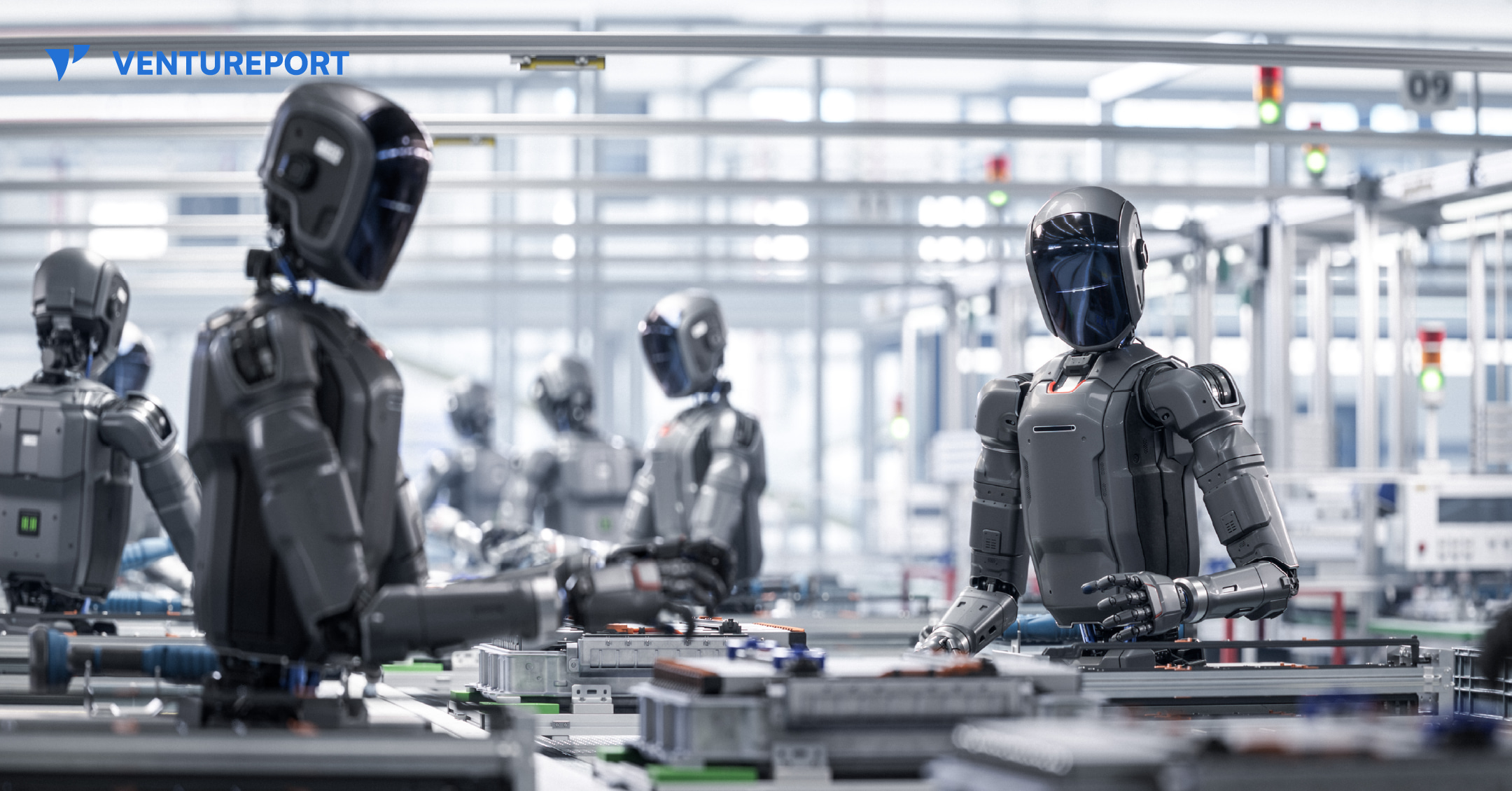
3D render of humanoid robots working in a factory assembly line. PHOTO: ADOBE STOCK
Oversonic Robotics, an Italian company known for building cognitive humanoid robots, has signed an agreement with STMicroelectronics, one of the world’s largest semiconductor manufacturers, to deploy humanoid robots inside semiconductor plants.
According to the companies, this is the first time cognitive humanoid robots will be used operationally inside semiconductor manufacturing facilities. And the first deployment has already taken place at ST’s advanced packaging and test plant in Malta.
At the center of the collaboration is RoBee, Oversonic’s humanoid robot. RoBee is designed to carry out support tasks within industrial environments, particularly where flexibility and interaction with human workers are required. In ST’s factories, the robots will assist with complex manufacturing and logistics flows linked to new semiconductor products. They are intended to work alongside existing automation systems, not replace them.
RoBee is notable for its ability to operate in environments shared with people. It is currently the only humanoid robot certified for use in both industrial and healthcare settings and is already in operation within several Italian companies. The robot is also being used in experimental hospital programs. That background helped position RoBee for deployment in tightly controlled manufacturing environments such as semiconductor plants.
Fabio Puglia, President of Oversonic Robotics, described the agreement as a milestone for deploying humanoid robots in complex industrial settings: “The partnership with STMicroelectronics is a great source of pride for us because it embodies the vision of cognitive robotics that Oversonic has brought to the industrial and healthcare markets. Being the first to introduce cognitive humanoid robots in a sophisticated production context such as semiconductors means measuring ourselves against the highest standards in terms of reliability, safety and operational continuity. This agreement represents a fundamental milestone for Oversonic and, more generally, for the industrial challenges these new machines are called to face in innovative and highly complex environments, alongside people and supporting their quality of work”.
From STMicroelectronics’ side, the use of humanoid robots is framed as part of a broader effort to manage growing manufacturing complexity. he company said RoBee will support complex tasks and help manage the intricate production flows required by newer semiconductor products. It is also expected to contribute to improved product quality and shorter manufacturing cycle times. The robots are designed to integrate with existing automation and software systems, helping improve safety and operational continuity.
In semiconductor manufacturing, precision and reliability leave little room for experimentation. Therefore, introducing humanoid robots into this environment signals a practical shift. It shows how robotics is starting to fill gaps that traditional automation has struggled to address.
Keep Reading
Quantara AI launches a continuous platform designed to estimate the financial impact of cyber risk as companies move beyond periodic assessments
Updated
February 20, 2026 6:43 PM

A person tightrope walking between two cliffs. PHOTO: UNSPLASH
Cyber risk is increasingly treated as a financial issue. Boards want to know how much a cyber incident could cost the company, how it could affect earnings, and whether current security spending is justified.
Yet many organizations still measure cyber risk through periodic reviews. These assessments are often conducted once or twice a year, supported by consultants and spreadsheet models. By the time the report reaches senior leadership, the company’s systems may have changed and new threats may have emerged. The way risk is measured does not always match how quickly it evolves.
This gap is where Quantara AI is positioning its new platform. Quantara AI, a Boise-based cybersecurity startup, has introduced what it describes as the industry’s first persistent AI-powered cyber risk solution. The system is designed to run continuously rather than rely on occasional assessments.
The company’s core argument is straightforward: not every security weakness carries the same financial consequence. Instead of ranking issues only by technical severity, the platform analyzes active threats, identifies which company systems are exposed, and estimates how much money a successful attack could cost. It uses statistical models, including Value at Risk (VaR), to calculate potential losses. It also estimates how specific security improvements could reduce that projected loss.
The timing aligns with a broader market shift. International Data Corporation (IDC) projects that by 2028, 40% of enterprises will adopt AI-based cyber risk quantification platforms. These tools convert security data into financial estimates that can guide budgeting and investment decisions. The forecast reflects growing pressure on security leaders to present risk in terms that boards and regulators understand.
Traditional compliance and risk management systems often focus on meeting regulatory standards. Vulnerability management programs typically score weaknesses based on technical characteristics. Consultant-led risk studies provide detailed analysis, but they are usually performed at set intervals. In fast-changing threat environments, that model can leave decision-makers working with outdated information.
Quantara’s platform attempts to replace that periodic process with continuous measurement. It brings together threat data, internal system information and financial modeling in one system. The goal is to show, at any given time, which specific weaknesses could lead to the largest financial losses.
Cyber risk quantification as a concept is not new. What is changing is the expectation that these calculations be updated regularly and tied directly to financial decision-making. As cyber incidents carry clearer monetary consequences, companies are looking for ways to measure exposure with greater precision.
The broader question is whether enterprises will shift fully toward continuous, AI-driven risk analysis or continue relying on periodic external assessments. What is clear is that cybersecurity discussions are moving closer to financial reporting — and tools that estimate potential loss in dollar terms are becoming central to that shift.