
The collaboration between Oversonic Robotics and STMicroelectronics highlights how robotics is beginning to fill gaps traditional automation cannot.
Updated
January 23, 2026 10:41 AM
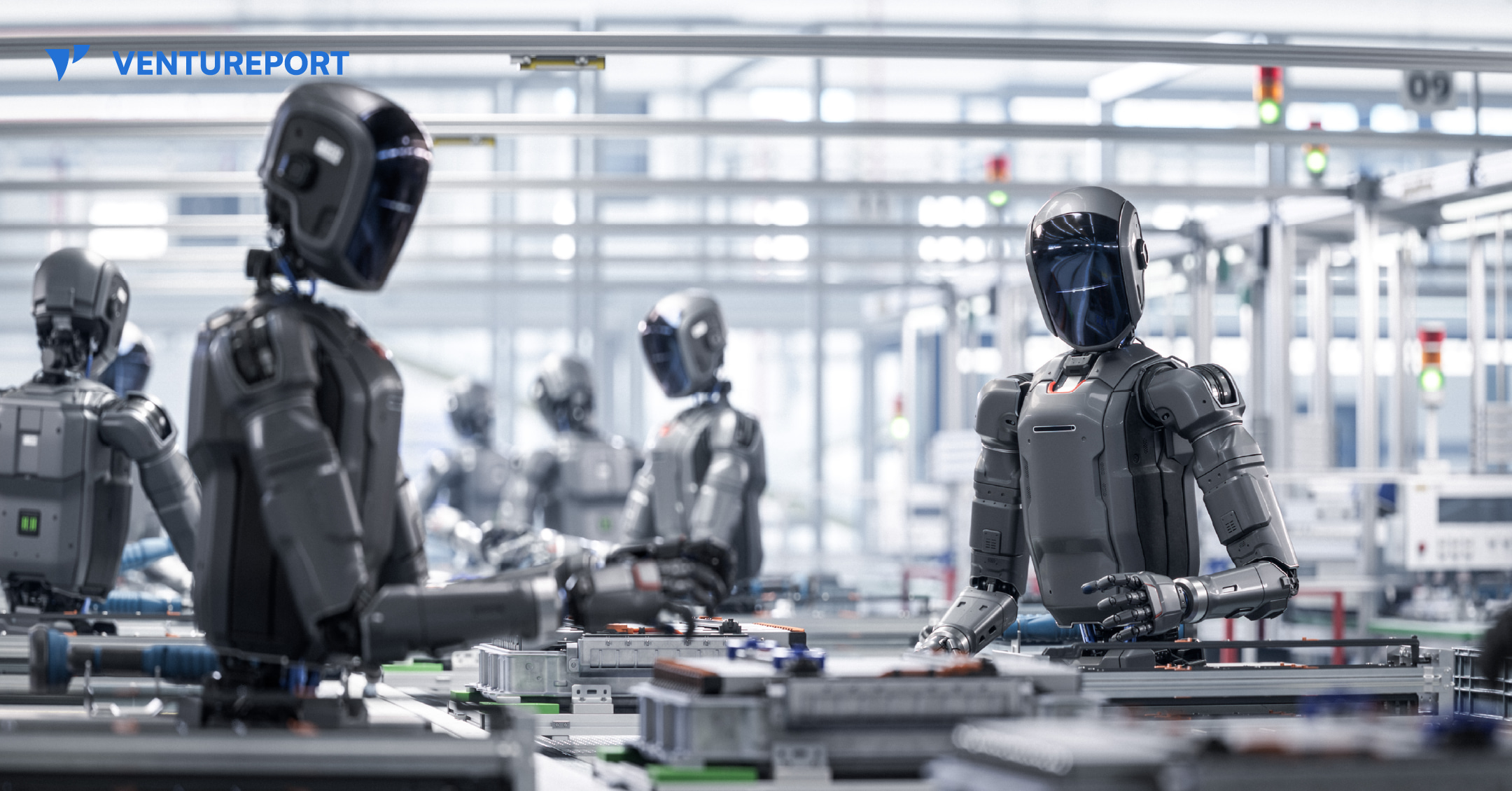
3D render of humanoid robots working in a factory assembly line. PHOTO: ADOBE STOCK
Oversonic Robotics, an Italian company known for building cognitive humanoid robots, has signed an agreement with STMicroelectronics, one of the world’s largest semiconductor manufacturers, to deploy humanoid robots inside semiconductor plants.
According to the companies, this is the first time cognitive humanoid robots will be used operationally inside semiconductor manufacturing facilities. And the first deployment has already taken place at ST’s advanced packaging and test plant in Malta.
At the center of the collaboration is RoBee, Oversonic’s humanoid robot. RoBee is designed to carry out support tasks within industrial environments, particularly where flexibility and interaction with human workers are required. In ST’s factories, the robots will assist with complex manufacturing and logistics flows linked to new semiconductor products. They are intended to work alongside existing automation systems, not replace them.
RoBee is notable for its ability to operate in environments shared with people. It is currently the only humanoid robot certified for use in both industrial and healthcare settings and is already in operation within several Italian companies. The robot is also being used in experimental hospital programs. That background helped position RoBee for deployment in tightly controlled manufacturing environments such as semiconductor plants.
Fabio Puglia, President of Oversonic Robotics, described the agreement as a milestone for deploying humanoid robots in complex industrial settings: “The partnership with STMicroelectronics is a great source of pride for us because it embodies the vision of cognitive robotics that Oversonic has brought to the industrial and healthcare markets. Being the first to introduce cognitive humanoid robots in a sophisticated production context such as semiconductors means measuring ourselves against the highest standards in terms of reliability, safety and operational continuity. This agreement represents a fundamental milestone for Oversonic and, more generally, for the industrial challenges these new machines are called to face in innovative and highly complex environments, alongside people and supporting their quality of work”.
From STMicroelectronics’ side, the use of humanoid robots is framed as part of a broader effort to manage growing manufacturing complexity. he company said RoBee will support complex tasks and help manage the intricate production flows required by newer semiconductor products. It is also expected to contribute to improved product quality and shorter manufacturing cycle times. The robots are designed to integrate with existing automation and software systems, helping improve safety and operational continuity.
In semiconductor manufacturing, precision and reliability leave little room for experimentation. Therefore, introducing humanoid robots into this environment signals a practical shift. It shows how robotics is starting to fill gaps that traditional automation has struggled to address.
Keep Reading
A closer look at PMMI’s FastTrack initiative and why it matters for growing manufacturing firms
Updated
February 13, 2026 10:44 AM

Cardboard boxes in a warehouse. PHOTO: UNSPLASH
Large trade shows are built for scale. But for small and medium-sized manufacturers, that scale often creates distance between what’s on display and what they can actually use. Too many options, too little time, and very few tools designed for companies that are still growing. That mismatch is what PMMI is trying to correct with its new SMB FastTrack Program at PACK EXPO East 2026.
That is the problem PMMI is trying to address with its new SMB FastTrack Program, launching at PACK EXPO East 2026 in Philadelphia.
PMMI — the Association for Packaging and Processing Technologies — is the industry body behind the PACK EXPO trade shows and a central organization in the global packaging and processing sector. Through FastTrack, it has created a program (not an app or a product) designed to help small and mid-sized companies navigate the show more efficiently and connect with solutions that fit their scale.
The idea behind SMB FastTrack is simple: reduce friction. Instead of asking smaller firms to sort through hundreds of exhibitors and sessions on their own, the program curates what is most relevant to them. Exhibitors that offer flexible pricing, right-sized machinery, or SMB-focused services are clearly identified with visual icons in both the online directory and on the show floor. That way, a small manufacturer can quickly distinguish between enterprise-only vendors and partners that are realistically accessible.
The same logic carries into education. Rather than treating all attendees the same, PACK EXPO East 2026 will include a learning track specifically built around SMB realities. These sessions focus on issues that smaller teams actually face—how to hire and train workers, use AI without over-investing, improve food safety, cut operating costs, and adopt technology in stages. The goal is not inspiration, but applicability: content that reflects real constraints, not ideal scenarios.
Planning, too, is built into the structure of the program. Through a dedicated FastTrack landing page, participants can access curated supplier lists, recommended sessions, and planning tools that help organize their time before they ever step onto the show floor. Tools like category search and sustainability finders are meant to narrow choices quickly, turning a massive event into something manageable.
Seen together, these elements point to a broader intention. PMMI is not simply adding features—it is reshaping how smaller manufacturers experience a major industry event. Instead of competing for attention in a space built for scale, SMBs are given clearer paths to the people, tools, and knowledge that match where they actually are in their growth cycle.
What makes SMB FastTrack notable is not the technology behind it, but the intention behind it. PMMI is recognizing that progress for small and mid-sized manufacturers depends less on spectacle and more on fit—solutions that are accessible, affordable, and adaptable. The program is designed to help companies move with purpose, not pressure.
In an industry where visibility often follows size, SMB FastTrack represents a structural shift. It treats small and medium-sized manufacturers not as a subset of the audience, but as a distinct group with distinct needs. By doing so, PMMI is quietly redefining what a trade show can be: not just a marketplace of innovation, but a usable platform for companies still building their next stage of growth.