
Rethinking 3D modelling for a world that generates too much, too quickly.
Updated
January 8, 2026 6:32 PM
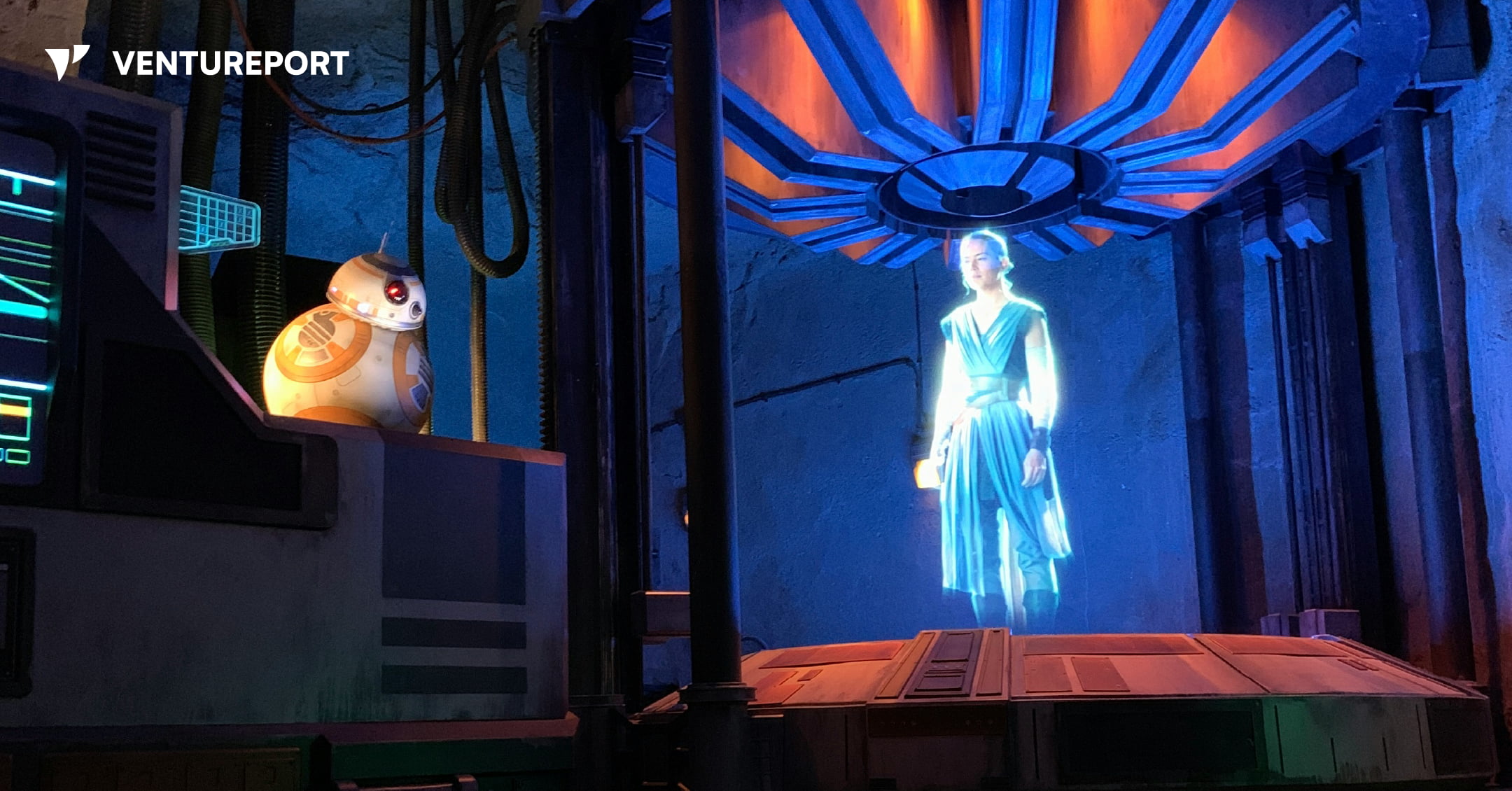
A hologram in the franchise Star Wars, in Walt Disney World Resort, Orlando. PHOTO: UNSPLASH
MicroCloud Hologram Inc. (NASDAQ: HOLO), a technology service provider recognized for its holography and imaging systems, is now expanding into a more advanced realm: a quantum-driven 3D intelligent model. The goal is to generate detailed 3D models and images with far less manual effort — a need that has only grown as industries flood the world with more visual data every year.
The concept is straightforward, even if the technology behind it isn’t. Traditional 3D modeling workflows are slow, fragmented and depend on large teams to clean datasets, train models, adjust parameters and fine-tune every output. HOLO is trying to close that gap by combining quantum computing with AI-powered 3D modeling, enabling the system to process massive datasets quickly and automatically produce high-precision 3D assets with much less human involvement.
To achieve this, the company developed a distributed architecture comprising of several specialized subsystems. One subsystem collects and cleans raw visual data from different sources. Another uses quantum deep learning to understand patterns in that data. A third converts the trained model into ready-to-use 3D assets based on user inputs. Additional modules manage visualization, secure data storage and system-wide protection — all supported by quantum-level encryption. Each subsystem runs in its own container and communicates through encrypted interfaces, allowing flexible upgrades and scaling without disrupting the entire system.
Why this matters: Industries ranging from gaming and film to manufacturing, simulation and digital twins are rapidly increasing their reliance on 3D content. The real bottleneck isn’t creativity — it’s time. Producing accurate, high-quality 3D assets still requires a huge amount of manual processing. HOLO’s approach attempts to lighten that workload by utilizing quantum tools to speed up data processing, model training, generation and scaling, while keeping user data secure.
According to the company, the system’s biggest advantages include its ability to handle massive datasets more efficiently, generate precise 3D models with fewer manual steps, and scale easily thanks to its modular, quantum-optimized design. Whether quantum computing will become a mainstream part of 3D production remains an open question. Still, the model shows how companies are beginning to rethink traditional 3D workflows as demand for high-quality digital content continues to surge.
Keep Reading
A closer look at how reading, conversation, and AI are being combined
Updated
February 7, 2026 2:18 PM

Assorted plush character toys piled inside a glass claw machine. PHOTO: ADOBE STOCK
In the past, “educational toys” usually meant flashcards, prerecorded stories or apps that asked children to tap a screen. ChooChoo takes a different approach. It is designed not to instruct children at them, but to talk with them.
ChooChoo is an AI-powered interactive reading companion built for children aged three to six. Instead of playing stories passively, it engages kids in conversation while reading. It asks questions, reacts to answers, introduces new words in context and adjusts the story flow based on how the child responds. The goal is not entertainment alone, but language development through dialogue.
That idea is rooted in research, not novelty. ChooChoo is inspired by dialogic reading methods from Yale’s early childhood language development work, which show that children learn language faster when stories become two-way conversations rather than one-way narration. Used consistently, this approach has been shown to improve vocabulary, comprehension and confidence within weeks.
The project was created by Dr. Diana Zhu, who holds a PhD from Yale and focused her work on how children acquire language. Her aim with ChooChoo was to turn academic insight into something practical and warm enough to live in a child’s room. The result is a device that listens, responds and adapts instead of simply playing content on command.
What makes this possible is not just AI, but where that AI runs.
Unlike many smart toys that rely heavily on the cloud, ChooChoo is built on RiseLink’s edge AI platform. That means much of the intelligence happens directly on the device itself rather than being sent back and forth to remote servers. This design choice has three major implications.
First, it reduces delay. Conversations feel natural because the toy can respond almost instantly. Second, it lowers power consumption, allowing the device to stay “always on” without draining the battery quickly. Third, it improves privacy. Sensitive interactions are processed locally instead of being continuously streamed online.
RiseLink’s hardware, including its ultra-low-power AI system-on-chip designs, is already used at large scale in consumer electronics. The company ships hundreds of millions of connected chips every year and works with global brands like LG, Samsung, Midea and Hisense. In ChooChoo’s case, that same industrial-grade reliability is being applied to a child’s learning environment.
The result is a toy that behaves less like a gadget and more like a conversational partner. It engages children in back-and-forth discussion during stories, introduces new vocabulary in natural context, pays attention to comprehension and emotional language and adjusts its pace and tone based on each child’s interests and progress. Parents can also view progress through an optional app that shows what words their child has learned and how the system is adjusting over time.
What matters here is not that ChooChoo is “smart,” but that it reflects a shift in how technology enters early education. Instead of replacing teachers or parents, tools like this are designed to support human interaction by modeling it. The emphasis is on listening, responding and encouraging curiosity rather than testing or drilling.
That same philosophy is starting to shape the future of companion robots more broadly. As edge AI improves and hardware becomes smaller and more energy efficient, we are likely to see more devices that live alongside people instead of in front of them. Not just toys, but helpers, tutors and assistants that operate quietly in the background, responding when needed and staying out of the way when not.
In that sense, ChooChoo is less about novelty and more about direction. It shows what happens when AI is designed not for spectacle, but for presence. Not for control, but for conversation.
If companion robots become part of daily life in the coming years, their success may depend less on how powerful they are and more on how well they understand when to speak, when to listen and how to grow with the people who use them.