
Here’s the story of how a quirky toy transformed into a worldwide phenomenon.
Updated
January 8, 2026 6:35 PM
.jpg)
Labubu vinyl figure displayed with surprise blind boxes in a store in Guayaquil, Ecuador. PHOTO: ADOBE STOCK
Trends move fast. One moment it's Dubai’s viral “Kunafa” chocolate bar, the next it’s Labubu—a mischievous-looking doll—racks up US$670 million in revenue this year, even outpacing Barbie and Hot Wheels. Celebrities like BLACKPINK’s Lisa and Dua Lipa have been spotted with Labubu dolls—whether as bag charms or in playful social posts.
For those unfamiliar, Labubu is the breakout character from the book series“The Monster” by Hong Kong-born, Belgium-based artist Kasing Lung. Alongside Labubu, the series features other quirky monsters like Zimomo, Mokoko and Tycoco—often grouped together as “Labubus”. These vinyl Labubu figures first entered the collectible scene in 2011 as “Monsters”, produced by Hong Kong-based production house How2Work. In 2019, Lung signed an exclusive licensing deal with Pop Mart, a Beijing-based toy collectible company, which further boosted the recognition and popularity of the franchise.
At first glance, Labubu might seem like just another fad. But the craze shows something deeper: in digital marketing, virality doesn’t happen by accident. It’s the result of timing, relatability and the rway global communities amplify trends.
So, what can marketers learn from the Labubu phenomenon? Let’s take a closer look.
Labubu’s unconventional aesthetics—a notorious grin, sharp teeth and wide eyes—break the traditional mold of “cute” toys. The social listening report from Meltwater, a media intelligence company reveals that from January to May 2025, mentions of “cute” outnumbered “ugly” nearly five to one. This “ugly-cute” look gave Labubu its identity and helped it stand out in a crowded market.
Marketing lesson: In a world of where everything blends together on endless feeds, uniqueness wins. Standing out with bold, even unconventional design choices can spark curiosity and desire. By leaning into what makes a product different, brands create instant recognition and give people something worth talking about.
Labubu’s surge in popularity is deeply rooted in Pop Mart’s focus on building genuine relationships with its fans. The company encourages user-generated content— unboxings, fan art, influencer stories—that fueled Labubu’s spread online and build brand engagement. Fans weren’t just buying toys; they were becoming part of a community that celebrated each new design.
Marketing lesson: Customers don’t want to feel like faceless buyers. They want to feel seen, heard and part of something bigger. By encouraging engagement and valuing contributions, brands can turn casual customers into loyal advocates who spread the word on their behalf.
While Pop Mart notes Labubu is most popular among women aged 18–30, its audience has broadened beyond that group. The design draws on influences from Nordic mythology and East Asian “kawaii” culture, making it feel both familiar and new to global audiences.
For Millennials and Gen Xers, Labubu also sparks nostalgia for toy crazes like Tickle Me Elmo and Beanie Babies that once lit up childhoods before fading away. Together, these layers of cultural resonance and cross-generational charm give Labubu an unusually broad reach.
Marketing lessons: Relatability is a powerful driver of virality. When a product can connect across generations and cultures, it expands far beyond a niche fan base. Brands that blend familiarity with novelty can build bridges to much larger audiences.
Labubu’s blind box model makes buying feel like a game. The thrill of not knowing which design you’d unwrap made collecting Labubus fun. It also turns buying into an emotional experience rather than a rational choice, fueling the urge to complete entire collections.
Besides, the suspense itself became content—millions watched unboxing videos to share in the excitement. Even BLACKPINK’s Lisa admitted she began with “only three to four” Labubus but soon wanted “a whole box” of the latest collection.
Marketing lesson: Mystery creates excitement, and excitement drives repeat purchases. By adding an element of surprise, brands can make the buying experience feels less like a transaction and more like a story unfolding. That thrill keeps customers coming back and makes the product easy to share online.
Pop Mart releases Labubus in limited drops, often tied to holidays or cultural events. Some editions include ultra-rare “chase” figures—appearing only once in every 144 boxes—creating a strong sense of urgency and fear-of-missing out (FOMO) among buyers. This strategy fuels a booming resale market, where regular figures retailing at US$25 can sell for US$200–US$300, and rare editions have even fetched prices up to US$150,000.
Marketing lessons: Scarcity isn’t just about limiting supply—it’s about building anticipation. By tying releases to events and sprinkling in rare editions, brands keep fans watching for the next drop. This combination of urgency and exclusivity transforms ordinary products into must-have collectibles.
Labubu has expanded its reach through creative brand collaborations. For instance, the Labubu x Coca-Cola series features figures in iconic red-and-white themes, while a Vans Old Skool drop merged streetwear in the clothing brand’s notable checkerboard pattern with collectibles. The One Piece collaboration blended Labubu’s quirky style with beloved anime heroes, appealing to fans of both worlds.
Marketing takeaway: Collaborations breathe fresh life into a brand and open doors to new audiences. Partnering with well-known names adds cultural weight and collectible value, while keeping the brand relevant in different communities. Done right, collaborations turn niche products into mainstream sensations.
Labubu’s phenomenal success is more than a passing craze. It’s proof that bold design, authentic community building, clever scarcity and cultural collaborations can transform a quirky idea into a global movement.
For marketers, the takeaway is simple: don’t just chase trends—create something real and let your community shape the story with you. Be bold, stay authentic and bring your fans along for the ride. That’s how brands move from fleeting hype to lasting cultural icons.
Keep Reading
A new safety layer aims to help robots sense people in real time without slowing production
Updated
February 13, 2026 10:44 AM
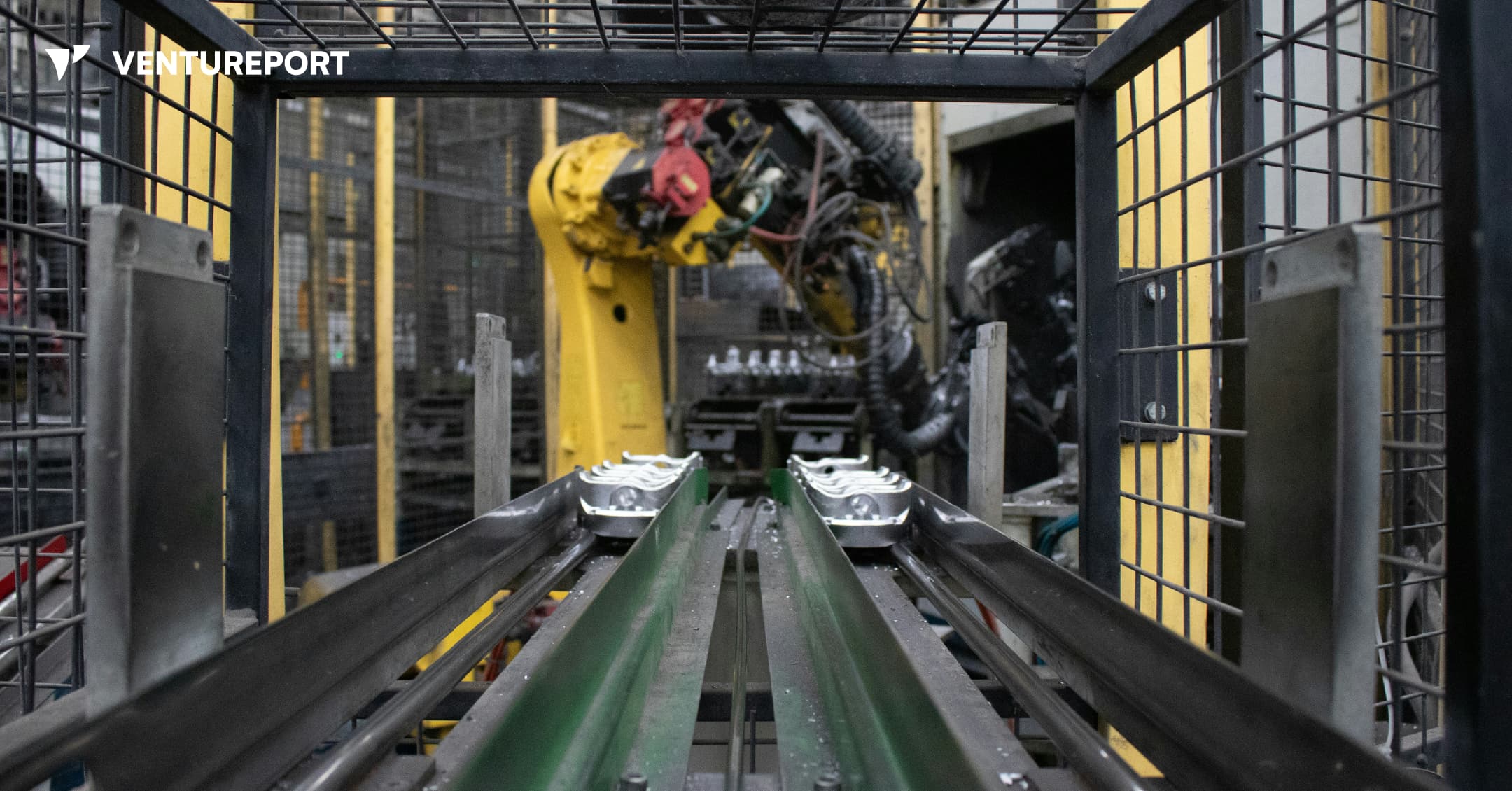
An industrial robot in a factory. PHOTO: UNSPLASH
Algorized has raised US$13 million in a Series A round to advance its AI-powered safety and sensing technology for factories and warehouses. The California- and Switzerland-based robotics startup says the funding will help expand a system designed to transform how robots interact with people. The round was led by Run Ventures, with participation from the Amazon Industrial Innovation Fund and Acrobator Ventures, alongside continued backing from existing investors.
At its core, Algorized is building what it calls an intelligence layer for “physical AI” — industrial robots and autonomous machines that function in real-world settings such as factories and warehouses. While generative AI has transformed software and digital workflows, bringing AI into physical environments presents a different challenge. In these settings, machines must not only complete tasks efficiently but also move safely around human workers.
This is where a clear gap exists. Today, most industrial robots rely on camera-based monitoring systems or predefined safety zones. For instance, when a worker steps into a marked area near a robotic arm, the system is programmed to slow down or stop the machine completely. This approach reduces the risk of accidents. However, it also means production lines can pause frequently, even when there is no immediate danger. In high-speed manufacturing environments, those repeated slowdowns can add up to significant productivity losses.
Algorized’s technology is designed to reduce that trade-off between safety and efficiency. Instead of relying solely on cameras, the company utilizes wireless signals — including Ultra-Wideband (UWB), mmWave, and Wi-Fi — to detect movement and human presence. By analysing small changes in these radio signals, the system can detect motion and breathing patterns in a space. This helps machines determine where people are and how they are moving, even in conditions where cameras may struggle, such as poor lighting, dust or visual obstruction.
Importantly, this data is processed locally at the facility itself — not sent to a remote cloud server for analysis. In practical terms, this means decisions are made on-site, within milliseconds. Reducing this delay, or latency, allows robots to adjust their movements immediately instead of defaulting to a full stop. The aim is to create machines that can respond smoothly and continuously, rather than reacting in a binary stop-or-go manner.
With the new funding, Algorized plans to scale commercial deployments of its platform, known as the Predictive Safety Engine. The company will also invest in refining its intent-recognition models, which are designed to anticipate how humans are likely to move within a workspace. In parallel, it intends to expand its engineering and support teams across Europe and the United States. These efforts build on earlier public demonstrations and ongoing collaborations with manufacturing partners, particularly in the automotive and industrial sectors.
For investors, the appeal goes beyond safety compliance. As factories become more automated, even small improvements in uptime and workflow continuity can translate into meaningful financial gains. Because Algorized’s system works with existing wireless infrastructure, manufacturers may be able to upgrade machine awareness without overhauling their entire hardware setup.
More broadly, the company is addressing a structural limitation in industrial automation. Robotics has advanced rapidly in precision and power, yet human-robot collaboration is still governed by rigid safety systems that prioritise stopping over adapting. By combining wireless sensing with edge-based AI models, Algorized is attempting to give machines a more continuous awareness of their surroundings from the start.