
How the high-profile trial of the music mogul offers lessons for entrepreneurs on accountability, ethics, and leadership.
Updated
January 8, 2026 6:35 PM
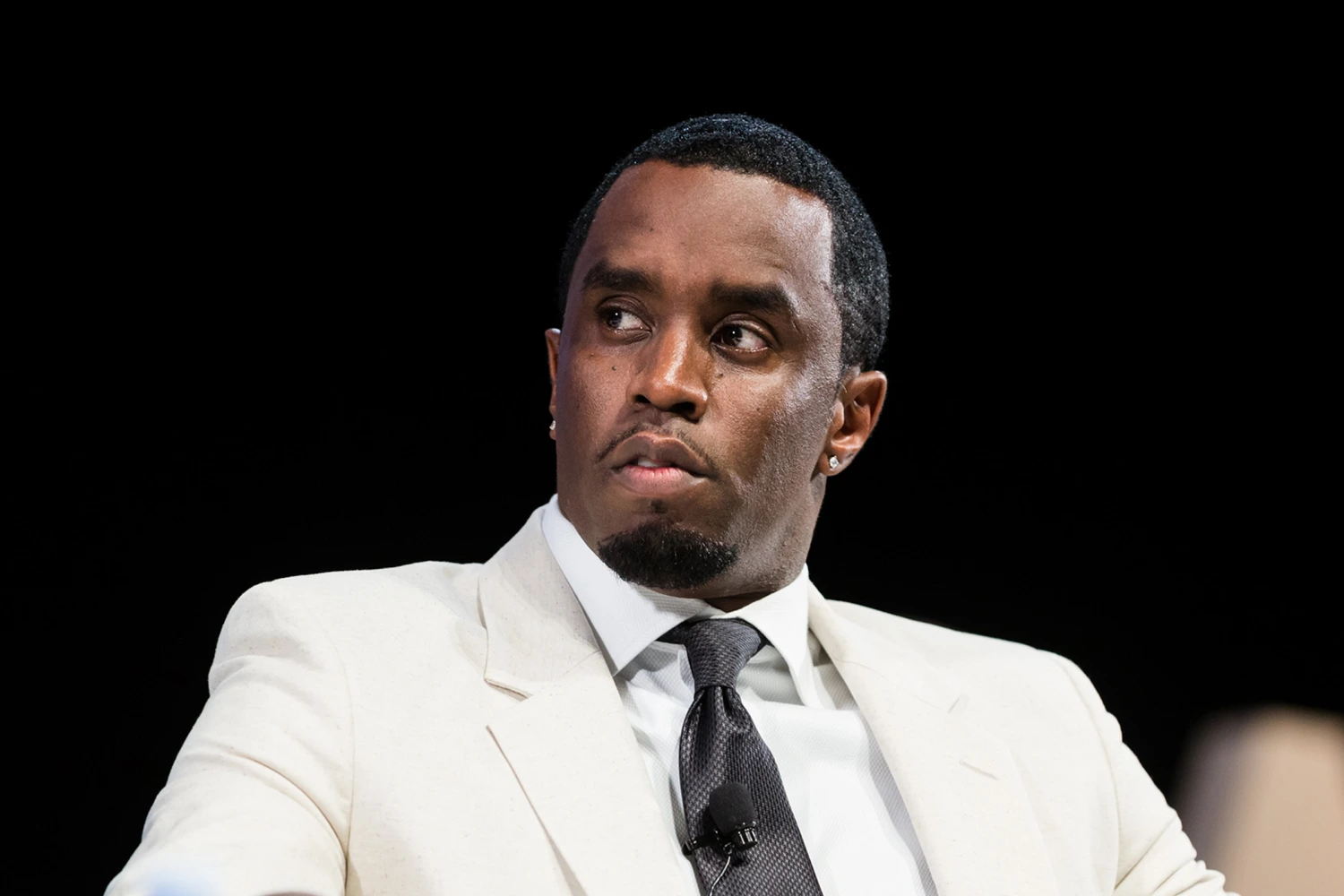
Sean "DIddy" Combs. PHOTO: NPC NEWS
Sean “Diddy” Combs—hip-hop icon, entrepreneur, and cultural force—has built a career on his larger-than-life persona, business acumen, and ability to dominate industries ranging from music to fashion to spirits. But his recent trial, which involves explosive allegations of racketeering, sex trafficking, and transportation to engage in prostitution, has cast a shadow over his legacy.
The federal trial, which began after his arrest in September 2024, has revealed shocking claims, including coercion, manipulation, and the abuse of power in both personal and professional settings. While Combs has pleaded not guilty to all charges, the case offers valuable lessons for small business owners about leadership, ethics, and the responsibility that comes with power.
Here’s what entrepreneurs can learn from the allegations and fallout surrounding Diddy’s trial.
Diddy has been accused of creating a toxic environment that involved coercion, manipulation, and abuse of power—both in his personal relationships and his professional dealings. The trial has highlighted allegations of “freak-offs,” elaborate sexual encounters with escorts that were reportedly coerced, as well as threats of financial and reputational harm to control others.
In business, leaders hold significant power over employees, partners, and collaborators. whether through coercion, intimidation, or favoritism—can lead to toxic environments and long-term damage to the organization.
The case has shown how Diddy’s alleged actions went unchecked for years, with accusations of violence, threats, and even financial control over his accusers. Testimonies from former employees and partners reveal a pattern of behavior that created a culture of fear and silence around him.
For small business owners, this is a reminder that accountability begins with leadership. If you fail to hold yourself and others accountable, you risk fostering an environment where misconduct is ignored or accepted.
A recurring theme in the trial is how Combs’ personal actions—both alleged and confirmed—have affected his professional reputation. From footage of him physically assaulting Cassie in a hotel hallway to allegations of coercion during drug-fueled parties, the courtroom revelations have tarnished his public image and cast a shadow over his brand.
For small business owners, this reinforces an important truth: your personal behavior can have far-reaching consequences for your business. Customers, employees, and partners often associate the values and reputation of a business with its leader.
The case has also highlighted the dangers of power imbalances. Testimonies from accusers like Cassie allege that Diddy used financial control—such as threatening to withhold rent payments—to coerce others into complying with his demands.
In a small business setting, power dynamics are also present, particularly between employers and employees or business owners and partners. Misusing that power, even unintentionally, can lead to resentment, distrust, and legal challenges.
The allegations against Diddy span more than a decade, with claims of abuse dating back decades. Had there been systems in place to address grievances or hold him accountable earlier, the damage to his brand—and to the individuals involved—might have been mitigated.
For small businesses, neglecting proactive measures to address workplace issues can lead to larger crises later. Waiting until problems escalate is not only costly but can also permanently harm your business’s reputation.
The Sean “Diddy” Combs trial is a cautionary tale about the consequences of unchecked power, unethical behavior, and a lack of accountability. For small business owners, it underscores the importance of leadership that prioritizes transparency, fairness, and integrity.
Running a business isn’t just about profits—it’s about creating a legacy founded on trust and respect. By learning from the mistakes and controversies of others, entrepreneurs can build companies that inspire loyalty, foster positive relationships, and stand the test of time.
Keep Reading
A closer look at the tech, AI, and open ecosystem behind Tien Kung 3.0’s real-world push
Updated
February 18, 2026 8:03 PM

Humanoid robots working in a warehouse. PHOTO: ADOBE STOCK
Humanoid robotics has advanced quickly in recent years. Machines can now walk, balance, and interact with their surroundings in ways that once seemed out of reach. Yet most deployments remain limited. Many robots perform well in controlled settings but struggle in real-world environments. Integration is often complex, hardware interfaces are closed, software tools are fragmented, and scaling across industries remains difficult.
Against this backdrop, X-Humanoid has introduced its latest general-purpose platform, Embodied Tien Kung 3.0. The company positions it not simply as another humanoid robot, but as a system designed to address the practical barriers that have slowed adoption, with a focus on openness and usability.
At the hardware level, Embodied Tien Kung 3.0 is built for mobility, strength, and stability. It is equipped with high-torque integrated joints that provide strong limb force for high-load applications. The company says it is the first full-size humanoid robot to achieve whole-body, high-dynamic motion control integrated with tactile interaction. In practice, this means the robot is designed to maintain balance and execute dynamic movements even in uneven or cluttered environments. It can clear one-meter obstacles, perform consecutive high-dynamic maneuvers, and carry out actions such as kneeling, bending, and turning with coordinated whole-body control.
Precision is also a focus. Through multi-degree-of-freedom limb coordination and calibrated joint linkage, the system is designed to achieve millimeter-level operational accuracy. This level of control is intended to support industrial-grade tasks that require consistent performance and minimal error across changing conditions.
But hardware is only part of the equation. The company pairs the robot with its proprietary Wise KaiWu general-purpose embodied AI platform. This system supports perception, reasoning, and real-time control through what the company describes as a coordinated “brain–cerebellum” architecture. It establishes a continuous perception–decision–execution loop, allowing the robot to operate with greater autonomy and reduced reliance on remote control.
For higher-level cognition, Wise KaiWu incorporates components such as a world model and vision-language models (VLM) to interpret visual scenes, understand language instructions, and break complex objectives into structured steps. For real-time execution, a vision-language-action (VLA) model and full autonomous navigation system manage obstacle avoidance and precise motion under variable conditions. The platform also supports multi-agent collaboration, enabling cross-platform compatibility, asynchronous task coordination, and centralized scheduling across multiple robots.
A central part of the platform is openness. The company states that the system is designed to address compatibility and adaptation challenges across both development and deployment layers. On the hardware side, Embodied Tien Kung 3.0 includes multiple expansion interfaces that support different end-effectors and tools, allowing faster adaptation to industrial manufacturing, specialized operations, and commercial service scenarios. On the software side, the Wise KaiWu ecosystem provides documentation, toolchains, and a low-code development environment. It supports widely adopted communication standards, including ROS2, MQTT, and TCP/IP, enabling partners to customize applications without rebuilding core systems.
The company also highlights its open-source approach. X-Humanoid has open-sourced key components from the Embodied Tien Kung and Wise KaiWu platforms, including the robot body architecture, motion control framework, world model, embodied VLM and cross-ontology VLA models, training toolchains, the RoboMIND dataset, and the ArtVIP simulation asset library. By opening access to these elements, the company aims to reduce development costs, lower technical barriers, and encourage broader participation from researchers, universities, and enterprises.
Embodied Tien Kung 3.0 enters a market where technical progress is visible but large-scale adoption remains uneven. The gap is not only about movement or strength. It is about integration, interoperability, and the ability to operate reliably and autonomously in everyday industrial and commercial settings. If platforms can reduce fragmentation and simplify deployment, humanoid robots may move beyond demonstrations and into sustained commercial use.
In that sense, the significance of Embodied Tien Kung 3.0 lies less in isolated technical claims and more in how its high-dynamic hardware, embodied AI system, open interfaces, and collaborative architecture are structured to work together. Whether that integrated approach can close the deployment gap will shape how quickly humanoid robotics becomes part of real-world operations.