
Sensing technology is facilitating the transition of drone delivery services from trial phases to regular daily operations.
Updated
January 23, 2026 10:41 AM

A quadcopter drone with package attached. PHOTO: FREEPIK
A new partnership between Hesai Technology, a LiDAR solutions company and Keeta Drone, an urban delivery platform under Meituan, offers a glimpse into how drone delivery is moving from experimentation to real-world scale.
Under the collaboration, Hesai will supply solid-state LiDAR sensors for Keeta’s next-generation delivery drones. The goal is to make everyday drone deliveries more reliable as they move from trials to routine operations. Keeta Drone operates in a challenging space—low-altitude urban airspace. Its drones deliver food, medicine and emergency supplies across cities such as Beijing, Shanghai, Hong Kong and Dubai. With more than 740,000 deliveries completed across 65 routes, the company has discontinued testing the concept. It is scaling it. For that scale to work, drones must be able to navigate crowded environments filled with buildings, trees, power lines and unpredictable conditions. This is where Hesai’s technology comes in.
Hesai’s solid-state LiDAR is integrated into Keeta's latest long-range delivery drones. LiDAR stands for Light Detection and Ranging. In simple terms, it is a sensing technology that helps machines understand their surroundings by sending out laser pulses and measuring how they bounce back. Unlike GPS, LiDAR does not rely solely on satellites to determine position. Instead, it gives drones a direct sense of their surroundings, helping them spot small but critical obstacles like wires or tree branches.
In a recent demonstration, Keeta Drone completed a nighttime flight using LiDAR-based navigation alone without relying on cameras or satellite positioning. This shows how the technology can support stable operations even when visibility is poor or GPS signals are limited.
The LiDAR system used in these drones is Hesai’s second-generation solid-state model known as FTX. Compared with earlier versions, the sensor offers higher resolution while being smaller and lighter—important considerations for airborne systems where weight and space are limited. The updated design also reduces integration complexity, making it easier to incorporate into commercial drone platforms. Large-scale production of the sensor is expected to begin in 2026.
From Hesai’s perspective, delivery drones are one of several forms robots are expected to take in the coming decades. Industry forecasts suggest robots will increasingly appear in many roles from industrial systems to service applications, with drones becoming a familiar part of urban infrastructure rather than a novelty.
For Keeta Drone, this improves safety and reliability. And for the broader industry, it signals that drone logistics is entering a more mature phase—one defined less by experimentation and more by dependable execution. Taken together, the partnership highlights a practical evolution in drone delivery.
As cities grow more complex, the question is no longer whether drones can fly but whether they can do so reliably, safely and at scale. At its core, this partnership is not about drones or sensors as products. It is about what it takes to make a complex system work quietly in real cities. As drone delivery moves out of pilot zones and into everyday use, reliability matters more than novelty.
Keep Reading
Amid AI and tech startups, Eastseabrother proved the power of demand and trust.
Updated
January 23, 2026 10:41 AM
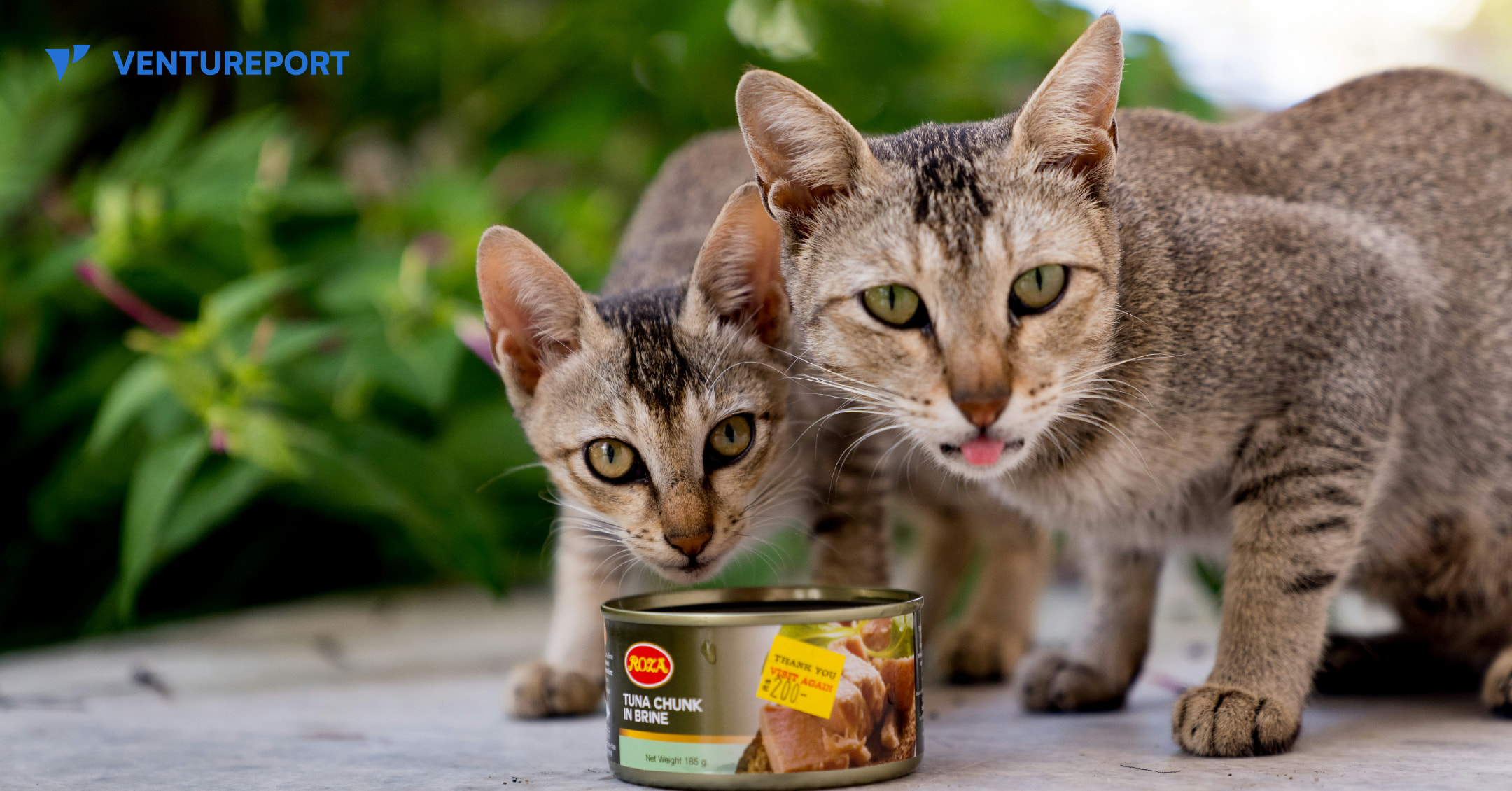
Cats having a jolly good time with a can of tuna. PHOTO: UNSPLASH
At a Silicon Valley pitch event crowded with AI, SaaS and deep-tech startups, the company that stood out was not selling software or algorithms. It was selling pet treats.
Eastseabrother, a premium pet food brand from South Korea, ranked first at a Plug and Play–hosted investor pitch competition in Sunnyvale. The product itself is simple: single-ingredient pet treats made from wild-caught seafood sourced from Korea’s East Sea. The company follows a principle it calls “Only What the Sea Allows”, working directly with regional fishermen while avoiding overfishing. With no additives and minimal processing, what sets Eastseabrother apart is not novelty, but control—over sourcing, supply chains and consistency.
That clarity helped the company walk away with both Best Product and Best Potential. “Investors asked detailed questions about repeat purchase rates and customer feedback, not just our technology or supply chain”, said Eunyul Kim, CEO of Eastseabrother. “That told us the market is shifting—real consumer trust now carries as much weight as a compelling tech narrative”.
What truly caught investors’ attention was not an ambitious vision of the future, but concrete evidence of traction today. Eastseabrother has already secured shelf space in specialty pet stores across California, New York and North Carolina, including an exclusive partnership with EarthWise Pet, a national specialty retail chain. At a consumer showcase at San Francisco’s Ferry Building, the brand recorded the highest on-site sales among all participating companies.
At its core, the pitch was built on simplicity: one ingredient, clear sourcing and a defined customer need. In a market saturated with complex products and abstract claims, that focus and transparency stood out.
The judges’ decision also reflects a broader shift in venture capital thinking. Not every successful startup is built on complex software or high-tech innovation. In categories like pet care—where trust, quality and transparency shape buying behavior—execution and credibility can matter more than technical sophistication.
Today, Eastseabrother has extended its reach beyond the U.S., expanding into Singapore and Hong Kong, with additional plans to grow further in North America as demand for premium pet food rises. And the broader takeaway from this pitch is not that consumer brands are overtaking tech startups. It is that investors are increasingly focused on fundamentals: who is buying, why they are returning and whether the business can sustain itself beyond the pitch deck.