
Can AI companions really help with our mental health?
Updated
January 8, 2026 6:35 PM

A laptop with the text "MENTAL HEALTH" displayed. PHOTO: PEXELS
As technology continues to weave itself into the fabric of our daily lives, it’s starting to play an unexpected role: supporting our mental health. AI companions—digital entities designed to hold natural, empathetic conversations—are emerging as a new frontier in emotional care. Unlike chatbots of the past, these AI companions leverage advanced algorithms and emotional intelligence to provide personalized support, making them more than just tools. They are companions in every sense of the word—always available, always listening, and always ready to offer comfort. But can AI companions truly help us feel better, or are they just another tech trend? Let’s dive into how these digital allies are reshaping mental health care and what their growing presence means for our emotional well-being.
Loneliness is often called an epidemic, with millions of people worldwide feeling isolated or disconnected. While human relationships are irreplaceable, AI companions offer a consistent and accessible alternative to combat feelings of loneliness.
These companions don’t just respond—they engage. They remember your preferences, ask follow-up questions, and adapt their conversations to your needs. Imagine having someone to talk to at any time of day, about anything on your mind, without fear of judgment. AI companions may not replace a human friend, but they can provide a sense of presence and connection that can be profoundly comforting.
In a world where reaching out to others can sometimes feel daunting, AI companions offer a simple solution: they’re always there. This consistency can help people feel less alone, fostering a sense of connection in an increasingly disconnected world.
We all experience moments of stress, sadness, or doubt, and having someone to turn to during those times can make all the difference. AI companions are designed with emotional intelligence, enabling them to recognize and respond to your feelings in real time.
Through sentiment analysis and adaptive learning, these companions can detect when you’re feeling low and tailor their responses to provide comfort. Whether it’s offering words of encouragement, suggesting self-care activities, or simply listening, they provide a safe space to process emotions.
Unlike traditional apps that focus on tracking habits or delivering generic advice, AI companions meet you where you are emotionally. This personalized approach can help users feel truly supported, even in their most challenging moments.
For many of us, expressing our thoughts and emotions openly can feel like a risk. Fear of judgment, misunderstanding, or even burdening others often holds us back. AI companions offer an alternative: a completely private, judgment-free space to share whatever is on your mind.
Talking things out—whether it’s frustrations from the day or deeper personal struggles—can be incredibly therapeutic. And with AI companions, there’s no need to worry about being misunderstood or dismissed. You can let your guard down, explore your feelings, and reflect on your experiences with total freedom.
This safe space for self-expression can be especially valuable for those who struggle to open up to others. It’s not about replacing human relationships but about having an outlet that’s always available and entirely focused on you.
Self-doubt is a common barrier to personal growth, and many of us battle negative self-talk daily. AI companions are programmed to combat this by offering positive reinforcement and encouragement.
For example, if you express doubt about your abilities, an AI companion might respond with affirmations like, “You’ve accomplished so much already—don’t forget how capable you are.” Over time, these small but meaningful interactions can help shift your mindset, replacing self-criticism with self-compassion.
This ability to mirror supportive, affirming conversations can build confidence and foster a more positive self-image. It’s a subtle but powerful way AI companions can contribute to emotional well-being.
AI companions are more than just a tech trend; they represent a new way of thinking about mental health care. By offering companionship, emotional support, safe spaces for self-expression, and tools for mindfulness, they empower users to take control of their well-being.
While they may not replace traditional methods of care, AI companions are making mental health support more accessible, immediate, and personalized. They’re a reminder that sometimes, the smallest interactions—an encouraging word, a moment of mindfulness, or a listening ear—can have the biggest impact.
As we embrace this new era of technology, one thing is clear: AI companions are not just about convenience. They’re about connection, support, and the potential to make emotional care a part of everyday life. And in a world that often feels disconnected, that’s something worth celebrating.
Keep Reading
How a Korean biotech startup is using AI to move drug discovery from trial-and-error to precision design
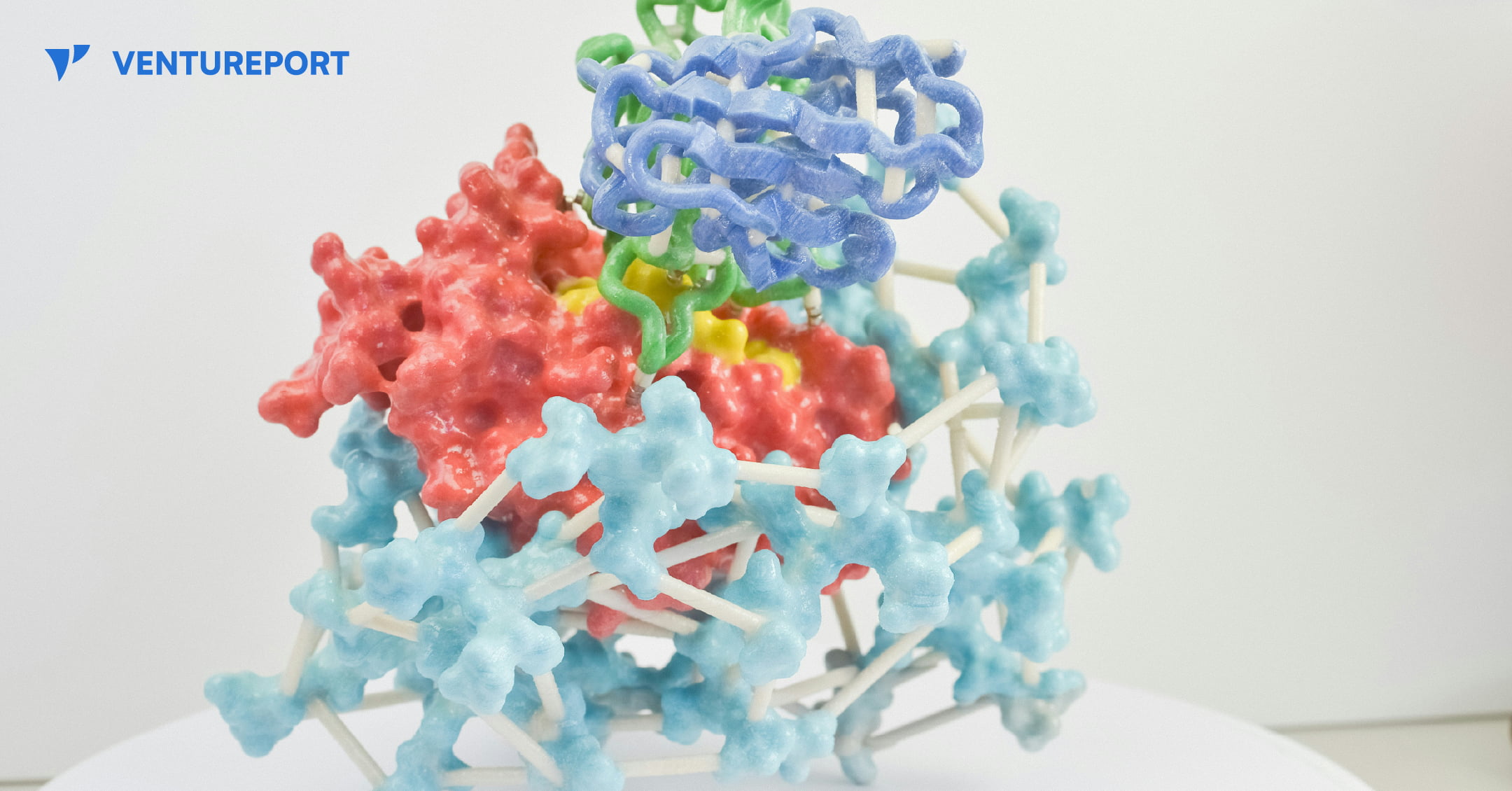
A close up of a protein structure model. PHOTO: UNSPLASH
For decades, drug discovery has relied on trial and error, with scientists testing thousands of molecules to find one that works. Galux, a South Korean biotech startup, is changing that by using AI to design proteins from scratch. This method, called “de novo” design, makes it possible to build precise new therapies instead of searching through existing ones.
The company recently announced a US$29 million Series B funding round, bringing its total capital to US$47 million.This significant investment attracted a substantial roster of institutional backers, including the Korea Development Bank (KDB), Yuanta Investment, SL Investment and NCORE Ventures. These firms joined existing investors such as InterVest, DAYLI Partners and PATHWAY Investment, as well as new participants including SneakPeek Investments, Korea Investment & Securities and Mirae Asset Securities.
At the core of the company’s work is a platform called GaluxDesign. Unlike many AI tools that only predict how existing proteins fold, this system uses deep learning and physics to create entirely new therapeutic antibodies. This “from scratch” approach lets the team go after so-called “undruggable” proteins. These are targets that traditional small-molecule drugs can’t reach because they lack clear binding pockets. By designing proteins to fit these complex shapes, Galux aims to unlock treatments that have stayed out of reach for decades. And that’s exactly why investors are paying attention.
The pharmaceutical industry is actively looking for faster and more efficient ways to develop new drugs, and Galux is built for exactly that. The company connects its AI platform directly to its own wet lab, where designs can be tested in real time. Each result feeds straight back into the system, sharpening the next round of models. This continuous loop speeds up discovery and improves precision at every step. It’s also why partners like Celltrion, LG Chem and Boehringer Ingelheim are already working with Galux.
Galux is no longer just trying to make drugs that stick to a target. The company now wants its AI to design medicines that actually work in the body and can be made at scale. In simple terms, a drug has to do more than bind to a disease—it must be stable, safe and strong enough to change how the illness behaves. Galux is moving into tougher targets such as ion channels and GPCRs. These play key roles in heart function and sensory signals. Ultimately, the goal is to show that AI-driven design can turn complex biology into real treatments. And instead of hunting blindly for a solution, the team is building exactly what they need.