
A breakdown of the mission aiming to turn space into the next layer of digital infrastructure.
Updated
January 8, 2026 6:32 PM
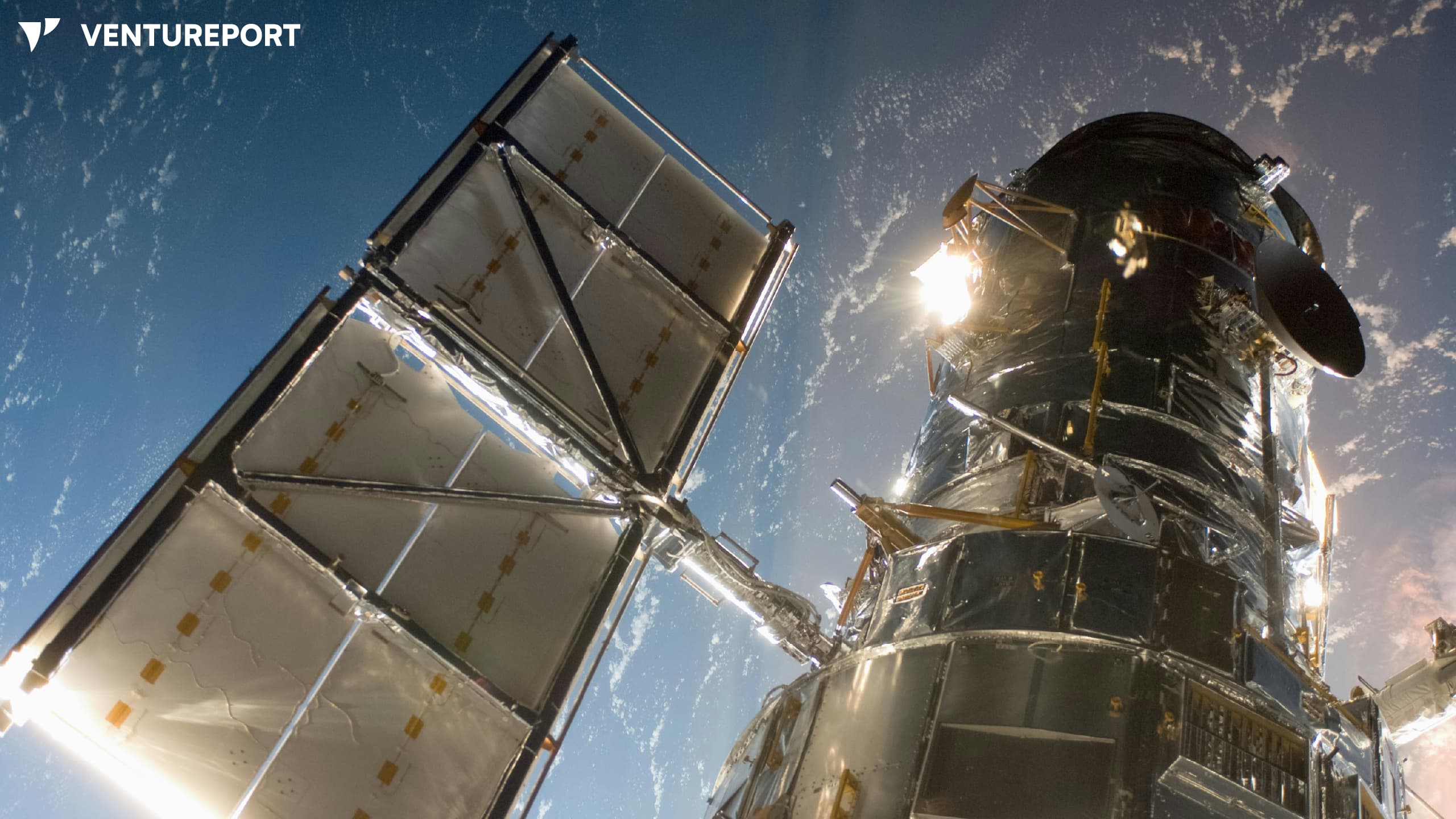
The Hubble Space Telescope, one of the fist space infrastructures. PHOTO: UNSPLASH
PowerBank Corporation and Smartlink AI, the company behind Orbit AI, are preparing to send a very different kind of satellite into space. Their upcoming mission, scheduled for December 2025, aims to test what they call the world’s first “Orbital Cloud” — a system that moves parts of today’s digital infrastructure off the ground and into orbit. While satellites already handle GPS, TV signals and weather data, this project tries to do something bigger: turn space itself into a platform for computing, artificial intelligence (AI) and secure blockchain-based digital transactions. In essence, it marks the beginning of space-based cloud computing.
To understand why this matters, it is helpful to examine the limitations of our current systems. As AI tools grow more advanced, they require massive data centers that consume enormous amounts of electricity, especially for cooling. These facilities depend on national power grids, face regulatory constraints and are concentrated in just a few regions. Meanwhile, global connectivity still struggles with inequalities, censorship, congestion and geopolitical bottlenecks. The Orbital Cloud is meant to plug these gaps by building a computing and communication layer above Earth — a solar-powered, space-cooled network in Low Earth Orbit (LEO) that no single nation or company fully controls.
Orbit AI’s approach brings together two new systems. The first, called DeStarlink, is a decentralized satellite network designed for global internet-style connectivity and resilient communication. The second, DeStarAI, is a set of AI-focused in-orbit data centers placed directly on satellites, using space’s naturally cold environment instead of the energy-hungry cooling towers used on Earth. When these two ideas merge, the result is a floating digital layer where information can be transmitted, processed and verified without touching terrestrial infrastructure — a key shift in how AI workloads and cloud computing may be handled in the future.
PowerBank enters the picture by supplying the electricity and temperature-control technology needed to keep these satellites running. In space, sunlight is constant and uninterrupted — no clouds, no storms, no nighttime periods where panels lie idle. PowerBank plans to provide high-efficiency solar arrays and adaptive thermal systems that help the satellites manage heat in orbit. This collaboration marks a shift for PowerBank, which is expanding from traditional solar and battery projects into the realm of digital infrastructure, AI energy systems and next-generation satellite technology.
Describing the ambition behind this move, Dr. Richard Lu, CEO of PowerBank, said: “The next frontier of human innovation isn't just in space exploration, it's in building the infrastructure of tomorrow above the Earth”. He pointed to a future market that could surpass US$700 billion, driven by orbital satellites, AI computing in space, blockchain verification and solar-powered data systems. Integrating solar energy with orbital computing, he said, could help create “a globally sovereign, AI-enabled digital layer in space, which is a system that can help power finance, communications and critical infrastructure”.
Orbit AI’s Co-Founder and CEO, Gus Liu, describes their satellites as deliberately autonomous and intelligent. “Orbit AI is creating the first truly intelligent layer in orbit — satellites that compute, verify and optimize themselves autonomously”, he said, “The Orbital Cloud turns space into a platform for AI, blockchain and global connectivity. By leveraging solar-powered compute payloads and decentralized verification nodes, we are opening an entirely new, potentially US$700+ billion-dollar market opportunity — one that combines energy, data and sovereignty to reshape industries from finance to government and Web3. PowerBank's expertise in advanced solar energy systems will be significant in supporting this initiative."
This vision is not isolated. Earlier this year, Jeff Bezos echoed a similar idea at Italian Tech Week, saying: “We will be able to beat the cost of terrestrial data centres in space in the next couple of decades. These giant training clusters will be better built in space, because we have solar power there, 24/7 — no clouds, no rain, no weather. The next step is going to be data centres and then other kinds of manufacturing.” His comments reflect a growing industry belief that space-based data centers will eventually outperform those on Earth.
The idea gains traction because the advantages are practical. Space offers free, constant solar power. It provides natural cooling, which is one of the costliest parts of running data centers on Earth. And above all, satellites in low-Earth orbit operate beyond national firewalls and political boundaries, making them more resilient to outages, censorship and conflict. For industries that rely heavily on secure connectivity and real-time data — finance, defense, AI, blockchain networks and global cloud providers — this could become an important alternative layer of infrastructure.
The upcoming Genesis-1 satellite is designed as a demonstration mission. It will test an Ethereum wallet, run a blockchain verification node and perform simple AI tasks in orbit. If the technology works as expected, Orbit AI plans to add several more satellites in 2026, expand into larger networks by 2027 and 2028 and begin full commercial operations by the decade’s end.
To build this system, Orbit AI plans to source technologies from some of the world’s most influential players: NVIDIA for AI processors, the Ethereum Foundation for blockchain tools, Galaxy Space and SparkX Satellite for satellite components, Galactic Energy for launch systems and AscendX Aerospace for advanced materials.
If successful, the Orbital Cloud could become the first step toward a world where part of humanity’s data, computing power and digital services run not in massive buildings on Earth, but in clusters of autonomous satellites illuminated by constant sunlight. For now, the journey begins with a single launch — a test satellite aiming to show that space can do far more than connect us. It may soon help power the systems that run our economies, technologies and global communication networks.
Keep Reading
Turning computing heat into a practical heating solution for greenhouses.
Updated
January 23, 2026 10:41 AM

Inside of a workstation computer with red lighting. PHOTO: UNSPLASH
Most computing systems have one unavoidable side effect: they get hot. That heat is usually treated as a problem and pushed away using cooling systems. Canaan Inc., a technology company that builds high-performance computing machines, is now showing how that same heat can be reused instead of wasted.
In a pilot project in Manitoba, Canada, Canaan is working with greenhouse operator Bitforest Investment to recover heat generated by its computing systems. Rather than focusing only on computing output, the project looks at a more basic question—what happens to all the heat these machines produce and can it serve a practical purpose?
The idea is simple. Canaan’s computers run continuously and naturally generate heat. Instead of releasing that heat into the environment, the system captures it and uses it to warm water. That warm water is then fed into the greenhouse’s existing heating system. As a result, the greenhouse needs less additional energy to maintain the temperatures required for plant growth.
This is enabled through liquid cooling. Instead of using air to cool the machines, a liquid circulates through the system and absorbs heat more efficiently. Because liquid retains heat better than air, the recovered water reaches temperatures that are suitable for industrial use. In effect, the computing system supports greenhouse heating while continuing to perform its primary computing function.
What makes this approach workable is that it integrates with existing infrastructure. The recovered heat does not replace the greenhouse’s boilers but supplements them. By preheating the water that enters the boiler system, the overall energy demand is reduced. Based on current assumptions, Canaan estimates that a significant portion of the electricity used by the servers can be recovered as usable heat, though actual results will be confirmed once the system is fully operational.
This matters because heating is one of the largest energy expenses for commercial greenhouses, particularly in colder regions like Canada. Many facilities still rely heavily on fossil-fuel-based heating and policies such as carbon pricing are encouraging lower-emission alternatives. Reusing computing heat offers a way to improve efficiency without requiring a complete overhaul of existing systems.
The project is planned to run for an initial two-year period, allowing Canaan to evaluate real-world performance factors such as reliability, system stability and maintenance needs. These findings will help determine whether the model can be replicated in other agricultural or industrial settings.
More broadly, the initiative reflects a shift in how computing infrastructure can be designed. Instead of operating as energy-intensive systems isolated from everyday use, computing equipment can contribute to real-world applications. Canaan’s greenhouse pilot highlights how excess heat—often seen as a by-product—can become part of a more efficient and thoughtful energy loop.
In doing so, the project suggests that improving sustainability in technology is not only about reducing energy consumption, but also about finding smarter ways to reuse the energy already being generated.