
Because running a café takes more than just a good roast
Updated
March 18, 2026 6:29 PM

A cup of espresso being brewed. PHOTO: UNSPLASH
Coffee has grown beyond being just a drink—it’s part of culture, connection and even a daily productivity hack. Think about it: friends catch up over cappuccinos, professionals start the day with a quick espresso and students practically live on iced lattes during exams. It’s woven into routines, with two-thirds of American adults consuming coffee on a daily basis and averaging around three cups per day. That is much higher than other beverages like tea, juice and bottled water. It is therefore no surprise that the global coffee shop industry is projected to reach about US$123.43 billion by 2030. For entrepreneurs, that makes coffee shops more than cozy corners with good aesthetics. They’re a real business opportunity. But before you open a coffee shop, here are five things you should know.
Like any small business, the success of your coffee shop often hinges on where it is. Coffee may have broad appeal, but daytime foot traffic and visibility can still make the difference between a busy café and one that struggles to stay afloat. Opening near universities, office parks, co-working hubs or residential neighbourhoods with young professionals can instantly give you a strong stream of potential customers.
That said, choosing a coffee shop location is not just about picking a busy area. You also need to know your target market. For example, opening a third-wave specialty coffee shop in a low-income neighbourhood may not work if your prices are beyond what local residents want to pay. The same café might perform much better in a more affluent or fast-changing district.
Competition matters a lot in the equation too. Walk around the area and see what other coffee shops are doing. The goal is not always to avoid competition but to find a gap in the market. If nearby cafés focus on quick grab-and-go drinks, there may be room for a slower, more community-driven coffee shop built around hand-poured brews and a relaxed atmosphere. Simply put, your shop’s exact street address could make or break your business.
It’s important to understand this early on: running a coffee shop is not just about serving coffee. Customers today have endless options, from making coffee at home to buying from major chains like Starbucks. What brings them through your doors is often the overall experience.
According to a report by Salesforce, 91% of customers say they’re more likely to make another purchase after a great service experience. That means your café needs to give people a reason to stay, come back and recommend it to others. Maybe it is the interior design, the playlist that feels just right, the reliable Wi-Fi, the convenient charging points or simply the way the space feels. Remember, good coffee gets people in once, but a strong customer experience gives them a reason to return.
Opening a modest-sized sit-down café in the U.S. can cost anywhere between US$100,000 and US$350,000. The final number depends on your location, your coffee shop concept, your equipment and how much you spend on the fit-out and interior design. Beyond those startup costs, your monthly expenses—like rent, utilities, staff salaries and coffee bean purchases—will play a huge role in whether your business survives the first year.
Profit margins in coffee retail are thinner than new owners expect. On average, small to medium-sized coffee shops make a 3-10% profit margin, which means efficiency is key. Selling higher-margin items like snacks, light bites and pastries can help lift revenue. A US$2 slice of banana bread, for example, may cost cents to make but can still raise the average spend per customer.
You also need to factor in seasonality when planning your coffee shop revenue. For instance, in warmer months, there is usually higher demand for iced and cold beverages. Many cafés respond by introducing cold brew, iced teas, smoothies or limited seasonal drinks to their menus. That helps keep sales steady and protects the average ticket size throughout the year. At the end of the day, running a café is just as much about managing the numbers as it is about serving great coffee.
A barista isn’t just someone pulling espresso shots; they’re often the face of your coffee shop. A warm smile, remembering a regular’s order or sharing a fun fact about the beans can create the kind of connection that keeps customers coming back.
As specialty coffee culture boomed in the early 2010s, baristas became more than brewers—they are now guides and storytellers. By talking about coffee origin, processing methods, bean varieties and roast profiles, they help customers understand what they are buying and why it matters. That mix of knowledge and personality can have a real impact on customer loyalty.
That’s why hiring and retaining great baristas is one of the smartest investments a café owner can make. Beyond competitive pay, creating a workplace where people feel valued also matters. Training, room for creativity and a sense of pride in the craft can go a long way in helping staff stay engaged.
Opening a coffee shop is exciting, but opening the doors and hoping people walk in is not enough. Good coffee shop marketing today is less about spending big and more about telling a story people want to follow. Well before you launch, start building hype and share behind-the-scenes snippets on Instagram, whether that is taste-tests, design decisions or even the messy parts of setting up the space. That kind of content feels real and helps build anticipation.
Once your café is open, think beyond basic promotion. Loyalty programs, collaborations with local businesses or even hosting events like poetry nights, art exhibits or coffee cupping sessions can all help bring people in. Social media is useful here too; it is not only a place to post latte art but also where you show what your brand stands for. Do you focus on sustainability? Do you source coffee ethically? Do you support local artists? Those details humanize your brand and make your café more than just a pitstop for caffeine.
Overall, opening a coffee shop blends passion, community and entrepreneurship. It also requires clear thinking and strong business decisions. From choosing the right location and creating a memorable customer experience to managing costs and building a great team, success takes more than just brewing good coffee. If you treat your coffee shop as both a craft and a business, you give it a much better chance of becoming a local favourite.
Keep Reading
Cyberport Venture Capital Forum (CVCF) 2025 Returns Under the Theme "The Innovation–Venture Nexus: Igniting Transformative Success"
Updated
January 8, 2026 6:34 PM
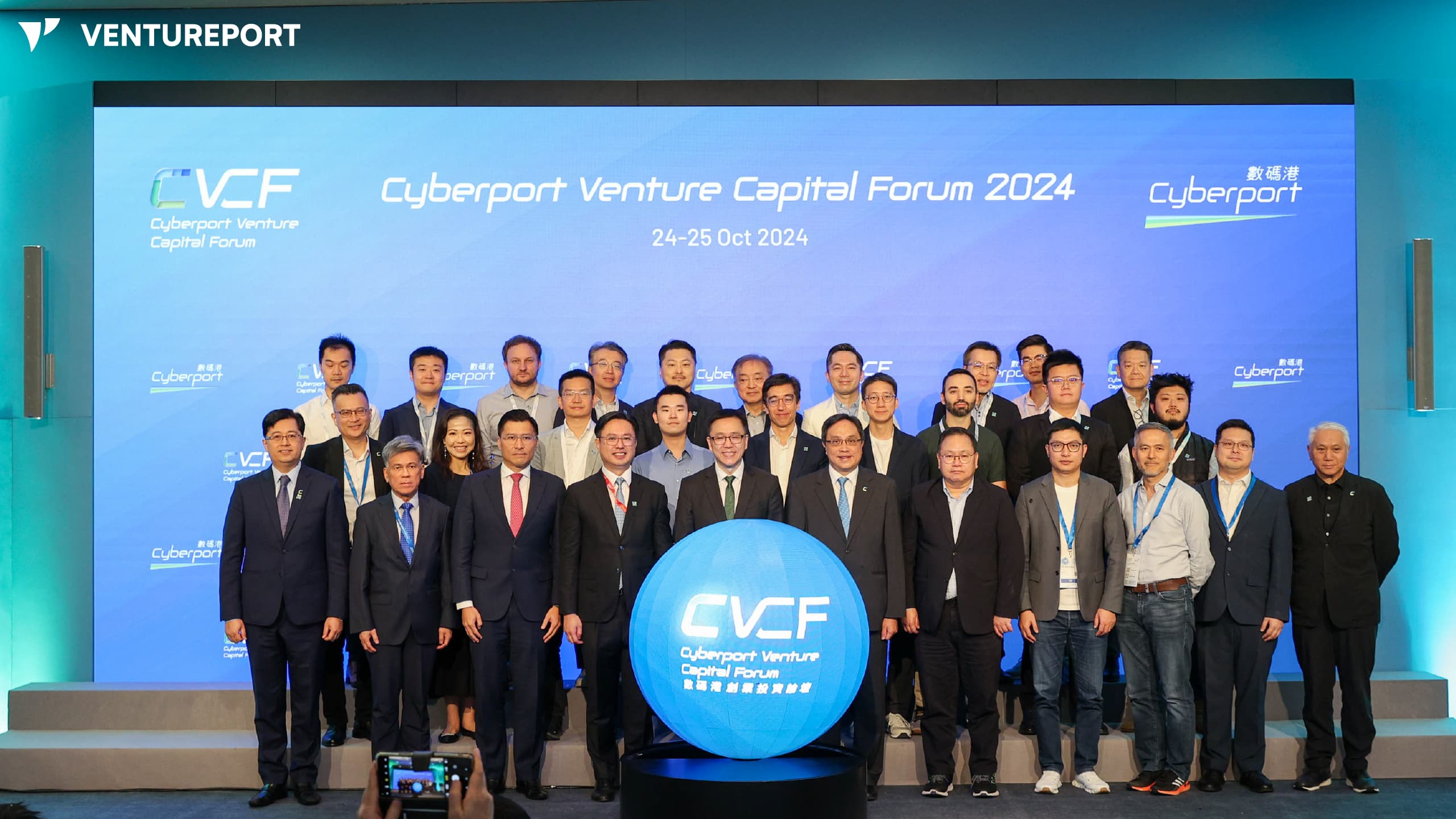
As the venture capital world recalibrates amid global uncertainty, Cyberport Venture Capital Forum (CVCF) 2025 returns on November 6-7 under the theme “The Innovation–Venture Nexus: Igniting Transformative Success”. PHOTO: CYBERPORT
The two-day forum will once again bring together global and local leaders to explore how technology, capital and collaboration intersect to drive the next wave of growth. Entrepreneurs, investors and innovators will exchange insights on artificial intelligence, digital assets and Web 3.0—technologies that are reshaping industries and redefining both risk and opportunity.
As industries face challenges from geopolitical shifts, regulatory changes and market volatility, CVCF will serve as a platform to address a defining question: How can innovation remain bold and visionary in an ever-evolving funding landscape? Through keynotes, panel discussions and interactive sessions, the forum will spotlight the transformative potential of technologies like artificial intelligence (AI), Web 3.0 and digital assets while offering practical strategies to turn disruption into market advantage.
With investor matching, power pitches, start-up clinics and workshops, CVCF 2025 offers a front-row seat to emerging markets across Asia, the Middle East, the United States and Europe, connecting forward-thinking investors with visionary entrepreneurs. It is not just a conference—it’s a bridge between ideas and investment designed to ignite breakthroughs and foster growth in the global innovation ecosystem. It provides a unique platform for startups and investors to navigate the complexities of today’s economy while seizing new opportunities for collaboration and growth.
To preview the conversations ahead, three speakers share perspectives on trends shaping the future of innovation, investment and entrepreneurship, setting the stage for the discussions that will unfold at CVCF 2025.

Co-founder and CEO, AIFT
Session: Riding the Middle East Momentum — Capitalizing Unique Innovation and Investment Strengths
As the Middle East accelerates its shift from oil dependence toward digital diversification, the region is becoming a focal point for blockchain and AI investment. In his upcoming session, Alvin Kwock will explore the region’s innovation potential — and here, he shares some of his views on the opportunities shaping that transformation.
Alvin Kwock, co-founder and CEO of AIFT, oversees operations across three verticals: AI and cybersecurity (Vulcan and Cymetrics), blockchain (OneInfinity and OneSavie) and pet and B2C (OneDegree). With local operations spanning Asia and the Middle East, AIFT is expanding rapidly.
When asked about the Middle East’s rapid rise as a global innovation hub, Kwock said that the region is shifting from a petroleum-dependent economy to one increasingly diversified through technology and innovation, with markets advancing blockchain and AI technologies. AIFT is prioritizing expansion in the UAE and Saudi Arabia, where AI investment and regulatory openness create immense potential. Hong Kong’s expertise in financial risk management acts as a “confidence anchor” for international markets, allowing AIFT to deliver compliant solutions tailored for emerging markets while developing Sharia-compliant, regulation-aligned technologies.
“Hong Kong’s storied expertise in financial risk management acts as a ‘confidence anchor’ for international markets.”
He also noted that the region’s accelerating digital adoption opens unique opportunities for AI, insurtech and fintech. The UAE and Bahrain’ embrace of virtual assets, combined with Hong Kong’s proven frameworks, provide a foundation for localized solutions. By integrating risk oversight and regulatory best practices, AIFT supports stable market growth and delivers specialized insurance to enhance resilience in emerging markets.
On managing geopolitical risk, Kwock explained that AIFT mitigates exposure through local partnerships, regulatory alignment and cultural understanding. By hiring Arab employees and ensuring operations align with Islamic values, AIFT strengthens Hong Kong–Middle East collaboration. This approach, he said, offers a blueprint for startups: prioritize local engagement and flexibility to balance risk and growth.

Founder, Hash Global Advisory Company Ltd.
Session: From Hype to Holdings — Where Smart Money Goes in Digital Assets 2025–2027
With institutional frameworks for Web 3.0 maturing, investors are increasingly focused on sustainable value creation. In his session, Kang Shen will discuss how smart capital is moving beyond speculation toward real-world utility—themes echoed in his reflections shared ahead of the forum.
Kang Shen, founder of Hash Global Advisory, applies value-investing principles to the Web 3.0 sector. A graduate of Fudan University and the University of Chicago Booth School of Business and a Chartered Financial Analyst (CFA), Shen has more than 20 years of financial industry experience with roles at the Industrial Bank of Japan, PIMCO and Bosera Asset Management.
On the tokenization of real-world assets, Shen observed that the RWA sector remains in its early phase of regulatory and infrastructure development. Over the next two years, as compliance systems mature, scalable projects with tangible value will emerge. For now, his approach remains cautious, focusing on fundamentals rather than inflated market narratives.
He also shared his optimism for three areas with the most potential upside: Web 3.0 Culture and Entertainment—including projects like Meet48 and Offgrid; Web 3.0 E-Commerce and Payments—with ventures such as WSPN, RD Technologies and Bitgoods; and On-Chain Data and Data Assets—such as Chainbase and Data Dance Chain. These, he noted, represent meaningful real-world applications of Web 3.0 technologies.
“Web 3.0 is currently undergoing a process of value realignment.”
Shen emphasized that Hash Global has always been committed to applying value-investing principles to the field of digital asset management. As early as 2019, the firm proposed using a monetary equation framework to evaluate ecosystem tokens and recently defined a new class—“Value-Functional Tokens”. He believes Web 3.0 is now undergoing a process of value realignment, where genuine utility will determine long-term worth.

Founder and CEO, Zhejiang Linctex Digital Technology Co., Ltd. (Style3D)
Session: Strategic Exits — IPO Paths for Expanding Rapid-Growth Companies
The fashion and textile industry is undergoing rapid digital transformation. Against this backdrop, Eric Liu will join CVCF 2025 to discuss strategic growth and expansion paths for fast-scaling companies.
Eric Liu, founder and CEO of Zhejiang Linctex Digital Technology Co., Ltd. (Style3D), holds dual master’s degrees in applied computing and molecular biology from VUB University in Belgium and a PhD in Electronic Information Engineering from Zhejiang University. A serial entrepreneur in the textile industry, Liu founded Style3D to drive digital transformation through AI and 3D technology.
He explained that Style3D’s fusion of AI and 3D technology builds a full-chain digital ecosystem. AI-driven design tools powered by large language models shorten design cycles from weeks to hours, while 3D simulation reduces prototyping costs by 30 percent. The company’s self-developed simulation engine supports virtual fashion shows and sustainability initiatives by optimizing fabric usage.
“Style3D’s fusion of AI and 3D technology builds a full-chain digital ecosystem.”
On the company’s origins, Liu said that traditional fashion R&D cycles are slow and costly. By integrating AI for pattern generation and 3D for design-to-production links, Style3D overcomes these barriers. With over 200 core patents and an extensive database of 2.3 million fabric properties and 1.2 million garment templates, the company leads digital fashion innovation.
Looking ahead, Liu noted that Style3D reinvests 40 percent of annual revenue into R&D, develops AI-driven trend prediction tools and expands innovation hubs in Paris and Milan. By leading the standardization of “3D Digital Fashion Infrastructure”, Style3D is setting the industry benchmark for the next era of intelligent manufacturing.
As global innovators prepare to gather at CVCF 2025, the forum promises to ignite ideas, discoveries and partnerships that will shape the future of technology and investment. From cutting-edge insights to practical strategies, the conversations starting here are just the beginning of a journey to redefine what’s possible in the global innovation ecosystem.
.jpg)