
"Discover how emerging sustainability trends in digital marketing are reshaping the way small businesses connect with eco-conscious consumers."
Updated
January 8, 2026 6:35 PM
.jpg)
Protestor holding a sign "NO BUSINESS ON A DEAD PLANET" during a march. PHOTO: UNSPLASH
Sustainability has become more than just a buzzword—it’s a movement that’s reshaping business practices across industries. For small businesses, aligning with sustainable values isn’t just about doing the right thing; it’s about staying competitive in a world where consumers increasingly prioritize eco-conscious brands.
In the digital age, sustainable marketing is evolving rapidly, offering businesses new ways to reduce their environmental impact while engaging with customers who care deeply about the planet. Let’s take a closer look at the top trends driving sustainable marketing today and their implications for small businesses.
Most people don’t realize that online advertising has an environmental cost. Every time an ad is displayed, clicked on, or streamed as a video, it consumes energy. This energy powers the servers, data centers, and networks that host and deliver these ads. The problem is that much of this energy still comes from non-renewable sources like coal and natural gas, which contribute to carbon emissions.
For small businesses, this could mean optimizing ad campaigns to reduce unnecessary data usage or using platforms that offset their carbon emissions. Additionally, adopting lighter website designs and faster-loading ads can not only reduce energy consumption but also improve user experience—leading to better engagement and conversion rates.
Small businesses can stand out by making their digital campaigns both efficient and eco-friendly. Highlighting these efforts in marketing messages can appeal to sustainability-minded customers while showcasing innovation.
Sustainable packaging is no longer optional—it’s an expectation. But for small businesses, it’s not just about switching to biodegradable materials. It’s about effectively communicating those efforts to customers through digital channels.
Brands are using their websites, social media, and email marketing to share the stories behind their packaging choices. Whether it’s sourcing recycled materials or partnering with eco-friendly suppliers, transparency is key. Educational content, such as videos or infographics, can help customers understand the impact of their purchases and feel good about supporting a brand.
By using digital platforms to tell the story of their sustainability efforts, small businesses can create deeper emotional connections with customers. Sharing behind-the-scenes processes or celebrating packaging milestones can boost loyalty and differentiate a brand from competitors.
Influencer marketing has become a powerful tool for brands, and the rise of eco-conscious influencers is creating new opportunities for businesses that prioritize sustainability. These influencers focus on topics like waste reduction, ethical consumption, and eco-friendly lifestyles, making them an ideal partner for sustainable brands.
Collaborating with such influencers allows small businesses to reach niche audiences that are already committed to sustainable living. These partnerships feel more authentic compared to traditional ads, as followers trust influencers to recommend products that align with their values.
Even small businesses with limited budgets can benefit from micro-influencers —individuals with smaller but highly engaged audiences. Partnering with eco-conscious influencers can amplify a business’s sustainability message and create a ripple effect of awareness.
Consumers today are more skeptical of vague claims like "green" or "eco-friendly." They want specifics. Brands that embrace transparency by sharing measurable data about their sustainability efforts are earning trust and loyalty.
For example, brands that disclose the carbon footprint of their products or provide detailed information about their supply chains stand out in an age of greenwashing (misleading sustainability claims). This trend is particularly relevant for small businesses, as customers often expect smaller, local brands to be more ethical and transparent.
Being upfront about sustainability efforts—even if they’re still a work in progress—can build credibility. Sharing challenges, milestones, and small wins through social media or email newsletters makes the brand relatable and trustworthy.
The circular economy—a model in which products are reused, repaired, or recycled instead of discarded—is gaining momentum. Small businesses are finding creative ways to incorporate this principle into their operations and marketing.
For example, some businesses encourage customers to return used products in exchange for discounts or loyalty points. Others upcycle returned goods into new products and share this process with customers through digital platforms.
By participating in the circular economy, small businesses can differentiate themselves while building a loyal customer base. Promoting these initiatives online—whether through videos, blogs, or customer testimonials—can amplify their impact and attract eco-conscious buyers.
Sustainable marketing is more than a trend—it’s becoming a necessity for businesses of all sizes. For small businesses, it represents both an opportunity to stand out in a competitive market and a chance to make a meaningful impact on the planet.
Emerging trends like green digital advertising, circular economy initiatives, and transparency are reshaping how brands connect with their audiences. By embracing these practices, small businesses can attract eco-conscious consumers, build loyalty, and foster trust—all while reducing their environmental footprint.
The future of marketing belongs to those who see sustainability not as an add-on, but as the foundation of their growth. For small businesses ready to take on this challenge, the rewards go beyond profits—they include making a lasting, positive impact on the planet and the people who inhabit it.
Keep Reading
How a Korean biotech startup is using AI to move drug discovery from trial-and-error to precision design
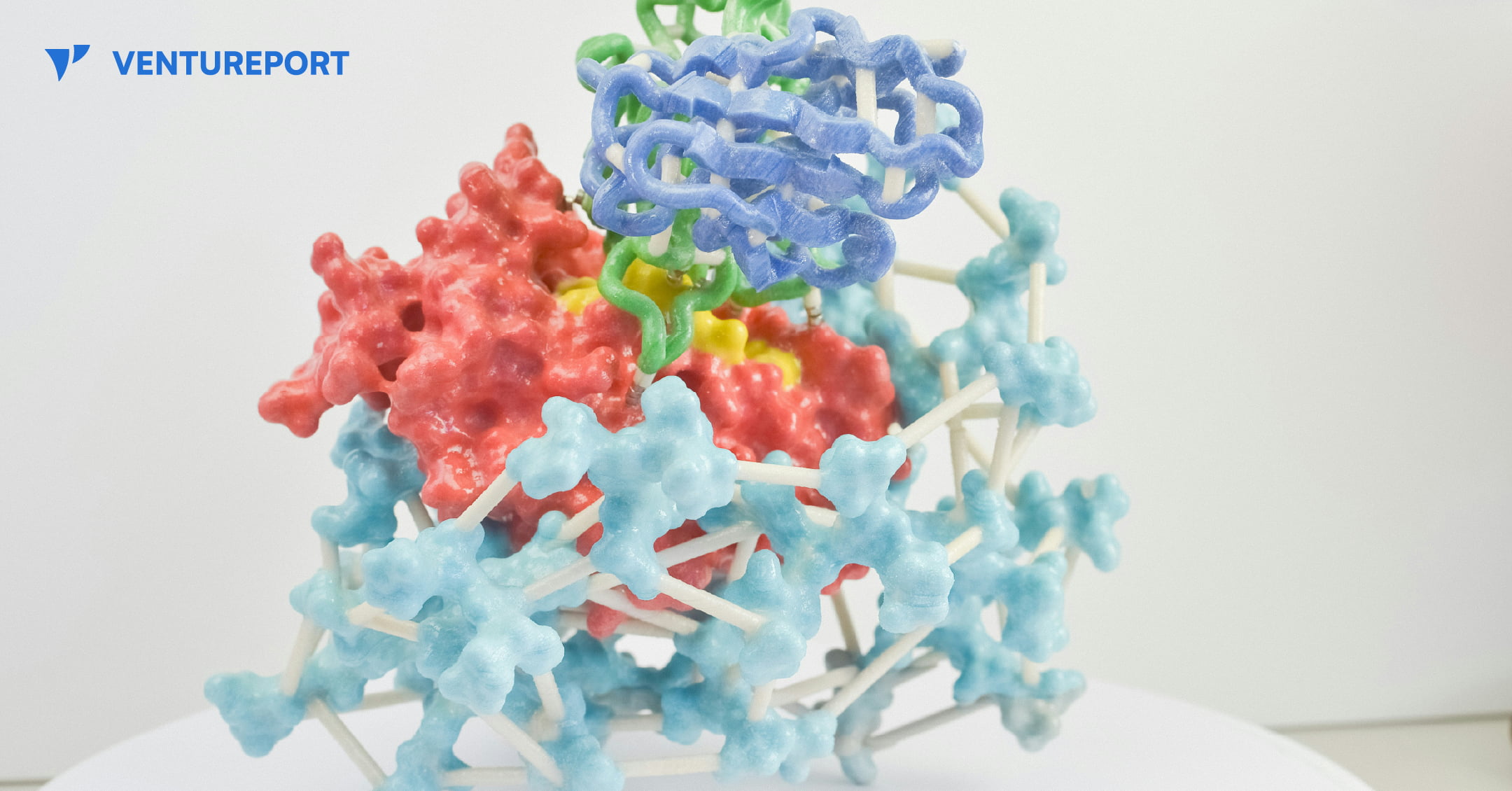
A close up of a protein structure model. PHOTO: UNSPLASH
For decades, drug discovery has relied on trial and error, with scientists testing thousands of molecules to find one that works. Galux, a South Korean biotech startup, is changing that by using AI to design proteins from scratch. This method, called “de novo” design, makes it possible to build precise new therapies instead of searching through existing ones.
The company recently announced a US$29 million Series B funding round, bringing its total capital to US$47 million.This significant investment attracted a substantial roster of institutional backers, including the Korea Development Bank (KDB), Yuanta Investment, SL Investment and NCORE Ventures. These firms joined existing investors such as InterVest, DAYLI Partners and PATHWAY Investment, as well as new participants including SneakPeek Investments, Korea Investment & Securities and Mirae Asset Securities.
At the core of the company’s work is a platform called GaluxDesign. Unlike many AI tools that only predict how existing proteins fold, this system uses deep learning and physics to create entirely new therapeutic antibodies. This “from scratch” approach lets the team go after so-called “undruggable” proteins. These are targets that traditional small-molecule drugs can’t reach because they lack clear binding pockets. By designing proteins to fit these complex shapes, Galux aims to unlock treatments that have stayed out of reach for decades. And that’s exactly why investors are paying attention.
The pharmaceutical industry is actively looking for faster and more efficient ways to develop new drugs, and Galux is built for exactly that. The company connects its AI platform directly to its own wet lab, where designs can be tested in real time. Each result feeds straight back into the system, sharpening the next round of models. This continuous loop speeds up discovery and improves precision at every step. It’s also why partners like Celltrion, LG Chem and Boehringer Ingelheim are already working with Galux.
Galux is no longer just trying to make drugs that stick to a target. The company now wants its AI to design medicines that actually work in the body and can be made at scale. In simple terms, a drug has to do more than bind to a disease—it must be stable, safe and strong enough to change how the illness behaves. Galux is moving into tougher targets such as ion channels and GPCRs. These play key roles in heart function and sensory signals. Ultimately, the goal is to show that AI-driven design can turn complex biology into real treatments. And instead of hunting blindly for a solution, the team is building exactly what they need.