
HyveGeo’s approach to restoring degraded land stands out at the FoodTech Challenge
Updated
February 7, 2026 2:18 PM

Clusters of sandstone buttes in Monument Valley, Colorado Plateau. PHOTO: UNSPLASH
HyveGeo, a climate-focused startup, has been named one of the global winners of the FoodTech Challenge, an international competition designed to surface practical technologies that strengthen food systems in arid and climate-stressed regions.
The FoodTech Challenge (FTC) is based in the UAE and brings together governments, foundations and agri-food institutions to identify early-stage solutions that address food production, land degradation and resource efficiency. Each year, hundreds of startups apply from around the world. In 2026, more than 1,200 teams from 113 countries submitted entries. Only four were selected.
HyveGeo stood out for its approach to one of agriculture’s hardest problems: how to make desert soil usable again. Founded in 2023 by a group of scientists and researchers, the Abu Dhabi-based company focuses on regenerating degraded land using a process built around biochar, a carbon-rich material made from agricultural waste, enhanced with microalgae. The aim is to accelerate soil recovery in environments where water is limited and land has been heavily stressed.
What caught the judges’ attention was not just the technology itself, but the way it links several challenges at once. The system turns waste into a usable soil input, reduces the time it takes for land to become productive and locks carbon into the ground instead of releasing it into the atmosphere. In short, it addresses land degradation, food production and climate pressure through a single framework.
As a winner of the FoodTech Challenge, HyveGeo will share a US$2 million prize with the other selected startups. Beyond funding, the company will also receive support from the UAE’s innovation ecosystem, including research backing, pilot projects, market access and incubation services to help move from testing into wider deployment.
The team’s plans focus on scaling within the UAE first. HyveGeo aims to work across Abu Dhabi’s network of farms and gradually expand into other arid and climate-stressed regions. Its longer-term target is to restore thousands of hectares of degraded land and contribute to carbon removal through soil-based methods.
Placed in a broader context, HyveGeo’s win reflects a shift in how food and climate technologies are being evaluated. Instead of chasing dramatic breakthroughs, competitions like the FTC are increasingly backing systems that connect waste, land, water and carbon into something usable on the ground. Not futuristic agriculture, but practical repair work for environments that can no longer rely on old farming assumptions. If that direction continues, the next wave of food innovation may be less about spectacle and more about quiet, scalable fixes for places where growing food has become hardest.
Keep Reading
From pre-orders to market entry, Rokid’s Taiwan campaign reflects how AI hardware is being introduced to consumers today.
Updated
January 8, 2026 6:30 PM
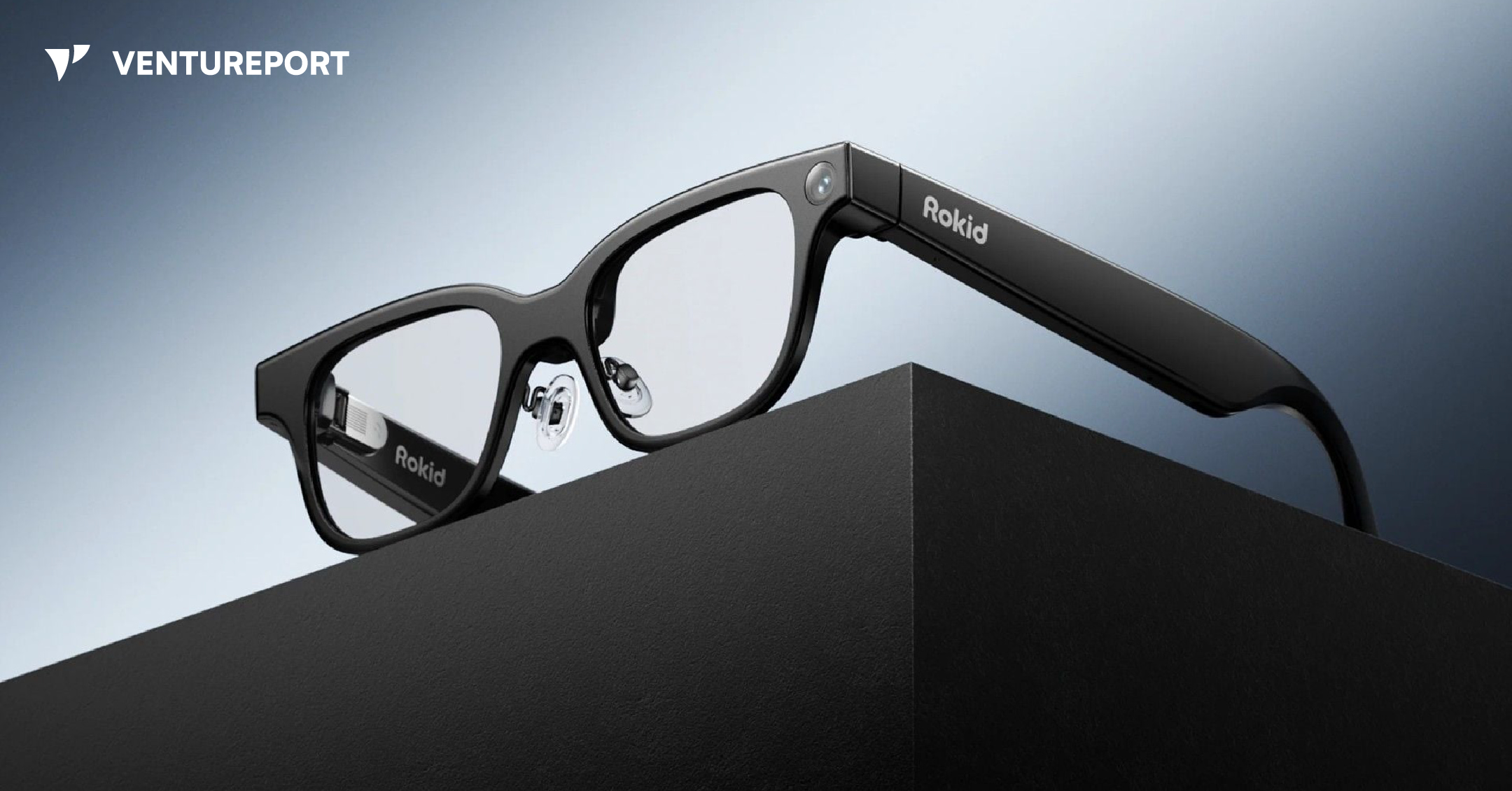
Rokid Glasses, a pair of AR glasses from Rokid. PHOTO: ROKID
Rokid has reached a significant crowdfunding milestone in Taiwan. Its Rokid Glasses campaign surpassed NT$62 million in pre-order funding on zeczec, Taiwan’s creative-oriented crowdfunding platform. The campaign ranked No. 1 across all categories on the platform in 2025 and entered the Top 10 funded campaigns in zeczec’s history, setting new records for AI and XR-related projects.
The campaign launched on October 28 and became one of the platform’s most prominent technology initiatives of the year. According to the company, the outcome followed growing visibility for Rokid Glasses after product showcases in New York, Berlin, Singapore and Paris, positioning the Taiwan campaign within a broader international rollout.
The crowdfunding achievement coincided with Rokid’s official market entry in Taiwan. On December 10, the company debuted Rokid Glasses locally, introducing the product to media, partners and early users in the region. The Taiwan launch mirrored earlier international events and connected the online crowdfunding campaign with a physical market presence.
Rokid Glasses combine augmented reality displays with built-in AI functions, including real-time multilingual translation, live transcription, navigation, object recognition and voice assistance. These capabilities were central to how the product was presented during both the crowdfunding campaign and the Taiwan launch, without framing the project as a traditional consumer electronics release.
The Taiwan campaign builds on Rokid’s prior crowdfunding history. The company previously raised more than US$4 million on Kickstarter, where Rokid Glasses became the highest-funded XR wearable project on the platform. The zeczec campaign extends that track record into one of Asia’s most established consumer electronics markets.
“Taiwan has one of the world's most mature and discerning consumer electronics markets”, said Said Justo Chang, Head of Global Channels at Rokid. “Reaching the top of Taiwan's crowdfunding platform is a great commercial achievement. We are excited to finally introduce Rokid Glasses to Taiwan”.
More broadly, the campaign highlights how crowdfunding platforms continue to function as launch and distribution channels for emerging AI and XR hardware. In Rokid’s case, product rollout, market entry and public participation converged within a single campaign, marking a notable moment for AI-enabled wearables in Taiwan’s technology landscape.