
Why investors are backing Applied Brain Research’s on-device voice AI approach.
Updated
January 14, 2026 1:38 PM

Plastic model of a human's brain. PHOTO: UNSPLASH
Applied Brain Research (ABR), a Canada-based startup, has closed its seed funding round to advance its work in “on-device voice AI”. The round was led by Two Small Fish Ventures, with its general partner Eva Lau joining ABR’s board, reflecting investor confidence in the company’s technical direction and market focus.
The round was oversubscribed, meaning more investors wanted to participate than the company had planned for. That response reflects growing interest in technologies that reduce reliance on cloud-based AI systems.
ABR is focused on a clear problem in voice-enabled products today. Most voice features depend on cloud servers to process speech, which can cause delays, increase costs, raise privacy concerns and limit performance on devices with small batteries or limited computing power.
ABR’s approach is built around keeping voice AI fully on-device. Instead of relying on cloud connectivity, its technology allows devices to process speech locally, enabling faster responses and more predictable performance while reducing data exposure.
Central to this approach is the company’s TSP1 chip, a processor designed specifically for handling time-based data such as speech. Built for real-time voice processing at the edge, TSP1 allows tasks like speech recognition and text-to-speech to run on smaller, power-constrained devices.
This specialization is particularly relevant as voice interfaces become more common across emerging products. Many edge devices such as wearables or mobile robotics cannot support traditional voice AI systems without compromising battery life or responsiveness. The TSP1 addresses this limitation by enabling these capabilities at significantly lower power levels than conventional alternatives. According to the company, full speech-to-text and text-to-speech can run at under 30 milliwatts of power, which is roughly 10 to 100 times lower than many existing alternatives. This level of efficiency makes advanced voice interaction feasible on devices where power consumption has long been a limiting factor.
That efficiency makes the technology applicable across a wide range of use cases. In augmented reality glasses, it supports responsive, hands-free voice control. In robotics, it enables real-time voice interaction without cloud latency or ongoing service costs. For wearables, it expands voice functionality without severely impacting battery life. In medical devices, it allows on-device inference while keeping sensitive data local. And in automotive systems, it enables consistent voice experiences regardless of network availability.
For investors, this combination of timing and technology is what stands out. Voice interfaces are becoming more common, while reliance on cloud infrastructure is increasingly seen as a limitation rather than a strength. ABR sits at the intersection of those two shifts.
With fresh funding in place, ABR is now working with partners across AR, robotics, healthcare, automotive and wearables to bring that future closer. For startup watchers, it’s a reminder that some of the most meaningful AI advances aren’t about bigger models but about making intelligence fit where it actually needs to live.
Keep Reading
Bindwell is testing a simple idea: use AI to design smarter, more targeted pesticides built for today’s farming challenges.
Updated
January 8, 2026 6:33 PM
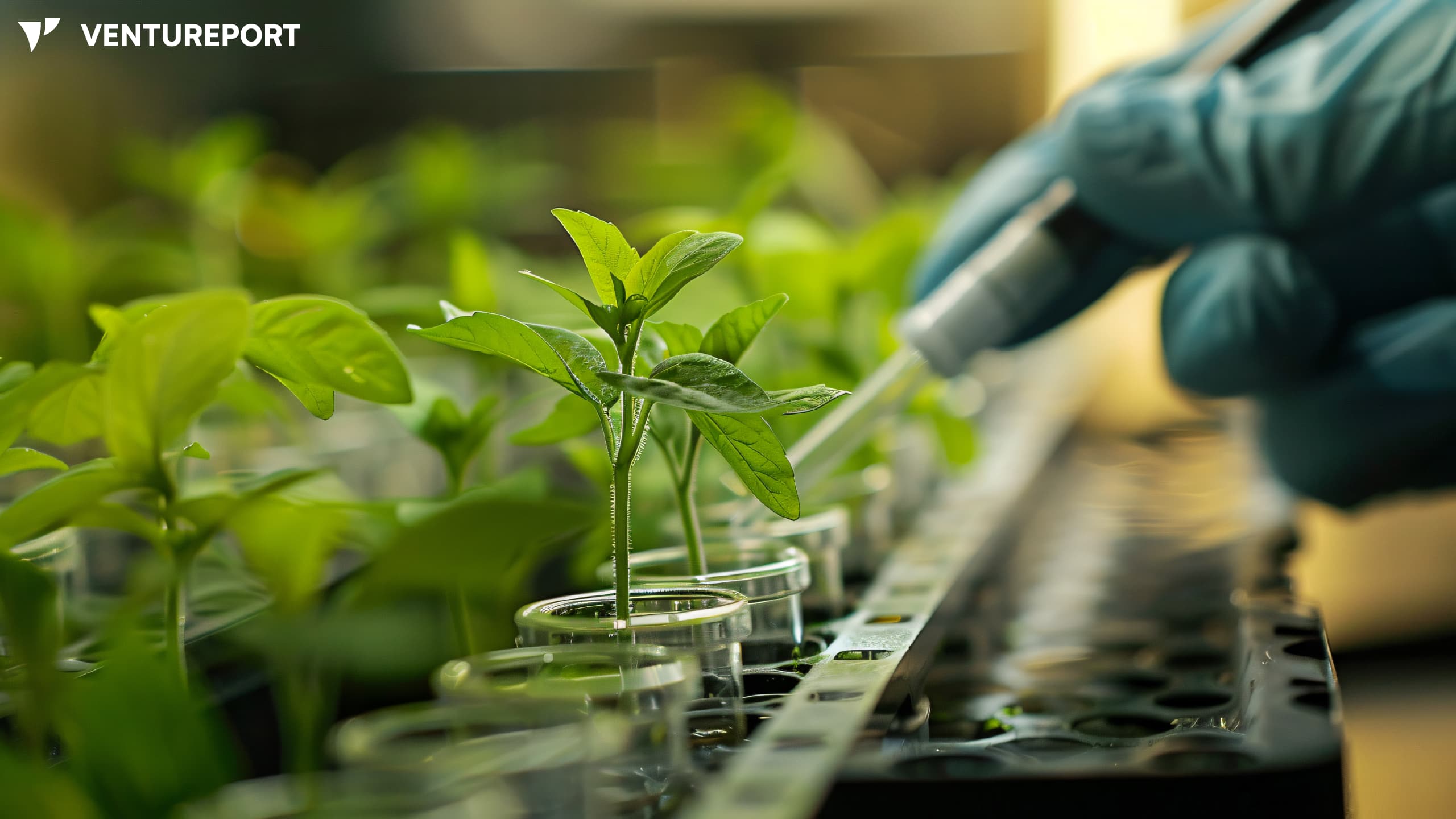
Researcher tending seedlings in a laboratory environment. PHOTO: FREEPIK
Bindwell, a San Francisco–based ag-tech startup using AI to design new pesticide molecules, has raised US$6 million in seed funding, co-led by General Catalyst and A Capital, with participation from SV Angel and Y Combinator founder Paul Graham. The round will help the company expand its lab in San Carlos, hire more technical talent and advance its first pesticide candidates toward validation.
Even as pesticide use has doubled over the last 30 years, farmers still lose up to 40% of global crops to pests and disease. The core issue is resistance: pests are adapting faster than the industry can update its tools. As a result, farmers often rely on larger amounts of the same outdated chemicals, even as they deliver diminishing returns.
Meanwhile, innovation in the agrochemical sector has slowed, leaving the industry struggling to keep up with rapidly evolving pests. This is the gap Bindwell is targeting. Instead of updating old chemicals, the company uses AI to find completely new compounds designed for today’s pests and farming conditions.
This vision is made even more striking by the people leading it. Bindwell was founded by 18-year-old Tyler Rose and 19-year-old Navvye Anand, who met at the Wolfram Summer Research Program in 2023. Both had deep ties to agriculture — Rose in China and Anand in India — witnessing up close how pest outbreaks and chemical dependence burdened farmers.
Filling the gap in today’s pesticide pipeline, Bindwell created an AI system that can design and evaluate new molecules long before they hit the lab. It starts with Foldwell, the company’s protein-structure model, which helps map the shapes of pest proteins so scientists know where a molecule should bind. Then comes PLAPT, which can scan through every known synthesized compound in just a few hours to see which ones might actually work. For biopesticides, they use APPT, a model tuned to spot protein-to-protein interactions and shown to outperform existing tools on industry benchmarks.
Bindwell isn’t selling AI tools. Instead, the company develops the molecules itself and licenses them to major agrochemical players. Owning the full discovery process lets the team bake in safety, selectivity and environmental considerations from day one. It also allows Bindwell to plug directly into the pipelines that produce commercial pesticides — just with a fundamentally different engine powering the science.
At present, the team is now testing its first AI-generated candidates in its San Carlos lab and is in early talks with established pesticide manufacturers about potential licensing deals. For Rose and Anand, the long-term vision is simple: create pest control that works without repeating the mistakes of the last half-century. As they put it, the goal is not to escalate chemical use but to design molecules that are more precise, less harmful and resilient against resistance from the start.