
Why investors are backing Applied Brain Research’s on-device voice AI approach.
Updated
January 14, 2026 1:38 PM
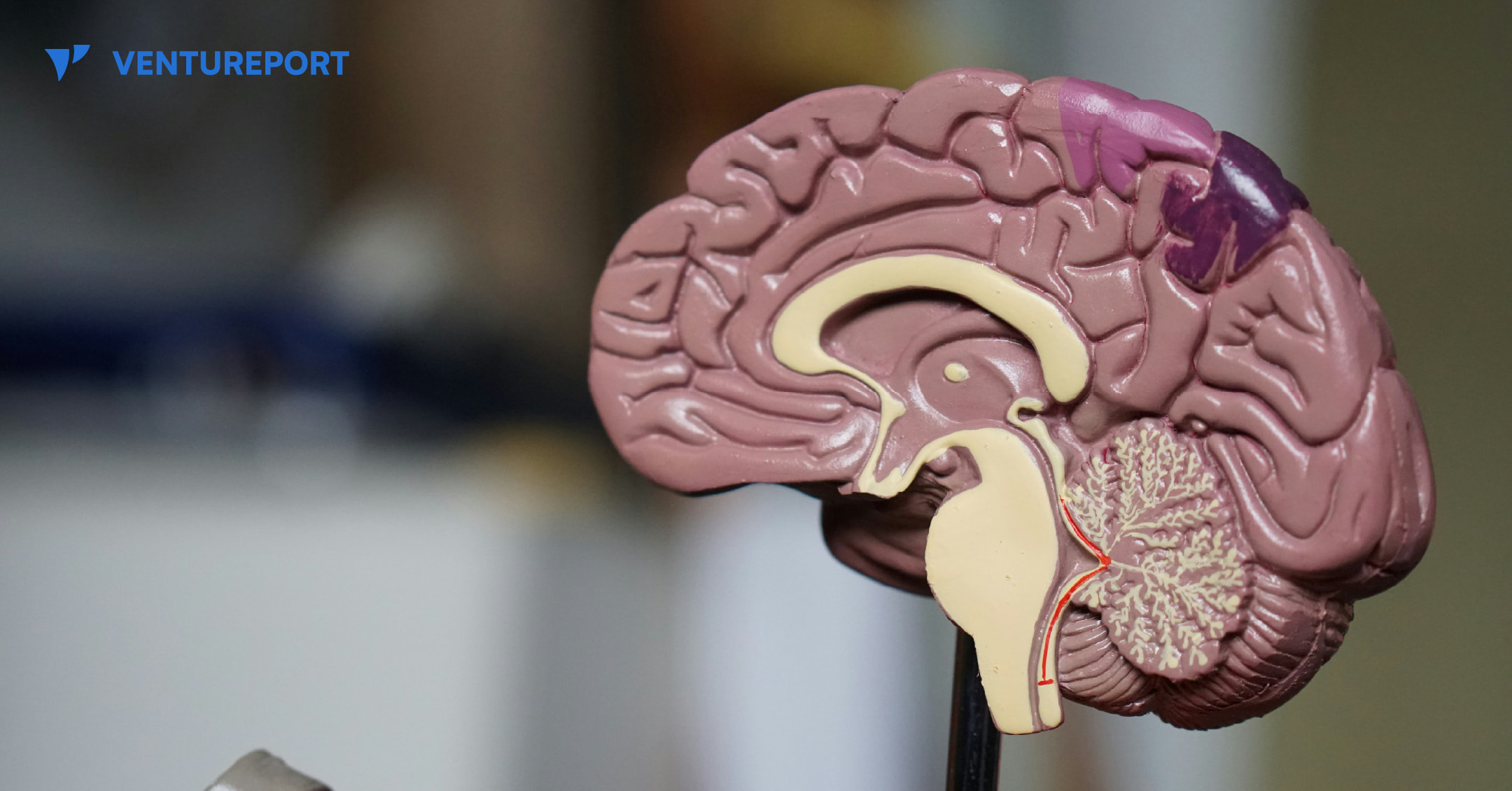
Plastic model of a human's brain. PHOTO: UNSPLASH
Applied Brain Research (ABR), a Canada-based startup, has closed its seed funding round to advance its work in “on-device voice AI”. The round was led by Two Small Fish Ventures, with its general partner Eva Lau joining ABR’s board, reflecting investor confidence in the company’s technical direction and market focus.
The round was oversubscribed, meaning more investors wanted to participate than the company had planned for. That response reflects growing interest in technologies that reduce reliance on cloud-based AI systems.
ABR is focused on a clear problem in voice-enabled products today. Most voice features depend on cloud servers to process speech, which can cause delays, increase costs, raise privacy concerns and limit performance on devices with small batteries or limited computing power.
ABR’s approach is built around keeping voice AI fully on-device. Instead of relying on cloud connectivity, its technology allows devices to process speech locally, enabling faster responses and more predictable performance while reducing data exposure.
Central to this approach is the company’s TSP1 chip, a processor designed specifically for handling time-based data such as speech. Built for real-time voice processing at the edge, TSP1 allows tasks like speech recognition and text-to-speech to run on smaller, power-constrained devices.
This specialization is particularly relevant as voice interfaces become more common across emerging products. Many edge devices such as wearables or mobile robotics cannot support traditional voice AI systems without compromising battery life or responsiveness. The TSP1 addresses this limitation by enabling these capabilities at significantly lower power levels than conventional alternatives. According to the company, full speech-to-text and text-to-speech can run at under 30 milliwatts of power, which is roughly 10 to 100 times lower than many existing alternatives. This level of efficiency makes advanced voice interaction feasible on devices where power consumption has long been a limiting factor.
That efficiency makes the technology applicable across a wide range of use cases. In augmented reality glasses, it supports responsive, hands-free voice control. In robotics, it enables real-time voice interaction without cloud latency or ongoing service costs. For wearables, it expands voice functionality without severely impacting battery life. In medical devices, it allows on-device inference while keeping sensitive data local. And in automotive systems, it enables consistent voice experiences regardless of network availability.
For investors, this combination of timing and technology is what stands out. Voice interfaces are becoming more common, while reliance on cloud infrastructure is increasingly seen as a limitation rather than a strength. ABR sits at the intersection of those two shifts.
With fresh funding in place, ABR is now working with partners across AR, robotics, healthcare, automotive and wearables to bring that future closer. For startup watchers, it’s a reminder that some of the most meaningful AI advances aren’t about bigger models but about making intelligence fit where it actually needs to live.
Keep Reading
Can SPhotonix’s optical memory technology protect data better than today’s storage?
Updated
January 8, 2026 6:32 PM

SPhotonix's 5D Memory Crystals™. PHOTO: SPHOTONIX
SPhotonix, a young deep-tech startup, is working on something unexpected for the data storage world: tiny, glass-like crystals that can hold enormous amounts of information for extremely long periods of time. The company works where light and data meet, using photonics—the science of shaping and guiding light—to build optical components and explore a new form of memory called “5D optical storage”.
It’s based on research that began more than twenty years ago, when Professor Peter Kazansky showed that a small crystal could preserve data—from the human genome to the entire Wikipedia—essentially forever.
Their new US$4.5 million pre-seed round, led by Creator Fund and XTX Ventures, is meant to turn that science into real products. And the timing aligns with a growing problem: the world is generating far more digital data than current storage systems can handle. Most of it isn’t needed every day, but it can’t be thrown away either. This long-term, rarely accessed cold data is piling up faster than existing storage infrastructure can manage and maintaining giant warehouses of servers just to keep it all alive is becoming expensive and environmentally unsustainable.
This is the problem SPhotonix is stepping in to solve. They want to store huge amounts of information in a stable format that doesn’t degrade, doesn’t need electricity to preserve data and doesn’t require constant swapping of hardware. Instead of racks of spinning drives, the idea is a durable optical crystal storage system that could last for generations.
The company’s underlying technology—called FemtoEtch™—uses ultrafast lasers to engrave microscopic patterns inside fused silica. These precisely etched structures can function as high-performance optical components for fields like aerospace, microscopy and semiconductor manufacturing. But the same ultra-controlled process can also encode information in five dimensions within the crystal, transforming the material into a compact, long-lasting archive capable of holding massive amounts of information in a very small footprint.
The new funding allows SPhotonix to expand its engineering team, grow its R&D facility in Switzerland and prepare the technology for real-world deployment. Investors say the opportunity is significant: global data generation has more than doubled in recent years and traditional storage systems—drives, disks, tapes—weren’t designed for the scale or longevity modern data demands.
While the company has been gaining attention in research circles (and even made an appearance in the latest Mission Impossible film), its next step is all about practical adoption. If the technology reaches commercial viability, it could offer an alternative to the energy-hungry, short-lived storage hardware that underpins much of today’s digital infrastructure.
As digital information continues to multiply, preserving it safely and sustainably is becoming one of the biggest challenges in modern computing. SPhotonix’s work points toward a future where long-lasting, low-maintenance optical data storage becomes a practical alternative to today’s fragile systems. It offers a more resilient way to preserve knowledge for the decades ahead.