
AI’s expansion into the physical world is reshaping what investors choose to back
Updated
March 17, 2026 1:02 AM

Exterior view of the Exchange Square in Central, Hong Kong. PHOTO: UNSPLASH
Artificial intelligence is often discussed in terms of large models trained in distant data centres. Less visible, but increasingly consequential, is the layer of computing that enables machines to interpret and respond to the physical world in real-time. As AI systems move from abstract software into vehicles, cameras and factory equipment, the chips that power on-device decision-making are becoming strategic assets in their own right.
It is within this shift that Axera, a Shanghai-based semiconductor company, began trading on the Hong Kong Stock Exchange on February 10 under the ticker symbol 00600.HK. The company priced its shares at HK$28.2, debuting with a market capitalization of approximately HK$16.6 billion. Its listing marks the first time a Chinese company focused primarily on AI perception and edge inference chips has gone public in the city — a milestone that underscores growing investor interest in the hardware layer of artificial intelligence.
The listing comes at a time when demand for flexible, on-device intelligence is expanding. As manufacturers, automakers and infrastructure operators integrate AI into physical systems, the need for specialized processors capable of handling visual and sensor data efficiently has grown. At the same time, China’s domestic semiconductor industry has faced increasing pressure to build local capabilities across the chip value chain. Companies such as Axera sit at the intersection of these dynamics, serving both commercial markets and broader industrial policy priorities.
For Hong Kong, the debut adds to a cohort of technology companies seeking public capital to scale hardware-intensive businesses. Unlike software firms, semiconductor designers operate in a capital-intensive environment shaped by supply chains, fabrication partnerships and rapid product cycles. Their presence on the exchange reflects a maturing investor appetite for AI infrastructure, not just consumer-facing applications.
Axera’s early backer, Qiming Venture Partners, led the company’s pre-A financing round in 2020 and continued to participate in subsequent rounds. Prior to the IPO, it held more than 6 percent of the company, making it the second-largest institutional investor. The public offering provides liquidity for early investors and new funding for a company operating in a highly competitive and technologically demanding sector.
Axera’s market debut does not resolve the competitive challenges of the semiconductor industry, where innovation cycles are short and global competition is intense. But it does signal that investors are placing tangible value on the hardware, enabling AI’s expansion beyond the cloud. In that sense, the listing represents more than a corporate milestone; it reflects a broader transition in how artificial intelligence is built, deployed and financed — moving steadily from software abstraction toward the silicon that makes real-world autonomy possible.
Keep Reading
Bitmo Lab is testing an ultra-thin, bendable tracker built to fit inside items traditional trackers can’t
Updated
March 17, 2026 1:02 AM
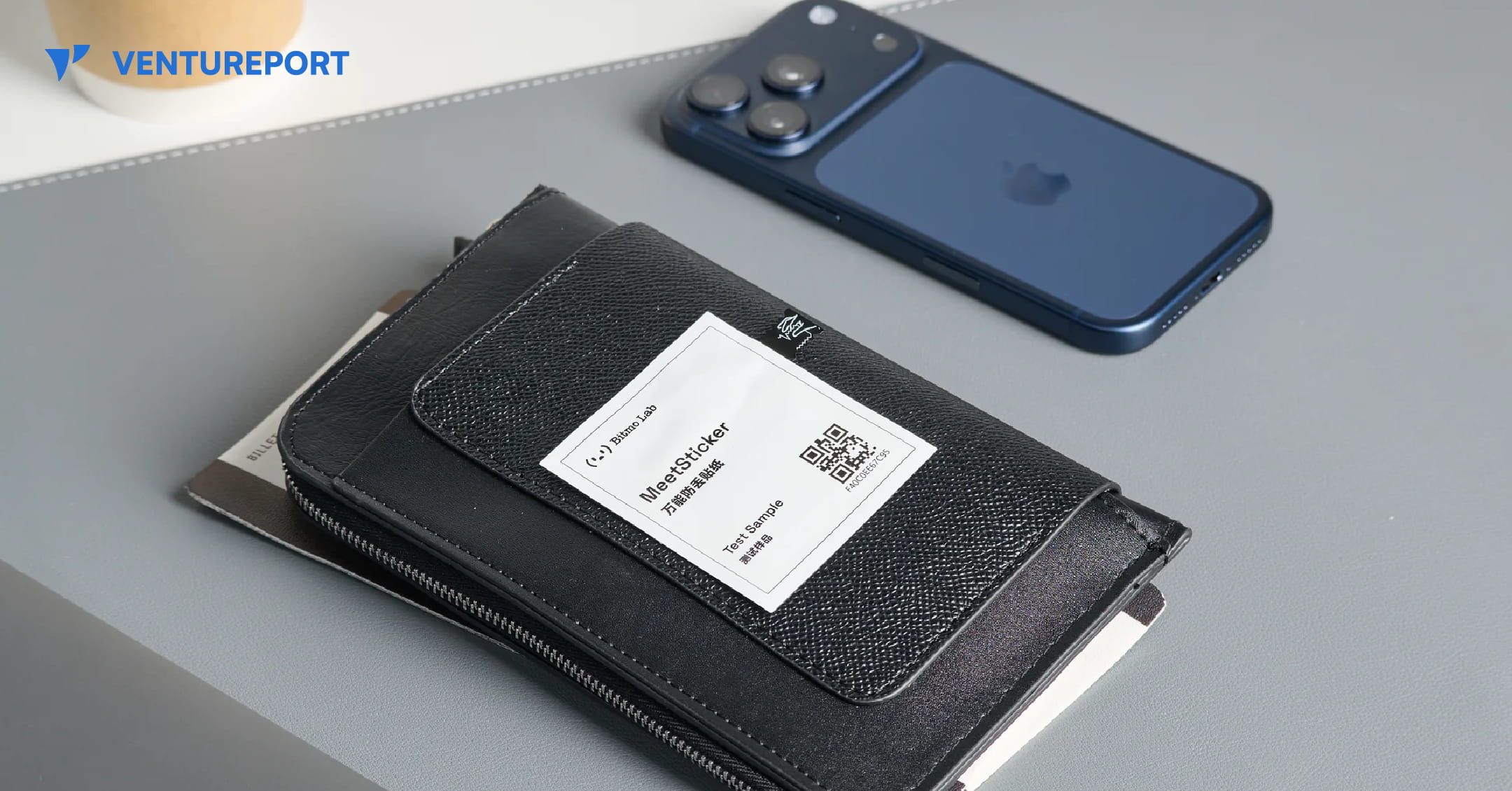
Bitmo Lab's MeetSticker tracker. PHOTO: BITMO LAB
Location trackers have become everyday accessories for keys, bags and luggage. But as personal items grow slimmer and more design-focused — from minimalist wallets to passport sleeves and specialised gear — tracking them has become less straightforward. Most trackers are built as small, rigid discs that assume the presence of space, loops or compartments. That assumption has created a growing mismatch between modern product design and the technology meant to secure it.
Hong Kong–based startup Bitmo Lab is attempting to address that gap with a device called MeetSticker. Instead of the solid plastic casing typical of most trackers, MeetSticker is engineered to be flexible and ultra-thin, measuring just 0.8 millimetres thick. The bendable design allows it to sit within narrow compartments or along curved surfaces without altering the shape of the object. Rather than attaching to an item externally, it is intended to integrate discreetly inside it.
That structural shift is the core of the product’s proposition. By removing the rigid shell that defines conventional tracking hardware, MeetSticker can be placed in items that previously had no practical way to accommodate a tracker. Bitmo Lab states that the device connects through a proprietary network and a companion application compatible with both iOS and Android, positioning it as a cross-platform solution rather than one tied to a single ecosystem.
The implications extend beyond form factor. Objects without obvious attachment points — such as compact travel accessories or specialised tools — could potentially be monitored without visible add-ons. In doing so, the device broadens the scope of tracking technology into categories where aesthetics, aerodynamics or compact design matter as much as functionality.
Before moving toward retail distribution, however, the company is focusing on validation. Bitmo Lab has launched a five-week global alpha testing programme beginning February 9. Sixty participants will receive a prototype unit and early access to the app. According to the company, the programme is designed to assess durability, usability and real-world performance before a wider commercial release. Participants who provide feedback will receive a retail unit upon launch.
Such testing is particularly relevant for flexible electronics. Unlike rigid devices, bendable hardware must withstand repeated flexing, daily handling and environmental exposure. Early user data can help refine manufacturing processes and software optimisation before scaling production.
As with other connected tracking devices, privacy considerations remain part of the equation. Bitmo Lab has stated that data collected during the alpha programme will be used strictly for testing purposes and deleted once the programme concludes.
Whether flexible trackers will redefine the category will depend on how they perform outside controlled testing environments. Still, the introduction of a near-invisible, bendable tracking device reflects a broader shift in consumer technology. As everyday products become thinner and more design-conscious, the tools built to protect them may need to adapt just as seamlessly.