
A plug-and-play export pathway helps regional brands reach Asia without building overseas operations
Updated
February 26, 2026 4:29 PM

Coupang headquarters in Silicon Valley. PHOTO: ADOBE STOCK
Two western Pennsylvania companies — Kate’s Real Food and Healthy Origins — are expanding beyond the U.S. through a partnership with Coupang.
Coupang, a U.S.-technology and Fortune 150 company, operates one of the largest e-commerce platforms in South Korea. It allows American sellers to reach customers overseas without setting up their own distribution networks. Businesses ship products to a domestic Coupang logistics facility. From there, the company manages storage, fulfillment and delivery directly to customers abroad.
For Kate’s Real Food and Healthy Origins, this system opens the door to new markets without requiring on-the-ground operations. Kate’s Real Food makes organic energy and protein bars. Healthy Origins is a family-owned supplements business based near Pittsburgh. Both are now selling to customers in South Korea and in Healthy Origins’ case, Taiwan as well.
That structure addresses a practical gap for growing brands: how to access international demand without building international operations. Instead of navigating foreign warehousing and retail partnerships independently, sellers plug into an existing marketplace and logistics system.
“At Coupang, we’re proud to help thousands of American small and medium-sized businesses, agricultural producers and larger brands sell their goods to customers around the world”, said Coupang vice president Bill Anaya. “We’ve built an innovative, AI-driven export engine that enables great American entrepreneurs — like those who created Kate’s Real Food and Healthy Origins — to expand their horizons, find new revenue abroad and keep growing their local teams".
For Kate’s Real Food, the move marks its entry into South Korea for the first time. For Healthy Origins, the results have been measurable. The company reports that sales of its products on the platform have increased more than 50% year over year since partnering with Coupang. It has also expanded into Taiwan.
“Partnering with Coupang has been a significant step forward for our business”, said Bret Eby, CEO of Healthy Origins. “Coupang makes it easier to deliver a great shopping experience and we’ve appreciated the collaboration and support throughout the process. Its scale, efficiency and consumer reach in Korea are unmatched and launching on Coupang allowed us to elevate our presence and connect with customers in a much more impactful and direct way”.
The broader relevance lies in the model itself. Digital marketplaces are building integrated cross-border infrastructure. That shift changes what international expansion requires. Smaller regional brands no longer need to replicate warehousing, logistics and retail partnerships in every new market. Instead, they can plug into an existing system and reach customers abroad.
In this case, two Pennsylvania companies are doing exactly that. Their expansion illustrates how platform-led trade is reshaping the path from local operations to global reach.
Keep Reading
The hidden cost of scaling AI: infrastructure, energy, and the push for liquid cooling.
Updated
January 8, 2026 6:31 PM
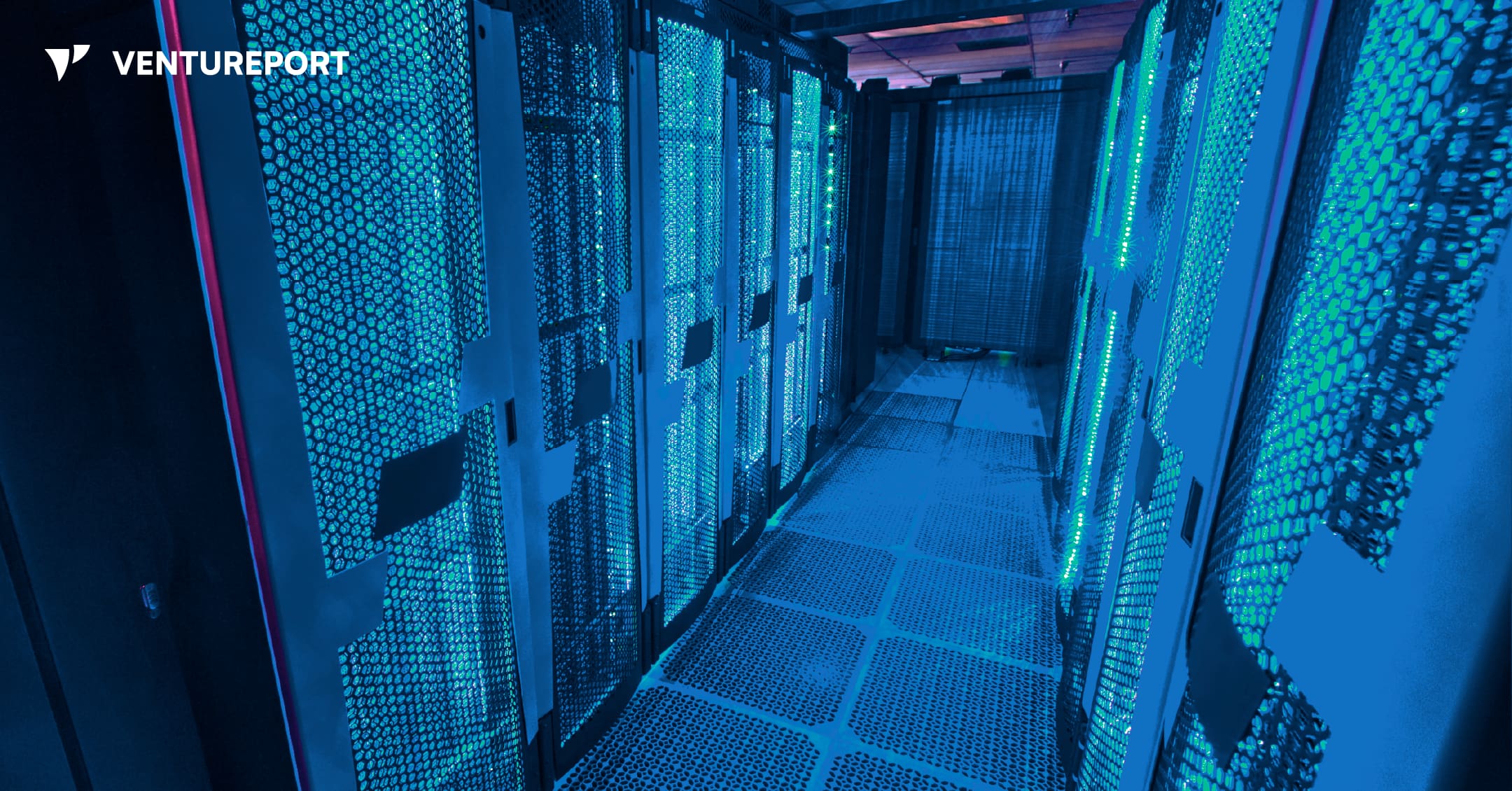
The inside of a data centre, with rows of server racks. PHOTO: FREEPIK
As artificial intelligence models grow larger and more demanding, the quiet pressure point isn’t the algorithms themselves—it’s the AI infrastructure that has to run them. Training and deploying modern AI models now requires enormous amounts of computing power, which creates a different kind of challenge: heat, energy use and space inside data centers. This is the context in which Supermicro and NVIDIA’s collaboration on AI infrastructure begins to matter.
Supermicro designs and builds large-scale computing systems for data centers. It has now expanded its support for NVIDIA’s Blackwell generation of AI chips with new liquid-cooled server platforms built around the NVIDIA HGX B300. The announcement isn’t just about faster hardware. It reflects a broader effort to rethink how AI data center infrastructure is built as facilities strain under rising power and cooling demands.
At a basic level, the systems are designed to pack more AI chips into less space while using less energy to keep them running. Instead of relying mainly on air cooling—fans, chillers and large amounts of electricity, these liquid-cooled AI servers circulate liquid directly across critical components. That approach removes heat more efficiently, allowing servers to run denser AI workloads without overheating or wasting energy.
Why does that matter outside a data center? Because AI doesn’t scale in isolation. As models become more complex, the cost of running them rises quickly, not just in hardware budgets, but in electricity use, water consumption and physical footprint. Traditional air-cooling methods are increasingly becoming a bottleneck, limiting how far AI systems can grow before energy and infrastructure costs spiral.
This is where the Supermicro–NVIDIA partnership fits in. NVIDIA supplies the computing engines—the Blackwell-based GPUs designed to handle massive AI workloads. Supermicro focuses on how those chips are deployed in the real world: how many GPUs can fit in a rack, how they are cooled, how quickly systems can be assembled and how reliably they can operate at scale in modern data centers. Together, the goal is to make high-density AI computing more practical, not just more powerful.
The new liquid-cooled designs are aimed at hyperscale data centers and so-called AI factories—facilities built specifically to train and run large AI models continuously. By increasing GPU density per rack and removing most of the heat through liquid cooling, these systems aim to ease a growing tension in the AI boom: the need for more computers without an equally dramatic rise in energy waste.
Just as important is speed. Large organizations don’t want to spend months stitching together custom AI infrastructure. Supermicro’s approach packages compute, networking and cooling into pre-validated data center building blocks that can be deployed faster. In a world where AI capabilities are advancing rapidly, time to deployment can matter as much as raw performance.
Stepping back, this development says less about one product launch and more about a shift in priorities across the AI industry. The next phase of AI growth isn’t only about smarter models—it’s about whether the physical infrastructure powering AI can scale responsibly. Efficiency, power use and sustainability are becoming as critical as speed.