
Tencent’s latest solution simplifies cross-border payments for Weixin users and merchants.
Updated
January 8, 2026 6:33 PM

Tencent's large penguin statue in front of a building. PHOTO: UNSPLASH
In a world where digital borders are fading faster than ever, Tencent is betting on familiarity. With the launch of TenPay Global Checkout, the company wants to make paying across countries feel as seamless as paying at home.
The new service, unveiled today, allows Weixin Mini Program merchants outside mainland China to accept a variety of local payment methods. That includes digital wallets, real-time payment networks and credit and debit cards, all through a single integration. The launch starts in Singapore and Macao SAR, where merchants can now take payments via PayNow, BOCPAY(MO), and major cards. Japan, Australia and New Zealand are next, with more regions to follow soon.
This rollout builds on the growing reach of Weixin Mini Programs, known internationally through WeChat. These small apps are built right into the platform, letting users' shop, book services and make payments without downloading separate apps. Today, there are over one million monthly active users in key overseas markets, with Mini Programs available across 92 countries and regions.
Yet, for many users abroad, paying within Mini Programs hasn’t always been simple. Foreign card restrictions, currency conversions and limited local options often made checkout a frustrating step. TenPay Global Checkout aims to change that.
“TenPay Global Checkout marks an important step in enhancing the local consumer experience. By enabling overseas Weixin Mini Program merchants to accept trusted and diversified local payment methods through one unified solution, users benefit from a more convenient and efficient payment experience. This helps merchants improve payment conversion rates, expand their user base and scale their businesses to serve a broader range of customers”, said Wenhui Yang, CEO of TenPay Global (Singapore).
What makes this move interesting isn’t just its technical simplicity—it’s the cultural bridge it builds. For users in Singapore or Japan, paying with PayNow or a local card inside Weixin feels less like an international transaction and more like an everyday purchase.
For merchants, it’s an invitation into a market that values convenience and trust. Payment familiarity, after all, often decides whether a user completes a purchase or abandons it at checkout.
The company remains focused on creating secure, connected and user-friendly payment experiences that help merchants grow and allow consumers to pay with confidence, wherever they are.
If successful, TenPay Global Checkout could quietly redefine how cross-border commerce feels—not like a transaction across regions, but a familiar tap, scan or click. In an increasingly global marketplace, that kind of familiarity might just be the next frontier in digital trust.
Keep Reading
How a Korean biotech startup is using AI to move drug discovery from trial-and-error to precision design
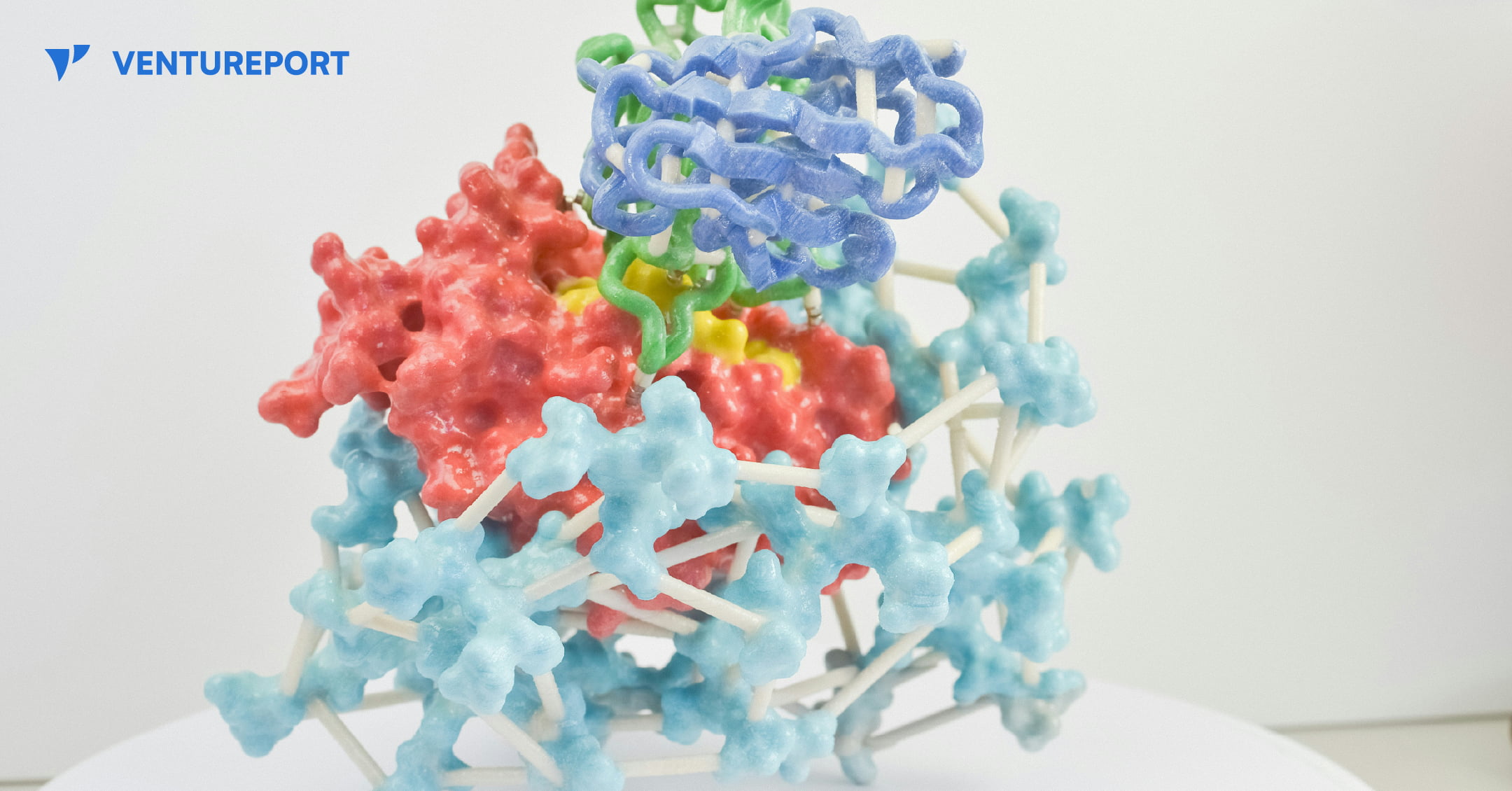
A close up of a protein structure model. PHOTO: UNSPLASH
For decades, drug discovery has relied on trial and error, with scientists testing thousands of molecules to find one that works. Galux, a South Korean biotech startup, is changing that by using AI to design proteins from scratch. This method, called “de novo” design, makes it possible to build precise new therapies instead of searching through existing ones.
The company recently announced a US$29 million Series B funding round, bringing its total capital to US$47 million.This significant investment attracted a substantial roster of institutional backers, including the Korea Development Bank (KDB), Yuanta Investment, SL Investment and NCORE Ventures. These firms joined existing investors such as InterVest, DAYLI Partners and PATHWAY Investment, as well as new participants including SneakPeek Investments, Korea Investment & Securities and Mirae Asset Securities.
At the core of the company’s work is a platform called GaluxDesign. Unlike many AI tools that only predict how existing proteins fold, this system uses deep learning and physics to create entirely new therapeutic antibodies. This “from scratch” approach lets the team go after so-called “undruggable” proteins. These are targets that traditional small-molecule drugs can’t reach because they lack clear binding pockets. By designing proteins to fit these complex shapes, Galux aims to unlock treatments that have stayed out of reach for decades. And that’s exactly why investors are paying attention.
The pharmaceutical industry is actively looking for faster and more efficient ways to develop new drugs, and Galux is built for exactly that. The company connects its AI platform directly to its own wet lab, where designs can be tested in real time. Each result feeds straight back into the system, sharpening the next round of models. This continuous loop speeds up discovery and improves precision at every step. It’s also why partners like Celltrion, LG Chem and Boehringer Ingelheim are already working with Galux.
Galux is no longer just trying to make drugs that stick to a target. The company now wants its AI to design medicines that actually work in the body and can be made at scale. In simple terms, a drug has to do more than bind to a disease—it must be stable, safe and strong enough to change how the illness behaves. Galux is moving into tougher targets such as ion channels and GPCRs. These play key roles in heart function and sensory signals. Ultimately, the goal is to show that AI-driven design can turn complex biology into real treatments. And instead of hunting blindly for a solution, the team is building exactly what they need.