
Reimagining biodefense at the intersection of AI, biology and urgency.
Updated
January 8, 2026 6:34 PM

Through computational tools, Valthos analyzes biological data to design adaptive solutions against emerging threats. PHOTO: VALTHOS
Valthos has raised US$30 million in seed funding, led by the OpenAI Startup Fund, Lux Capital and Founders Fund, to advance its mission of building next-generation biodefense systems.
The company’s work comes at a time when biotechnology is evolving at an unprecedented pace. Biotechnology is moving at record speed. These new tools can lead to life-changing medical discoveries, but they also bring the risk of dangerous biological agents being developed faster than ever.
“The issue at the core of biodefense is asymmetry”, said Kathleen McMahon, co-founder of Valthos. “It’s easier to make a pathogen than a cure. We’re building tools to help experts at the frontlines of biodefense move as fast as the threats they face”. The gap Valthos aims to close is between the rapid rise of biological threats and the slower pace of developing cures. Therefore, the company is developing AI systems that can rapidly analyze biological sequences and significantly shorten the time needed to design medical countermeasures.
“In this new world, the only way forward is to be faster. So we set out to build a new tech stack for biodefense”, said Tess van Stekelenburg, co-founder of Valthos. “This software infrastructure strengthens biodefense today and lays the groundwork for the adaptive, precision therapeutics of tomorrow”.
The company was founded by van Stekelenburg, a partner at Lux Capital and McMahon, the former head of Palantir’s Life Sciences division. Together, they’ve built a multidisciplinary team of experts from Palantir, DeepMind, Stanford’s Arc Institute and MIT’s Broad Institute, bringing together deep experience in software engineering, machine learning and biotechnology.
“Technology is moving fast. An industrial ecosystem of builders, companies and solutions further democratizes AI to provide broad resilience, and ensures the U.S. continues to lead as AI increasingly powers everything around us. As AI and biotech rapidly advance, biodefense is one of the new industry verticals that helps maximize the benefits and minimize the risks”, said Jason Kwon, OpenAI’s Chief Strategy Officer. “Valthos is pushing the frontier of protection and defense in one of the most strategic intersections of multiple world-changing technologies, and with the team to do it”.
Looking ahead, Valthos plans to expand its engineering team and scale its software infrastructure for both government and commercial partners — moving closer to its goal of enabling faster, smarter and more adaptive biodefense capabilities.
Keep Reading
From pre-orders to market entry, Rokid’s Taiwan campaign reflects how AI hardware is being introduced to consumers today.
Updated
January 8, 2026 6:30 PM
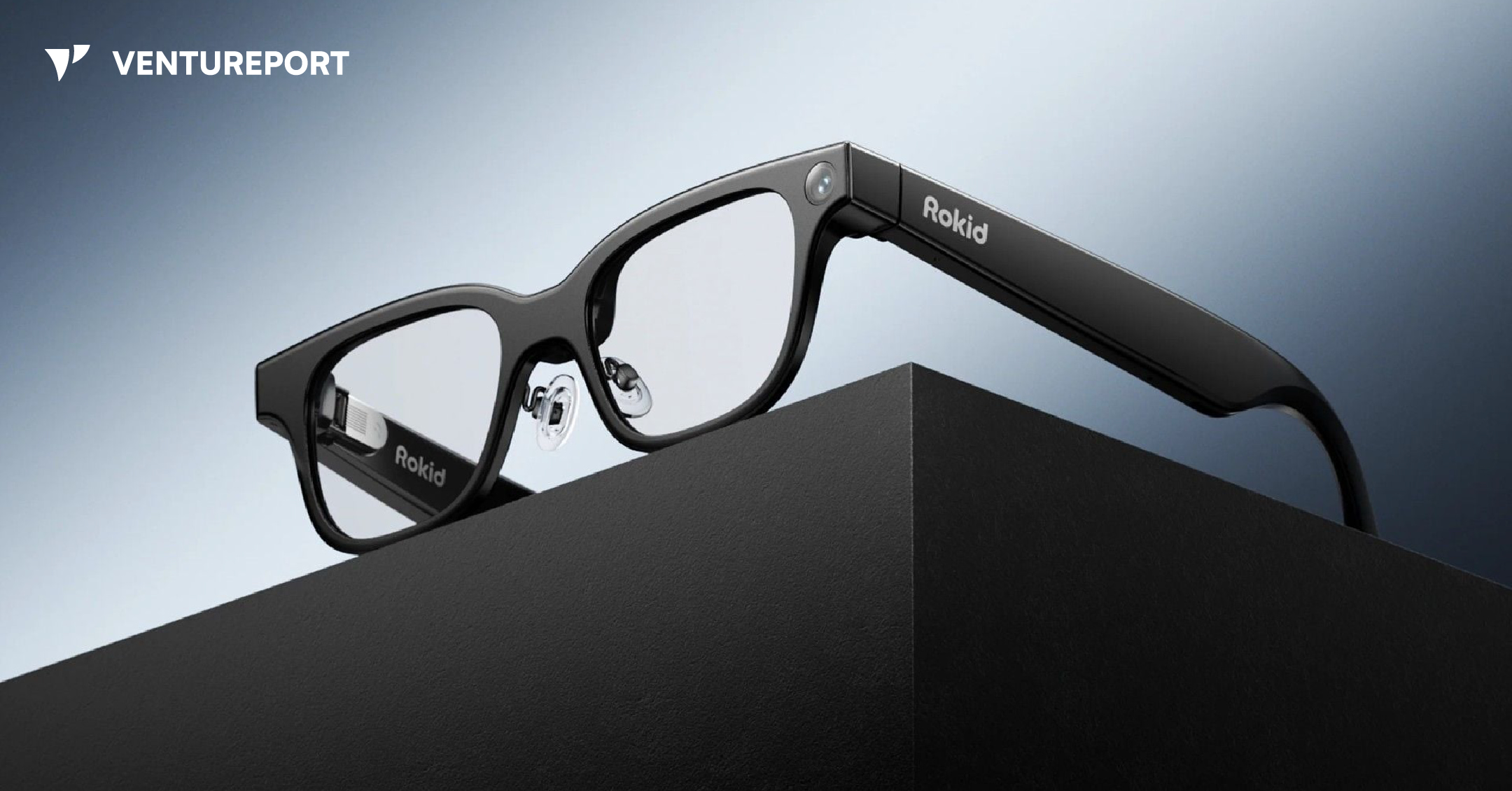
Rokid Glasses, a pair of AR glasses from Rokid. PHOTO: ROKID
Rokid has reached a significant crowdfunding milestone in Taiwan. Its Rokid Glasses campaign surpassed NT$62 million in pre-order funding on zeczec, Taiwan’s creative-oriented crowdfunding platform. The campaign ranked No. 1 across all categories on the platform in 2025 and entered the Top 10 funded campaigns in zeczec’s history, setting new records for AI and XR-related projects.
The campaign launched on October 28 and became one of the platform’s most prominent technology initiatives of the year. According to the company, the outcome followed growing visibility for Rokid Glasses after product showcases in New York, Berlin, Singapore and Paris, positioning the Taiwan campaign within a broader international rollout.
The crowdfunding achievement coincided with Rokid’s official market entry in Taiwan. On December 10, the company debuted Rokid Glasses locally, introducing the product to media, partners and early users in the region. The Taiwan launch mirrored earlier international events and connected the online crowdfunding campaign with a physical market presence.
Rokid Glasses combine augmented reality displays with built-in AI functions, including real-time multilingual translation, live transcription, navigation, object recognition and voice assistance. These capabilities were central to how the product was presented during both the crowdfunding campaign and the Taiwan launch, without framing the project as a traditional consumer electronics release.
The Taiwan campaign builds on Rokid’s prior crowdfunding history. The company previously raised more than US$4 million on Kickstarter, where Rokid Glasses became the highest-funded XR wearable project on the platform. The zeczec campaign extends that track record into one of Asia’s most established consumer electronics markets.
“Taiwan has one of the world's most mature and discerning consumer electronics markets”, said Said Justo Chang, Head of Global Channels at Rokid. “Reaching the top of Taiwan's crowdfunding platform is a great commercial achievement. We are excited to finally introduce Rokid Glasses to Taiwan”.
More broadly, the campaign highlights how crowdfunding platforms continue to function as launch and distribution channels for emerging AI and XR hardware. In Rokid’s case, product rollout, market entry and public participation converged within a single campaign, marking a notable moment for AI-enabled wearables in Taiwan’s technology landscape.