
Redefining sensor performance with advanced physical AI and signal processing.
Updated
January 8, 2026 6:32 PM
.jpg)
Robot with human features, equipped with a visual sensor. PHOTO: UNSPLASH
Atomathic, the company once known as Neural Propulsion Systems, is stepping into the spotlight with a bold claim: its new AI platforms can help machines “see the invisible”. With the commercial launch of AIDAR™ and AISIR™, the company says it is opening a new chapter for physical AI, AI sensing and advanced sensor technology across automotive, aviation, defense, robotics and semiconductor manufacturing.
The idea behind these platforms is simple yet ambitious. Machines gather enormous amounts of signal data, yet they still struggle to understand the faint, fast or hidden details that matter most when making decisions. Atomathic says its software closes that gap. By applying AI signal processing directly to raw physical signals, the company aims to help sensors pick up subtle patterns that traditional systems miss, enabling faster reactions and more confident autonomous system performance.
"To realize the promise of physical AI, machines must achieve greater autonomy, precision and real-time decision-making—and Atomathic is defining that future," said Dr. Behrooz Rezvani, Founder and CEO of Atomathic. "We make the invisible visible. Our technology fuses the rigor of mathematics with the power of AI to transform how sensors and machines interact with the world—unlocking capabilities once thought to be theoretical. What can be imagined mathematically can now be realized physically."
This technical shift is powered by Atomathic’s deeper mathematical framework. The core of its approach is a method called hyperdefinition technology, which uses the Atomic Norm and fast computational techniques to map sparse physical signals. In simple terms, it pulls clarity out of chaos. This enables ultra-high-resolution signal visualization in real time—something the company claims has never been achieved at this scale in real-time sensing.
AIDAR and AISIR are already being trialled and integrated across multiple sectors and they’re designed to work with a broad range of hardware. That hardware-agnostic design is poised to matter even more as industries shift toward richer, more detailed sensing. Analysts expect the automotive sensor market to surge in the coming years, with radar imaging, next-gen ADAS systems and high-precision machine perception playing increasingly central roles.
Atomathic’s technology comes from a tight-knit team with deep roots in mathematics, machine intelligence and AI research, drawing talent from institutions such as Caltech, UCLA, Stanford and the Technical University of Munich. After seven years of development, the company is ready to show its progress publicly, starting with demonstrations at CES 2026 in Las Vegas.
Suppose the future of autonomy depends on machines perceiving the world with far greater fidelity. In that case, Atomathic is betting that the next leap forward won’t come from more hardware, but from rethinking the math behind the signal—and redefining what physical AI can do.
Keep Reading
The IT services firm strengthens its collaboration with Google Cloud to help enterprises move AI from pilot projects to production systems
Updated
February 18, 2026 8:11 PM
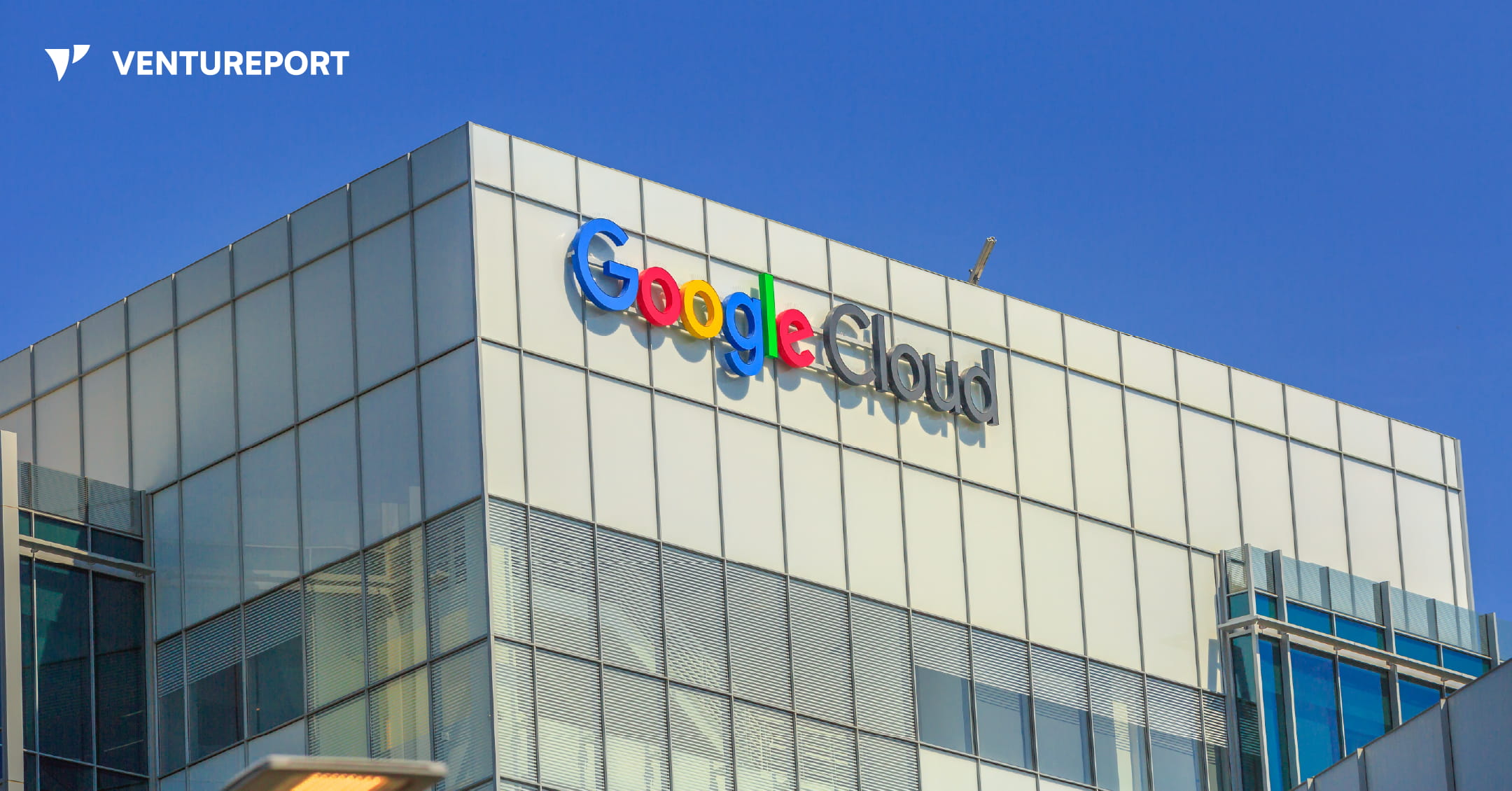
Google Cloud building. PHOTO: ADOBE STOCK
Enterprise interest in AI has moved quickly from experimentation to execution. Many organizations have tested generative tools, but turning those tools into systems that can run inside daily operations remains a separate challenge. Cognizant, an IT services firm, is expanding its partnership with Google Cloud to help enterprises move from AI pilots to fully deployed, production-ready systems.
Cognizant and Google Cloud are deepening their collaboration around Google’s Gemini Enterprise and Google Workspace. Cognizant is deploying these tools across its own workforce first, using them to support internal productivity and collaboration. The idea is simple: test and refine the systems internally, then package similar capabilities for clients.
The focus of the partnership is what Cognizant calls “agentic AI.” In practical terms, this refers to AI systems that can plan, act and complete tasks with limited human input. Instead of generating isolated outputs, these systems are designed to fit into business workflows and carry out structured tasks.
To make that workable at scale, Cognizant is building delivery infrastructure around the technology. The company is setting up a dedicated Gemini Enterprise Center of Excellence and formalizing an Agent Development Lifecycle. This framework covers the full process, from early design and blueprinting to validation and production rollout. The aim is to give enterprises a clearer path from the AI concept to a deployed system.
Cognizant also plans to introduce a bundled productivity offering that combines Gemini Enterprise with Google Workspace. The targeted use cases are operational rather than experimental. These include collaborative content creation, supplier communications and other workflow-heavy processes that can be standardized and automated.
Beyond productivity tools, Cognizant is integrating Gemini into its broader service platforms. Through Cognizant Ignition, enabled by Gemini, the company supports early-stage discovery and prototyping while helping clients strengthen their data foundations. Its Agent Foundry platform provides pre-configured and no-code capabilities for specific use cases such as AI-powered contact centers and intelligent order management. These tools are designed to reduce the amount of custom development required for each deployment.
Scaling is another element of the strategy. Cognizant, a multi-year Google Cloud Data Partner of the Year award winner, says it will rely on a global network of Gemini-trained specialists to deliver these systems. The company is also expanding work tied to Google Distributed Cloud and showcasing capabilities through its Google Experience Zones and Gen AI Studios.
For Google Cloud, the partnership reinforces its enterprise AI ecosystem. Cloud providers can offer models and infrastructure, but enterprise adoption often depends on service partners that can integrate tools into existing systems and manage ongoing operations. By aligning closely with Cognizant, Google strengthens its ability to move Gemini from platform capability to production deployment.
The announcement does not introduce a new AI model. Instead, it reflects a shift in emphasis. The core question is no longer whether AI tools exist, but how they are implemented, governed and scaled across large organizations. Cognizant’s expanded role suggests that execution frameworks, internal deployment and structured delivery models are becoming central to how enterprises approach AI.
In that sense, the partnership is less about new technology and more about operational maturity. It highlights how AI is moving from isolated pilots to managed systems embedded in business processes — a transition that will likely define the next phase of enterprise adoption.