
Startup employee reviewing business metrics on an AI-powered dashboard. PHOTO: FREEPIK
Examining the shift from fast answers to verified intelligence in enterprise AI.
Updated
November 28, 2025 4:18 PM
Startup employee reviewing business metrics on an AI-powered dashboard. PHOTO: FREEPIK
Neuron7.ai, a company that builds AI systems to help service teams resolve technical issues faster, has launched Neuro. It is a new kind of AI agent built for environments where accuracy matters more than speed. From manufacturing floors to hospital equipment rooms, Neuro is designed for situations where a wrong answer can halt operations.
What sets Neuro apart is its focus on reliability. Instead of relying solely on large language models that often produce confident but inaccurate responses, Neuro combines deterministic AI — which draws on verified, trusted data — with autonomous reasoning for more complex cases. This hybrid design helps the system provide context-aware resolutions without inventing answers or “hallucinating”, a common issue that has made many enterprises cautious about adopting agentic AI.
“Enterprise adoption of agentic AI has stalled despite massive vendor investment. Gartner predicts 40% of projects will be canceled by 2027 due to reliability concerns”, said Niken Patel, CEO and Co-Founder of Neuron7. “The root cause is hallucinations. In service operations, outcomes are binary. An issue is either resolved or it is not. Probabilistic AI that is right only 70% of the time fails 30% of your customers and that failure rate is unacceptable for mission-critical service”.
That concern shaped how Neuro was built. “We use deterministic guided fixes for known issues. No guessing, no hallucinations — and reserve autonomous AI reasoning for complex scenarios. What sets Neuro apart is knowing which mode to use. While competitors race to make agents more autonomous, we're focused on making service resolution more accurate and trusted”, Patel explained.
At the heart of Neuro is the Smart Resolution Hub, Neuron7’s central intelligence layer that consolidates service data, knowledge bases and troubleshooting workflows into one conversational experience. This means a technician can describe a problem — say, a diagnostic error in an MRI scanner — and Neuro can instantly generate a verified, step-by-step solution. If the problem hasn’t been encountered before, it can autonomously scan through thousands of internal and external data points to identify the most likely fix, all while maintaining traceability and compliance.
Neuro’s architecture also makes it practical for real-world use. It integrates seamlessly with enterprise systems such as Salesforce, Microsoft, ServiceNow and SAP, allowing companies to embed it within their existing support operations. Early users of Neuron7’s platform have reported measurable improvements — faster resolutions, higher customer satisfaction and reduced downtime — thanks to guided intelligence that scales expert-level problem solving across teams.
The timing of Neuro’s debut feels deliberate. As organizations look to move past the hype of generative AI, trust and accountability have become the new benchmarks. AI systems that can explain their reasoning and stay within verifiable boundaries are emerging as the next phase of enterprise adoption.
“The market has figured out how to build autonomous agents”, Patel said. “The unsolved problem is building accurate agents for contexts where errors have consequences. Neuro fills that gap”.
Neuron7 is building a system that knows its limits — one that reasons carefully, acts responsibly and earns trust where it matters most. In a space dominated by speculation, that discipline may well redefine what “intelligent” really means in enterprise AI.
Keep Reading
Mainland giants accelerate expansion as local players face unprecedented competition.
Updated
November 28, 2025 4:18 PM
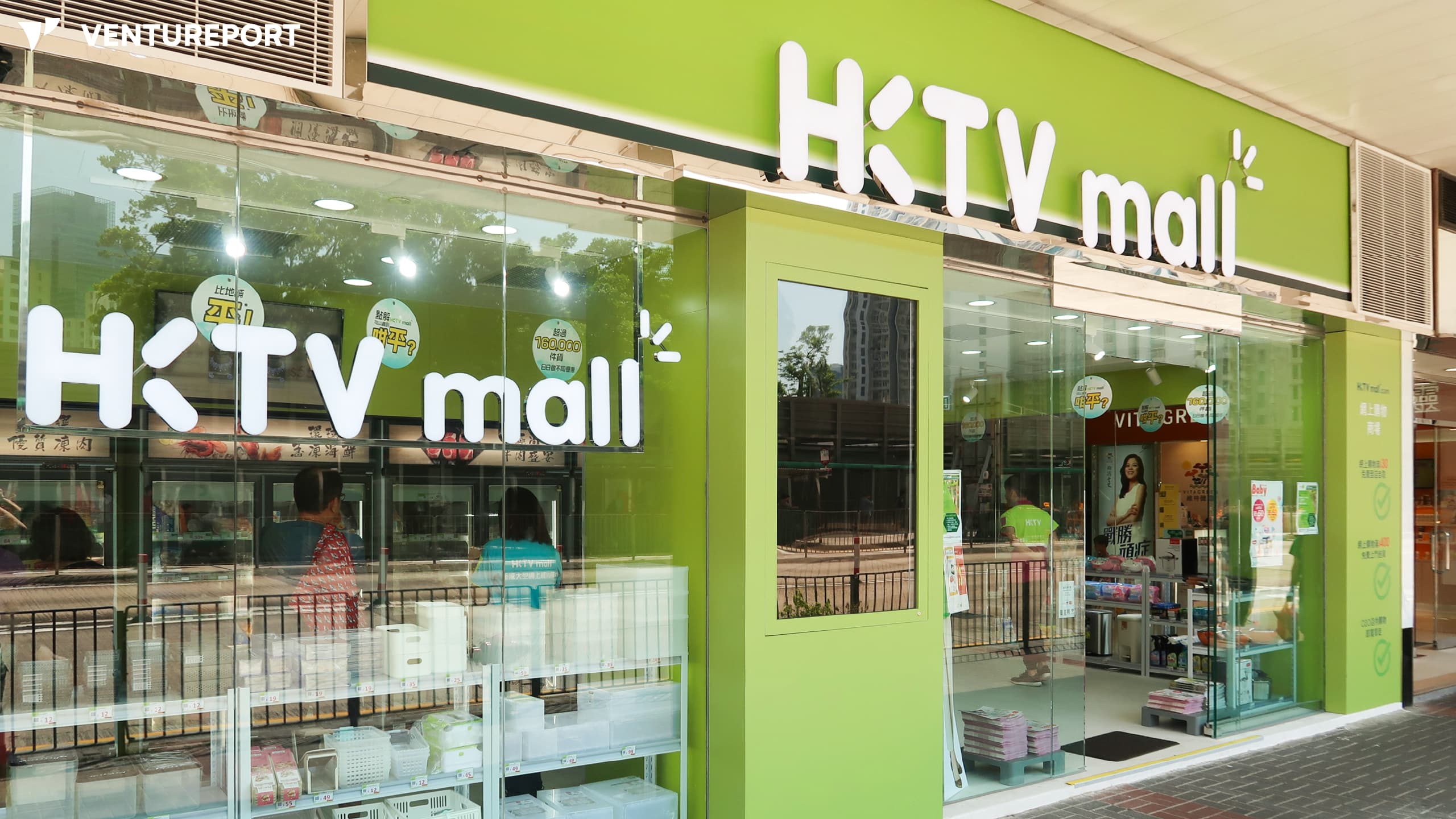
HKTV Mall in Amoy Plaza. PHOTO: WIKIPEDIA USER -WPCPEY
Hong Kong is entering a new phase of competition as mainland platforms accelerate their expansion into the city, turning it into a frontline testing ground for Chinese companies preparing to push into global markets. With retail, logistics and food-delivery businesses all reshaped in the past year, Hong Kong has become the closest international environment where mainland firms can experiment with pricing, supply chains and customer behaviour under a familiar regulatory and cultural framework.
The shift became especially clear this week. At HKTVmall’s Vision Day on November 11, 2025, CEO Ricky Wong warned that Hong Kong’s traditional retail model is facing its toughest moment yet. He said the biggest threat is not mainland competitors like Taobao, JD.com or Pinduoduo entering Hong Kong, but the city’s longstanding dependence on physical shopping. If local retailers do not evolve, he said, they risk becoming “very easy to die of thirst in the desert”. Wong even welcomed the rise of mainland e-commerce giants, arguing that the more players enter the city, the faster consumers will shift online — a transition HKTVmall relies on for growth.
Yet his optimism is layered over a challenging reality. HKTVmall’s own numbers reflect pressure from competition and changing consumer habits. The company reported average daily GMV of HK$22.2 million during the latest shopping festival season — up 2.8% month-on-month but still down 4.3% compared year-on-year — showing that even established online platforms are struggling to maintain momentum as mainland entrants squeeze prices and widen product selection.
The city’s food-delivery market illustrates the shift even more sharply. Deliveroo, once the fastest-growing platform in Hong Kong and at one point holding more than half of the market, officially shut down in April this year after a long decline. Its trajectory mirrored the sector’s upheaval: the company surged during the pandemic but lost ground after restrictions eased, first overtaken by Foodpanda and then pressured heavily by Meituan-backed Keeta, which entered Hong Kong in 2023 and quickly seized about 30% of citywide orders.
Deliveroo’s exit and the handover of parts of its business to Foodpanda did little to stabilise the market. Keeta’s rapid expansion instead pushed Foodpanda onto the defensive, leaving two major players competing in a market shaped by mainland-style pricing and operations. Hong Kong’s delivery sector, once dominated by global firms, is increasingly defined by Chinese platforms optimizing speed and efficiency at a scale few competitors can match.
These changes are unfolding as Chinese companies shift their focus toward new global markets.
With China reducing its reliance on the US and EU and exports steadily moving toward ASEAN, Hong Kong has become a strategic launchpad. The city’s proximity, language familiarity and regulatory structure make it the nearest international setting where Chinese firms can test overseas strategies before expanding into Southeast Asia, the Middle East or Latin America. The result is a competitive intensity that local companies have rarely experienced. Retailers face price pressure they can’t match, local platforms are losing ground to mainland giants and global players are struggling to stay in the game.
Consumers benefit from lower prices, faster delivery and wider choice — but for Hong Kong businesses, the landscape has turned unforgiving. Mainland companies are not treating Hong Kong as a final destination but as the first stop in a broader global push. That positioning is reshaping the city’s entire consumer economy. As more mainland firms look outward, Hong Kong’s role as a testing ground will only deepen and the first players to feel the impact will be those operating closest to the consumer.