
A Massachusetts startup advances scalable light-control tech for AR, AI and imaging markets
Updated
February 27, 2026 3:59 PM

Myrias Optics' Nanoimprinted All-inorganic Metaoptic. PHOTO: MYRIAS OPTICS
Myrias Optics, a Massachusetts-based optical technology startup, has raised US$2.1 million in a Seed 1 financing round to accelerate the commercialization of its advanced light-control technology. The round was led by MassVentures, with participation from existing investors Hoss Investment Inc., Maroon Venture Partners and Tenon Venture Partners, as well as new investors Mill Town Capital, TiE Boston Angels and Doug Crane. This new round follows a US$3.3 million seed financing completed in December 2023, led by Asia Optical, and a US$1.5 million Direct-to-Phase II award from the National Science Foundation. In total, Myrias has secured US$6.9 million to date, positioning it to move from development to scaled production.
The company builds ultra-thin, nano-patterned surfaces that precisely control how light moves through a device. These structures replace or enhance traditional lenses and optical parts inside products such as augmented reality headsets, AI data center hardware, consumer electronics, industrial systems and medical imaging devices. The goal is straightforward: to deliver high optical performance while making the parts easier and more cost-effective to manufacture in large quantities.
Across industries such as augmented reality and AI infrastructure, manufacturers face a common challenge. They need highly precise light-guiding components that can withstand heat and long-term use. At the same time, those components must be produced consistently and at scale. Traditional semiconductor-style fabrication can be costly, while polymer-based optical manufacturing can face limits in durability and thermal stability.
Myrias addresses this gap by using inorganic materials and a nanoimprint manufacturing process to create stable, repeatable optical layers on wafers. This approach is designed to combine performance with manufacturability. In augmented reality systems, for example, the company’s technology enables higher viewing angles while remaining suitable for volume production. In AI data centers, the same material and process advantages support improved light transfer and stronger performance under demanding thermal conditions. These benefits also extend to advanced imaging systems in consumer, industrial and medical markets.
The new Seed 1 funding is intended to expand manufacturing capacity and scale pilot production lines. The company will also continue executing active customer programs. Myrias is already working with strategic partners and Tier 1 supply chain participants to integrate its waveguide and light-shaping solutions into commercial AR platforms, AI photonics systems and advanced imaging products. The capital, therefore, supports a clear next step: moving from validated prototypes to a steady commercial supply.
Keep Reading
Bindwell is testing a simple idea: use AI to design smarter, more targeted pesticides built for today’s farming challenges.
Updated
January 8, 2026 6:33 PM
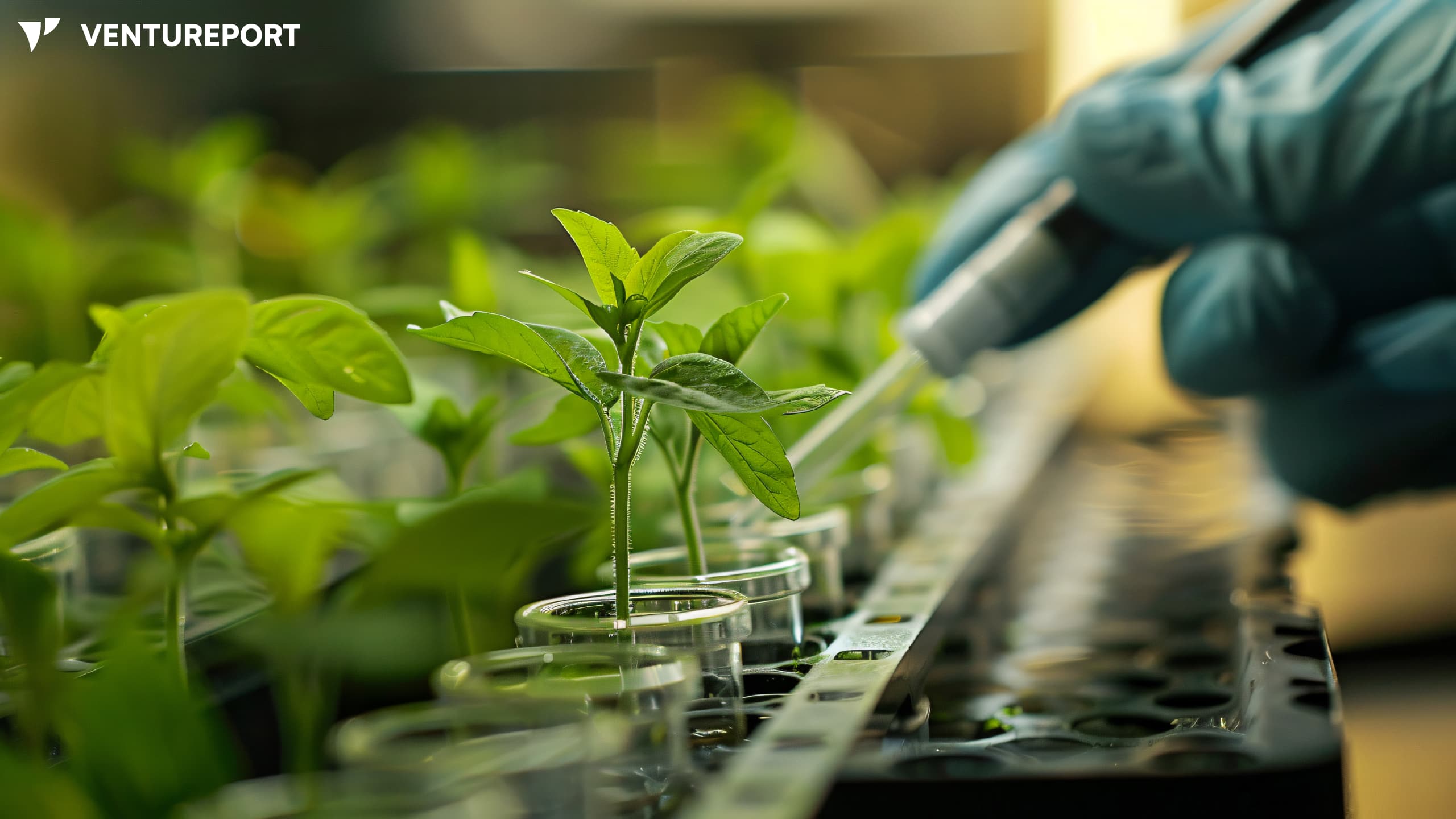
Researcher tending seedlings in a laboratory environment. PHOTO: FREEPIK
Bindwell, a San Francisco–based ag-tech startup using AI to design new pesticide molecules, has raised US$6 million in seed funding, co-led by General Catalyst and A Capital, with participation from SV Angel and Y Combinator founder Paul Graham. The round will help the company expand its lab in San Carlos, hire more technical talent and advance its first pesticide candidates toward validation.
Even as pesticide use has doubled over the last 30 years, farmers still lose up to 40% of global crops to pests and disease. The core issue is resistance: pests are adapting faster than the industry can update its tools. As a result, farmers often rely on larger amounts of the same outdated chemicals, even as they deliver diminishing returns.
Meanwhile, innovation in the agrochemical sector has slowed, leaving the industry struggling to keep up with rapidly evolving pests. This is the gap Bindwell is targeting. Instead of updating old chemicals, the company uses AI to find completely new compounds designed for today’s pests and farming conditions.
This vision is made even more striking by the people leading it. Bindwell was founded by 18-year-old Tyler Rose and 19-year-old Navvye Anand, who met at the Wolfram Summer Research Program in 2023. Both had deep ties to agriculture — Rose in China and Anand in India — witnessing up close how pest outbreaks and chemical dependence burdened farmers.
Filling the gap in today’s pesticide pipeline, Bindwell created an AI system that can design and evaluate new molecules long before they hit the lab. It starts with Foldwell, the company’s protein-structure model, which helps map the shapes of pest proteins so scientists know where a molecule should bind. Then comes PLAPT, which can scan through every known synthesized compound in just a few hours to see which ones might actually work. For biopesticides, they use APPT, a model tuned to spot protein-to-protein interactions and shown to outperform existing tools on industry benchmarks.
Bindwell isn’t selling AI tools. Instead, the company develops the molecules itself and licenses them to major agrochemical players. Owning the full discovery process lets the team bake in safety, selectivity and environmental considerations from day one. It also allows Bindwell to plug directly into the pipelines that produce commercial pesticides — just with a fundamentally different engine powering the science.
At present, the team is now testing its first AI-generated candidates in its San Carlos lab and is in early talks with established pesticide manufacturers about potential licensing deals. For Rose and Anand, the long-term vision is simple: create pest control that works without repeating the mistakes of the last half-century. As they put it, the goal is not to escalate chemical use but to design molecules that are more precise, less harmful and resilient against resistance from the start.