
A new bet on early heart failure detection and why women’s health is at the center.
Updated
January 8, 2026 6:28 PM
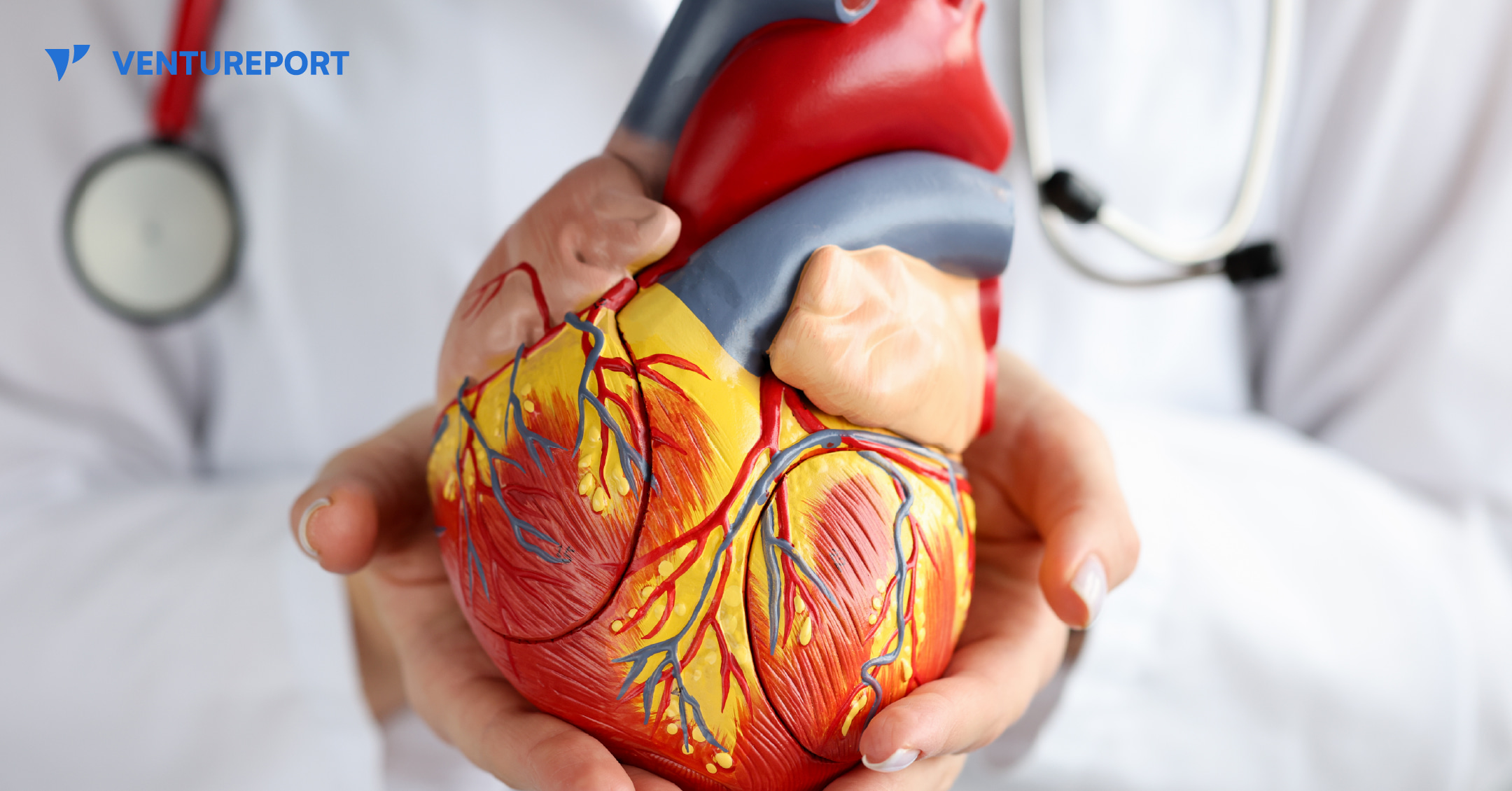
A doctor holding an artificial heart model. PHOTO: ADOBE STOCK
Heart disease does not always announce itself clearly, especially in women. Many of the symptoms are ordinary, including fatigue, shortness of breath and swelling. These signs are frequently dismissed or explained away. As a result, many women are diagnosed late, when treatment options are narrower and outcomes are worse. That diagnostic gap is the context behind a recent investment involving Ultromics and the American Heart Association’s Go Red for Women Venture Fund.
Ultromics is a health technology company that uses artificial intelligence to help doctors spot early signs of heart failure from routine heart scans. It has received a strategic investment from the American Heart Association’s Go Red for Women Venture Fund.
The focus of the investment is a long-standing blind spot in cardiac care. Heart failure with preserved ejection fraction, or HFpEF, affects millions of people worldwide, with women disproportionately impacted. It is one of the most common forms of heart failure, yet also one of the hardest to diagnose. Studies even show women are twice as likely as men to develop the condition and around 64% of cases go undiagnosed in routine clinical practice.
Ultromics works with a tool most patients already experience during heart care: the echocardiogram. There is no new scan and no added burden for patients. Its software analyzes standard heart ultrasound images and looks for subtle patterns that point to early heart failure. The goal is clarity. Give clinicians better signals earlier, before the disease advances.
“Heart failure with preserved ejection fraction is one of the most complex and overlooked diseases in cardiology. For too long, clinicians have been expected to diagnose it using tools that weren't built to detect it and as a result, many patients are identified too late,” said Ross Upton, PhD, CEO and Founder of Ultromics. “By augmenting physicians' decision making with EchoGo, we can help them recognize disease at an earlier stage and treat it more effectively.”
The stakes are high. Research suggests women are twice as likely as men to develop the condition and that a majority of cases are missed in routine clinical practice. That delay matters. New therapies can reduce hospitalizations and improve survival, but only if patients are diagnosed in time.
This is why early detection has become a priority for mission-driven investors. “Closing the diagnostic gap by recognizing disease before irreversible damage occurs is critical to improving health for women—and everyone,” said Tracy Warren, Senior Managing Director, Go Red for Women Venture Fund. “We are gratified to see technologies, such as this one, that are accepted by leading institutions as advances in the field of cardiovascular diagnostics. That's the kind of progress our fund was created to accelerate.”
Ultromics’ platform is already cleared by regulators for clinical use and is being deployed in hospitals across the US and UK. The company says its technology has analyzed hundreds of thousands of heart scans, helping clinicians reach clearer conclusions when traditional methods fall short.
Taken together, the investment reflects a broader shift in healthcare. Attention is shifting earlier—toward detection instead of reaction. Toward tools that fit into existing care rather than complicate it. In this case, the funding is not about introducing something new into the system. It is about seeing what has long been missed—and doing so in time.
Keep Reading
How a Korean biotech startup is using AI to move drug discovery from trial-and-error to precision design
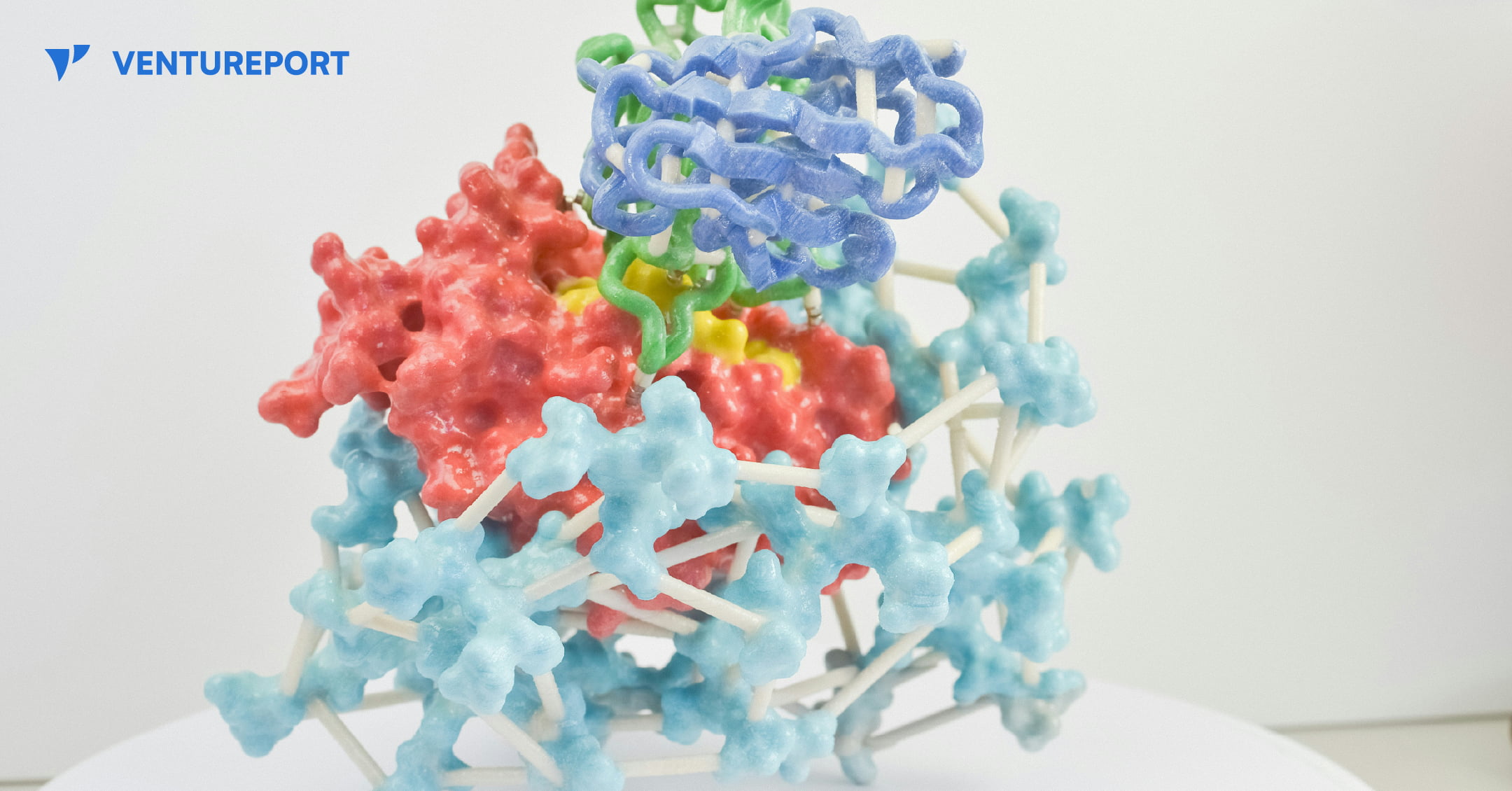
A close up of a protein structure model. PHOTO: UNSPLASH
For decades, drug discovery has relied on trial and error, with scientists testing thousands of molecules to find one that works. Galux, a South Korean biotech startup, is changing that by using AI to design proteins from scratch. This method, called “de novo” design, makes it possible to build precise new therapies instead of searching through existing ones.
The company recently announced a US$29 million Series B funding round, bringing its total capital to US$47 million.This significant investment attracted a substantial roster of institutional backers, including the Korea Development Bank (KDB), Yuanta Investment, SL Investment and NCORE Ventures. These firms joined existing investors such as InterVest, DAYLI Partners and PATHWAY Investment, as well as new participants including SneakPeek Investments, Korea Investment & Securities and Mirae Asset Securities.
At the core of the company’s work is a platform called GaluxDesign. Unlike many AI tools that only predict how existing proteins fold, this system uses deep learning and physics to create entirely new therapeutic antibodies. This “from scratch” approach lets the team go after so-called “undruggable” proteins. These are targets that traditional small-molecule drugs can’t reach because they lack clear binding pockets. By designing proteins to fit these complex shapes, Galux aims to unlock treatments that have stayed out of reach for decades. And that’s exactly why investors are paying attention.
The pharmaceutical industry is actively looking for faster and more efficient ways to develop new drugs, and Galux is built for exactly that. The company connects its AI platform directly to its own wet lab, where designs can be tested in real time. Each result feeds straight back into the system, sharpening the next round of models. This continuous loop speeds up discovery and improves precision at every step. It’s also why partners like Celltrion, LG Chem and Boehringer Ingelheim are already working with Galux.
Galux is no longer just trying to make drugs that stick to a target. The company now wants its AI to design medicines that actually work in the body and can be made at scale. In simple terms, a drug has to do more than bind to a disease—it must be stable, safe and strong enough to change how the illness behaves. Galux is moving into tougher targets such as ion channels and GPCRs. These play key roles in heart function and sensory signals. Ultimately, the goal is to show that AI-driven design can turn complex biology into real treatments. And instead of hunting blindly for a solution, the team is building exactly what they need.