
A closer look at how startups are turning local AI into global opportunity
Updated
March 24, 2026 6:25 PM
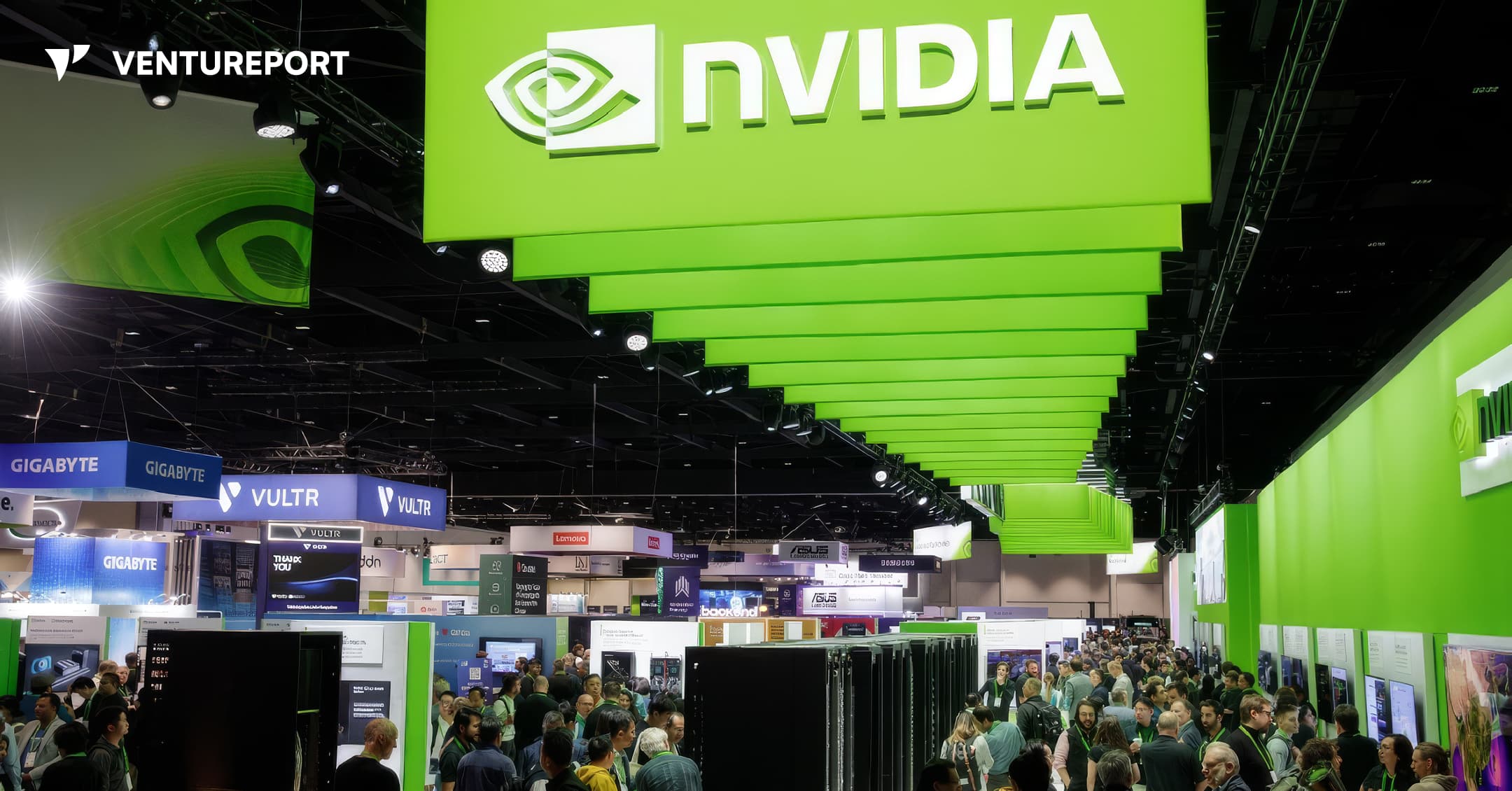
NVIDIA GTC 2026. PHOTO: NVIDIA
At NVIDIA GTC 2026 in Palo Alto, a group of 16 Taiwanese startups used the global AI stage to do more than showcase products—they tested how far their technologies could travel beyond domestic markets. The delegation, led by Startup Island TAIWAN Silicon Valley Hub with support from Taiwan’s National Development Council, reflected a broader shift in the country’s role within the AI ecosystem.
The startups represented a mix of emerging areas including digital twins, robotics, AI agents and healthcare, aligning closely with enterprise AI adoption trends. Some gained formal visibility within NVIDIA’s ecosystem, with companies such as MetAI and Spingence featured in the Inception Program, while six others presented their work in the conference’s poster gallery. These formats allowed them to engage directly with developers, enterprise users and potential partners rather than simply exhibiting technology.
A defining feature of Taiwan’s presence this year was how closely startups operated alongside established hardware companies such as ASUS, AAEON and Compal. This setup reflected a vertically integrated model where infrastructure and applications are developed together, offering a clearer path from product development to deployment. It also underscored Taiwan’s gradual shift from being primarily a hardware supplier to participating more actively across the full AI stack.
Activity around the conference extended well beyond the exhibition floor. A Taiwan Demo Day held during the week drew more than 1,000 registrations and nearly 600 in-person attendees, bringing startups into contact with close to 200 international investors. The event focused on structured introductions and deal flow, positioning startups in front of venture firms and corporate innovation teams looking for AI applications.
Alongside these formal sessions, Taiwan Startup Night provided a more informal but equally strategic setting. With over 100 curated participants, including founders, investors and corporate representatives, the gathering created space for early-stage conversations that could evolve into partnerships or market entry opportunities. These interactions, while less visible than on-stage presentations, are often where initial collaboration takes shape.
Taken together, the events around GTC point to a more coordinated approach to international expansion. Through platforms like Startup Island TAIWAN, the emphasis is not just on visibility but on building continuity—connecting startups with investors, partners and customers across multiple touchpoints in a single week. As AI development increasingly spans chips, systems and applications, Taiwan’s presence at GTC suggests a more integrated role, where the focus is as much on enabling global deployment as it is on developing the technology itself.
Keep Reading
A closer look at how machine intelligence is helping doctors see cancer in an entirely new light.
Updated
January 8, 2026 6:33 PM

Serratia marcescens colonies on BTB agar medium. PHOTO: UNSPLASH
Artificial intelligence is beginning to change how scientists understand cancer at the cellular level. In a new collaboration, Bio-Techne Corporation, a global life sciences tools provider, and Nucleai, an AI company specializing in spatial biology for precision medicine, have unveiled data from the SECOMBIT clinical trial that could reshape how doctors predict cancer treatment outcomes. The results, presented at the Society for Immunotherapy of Cancer (SITC) 2025 Annual Meeting, highlight how AI-powered analysis of tumor environments can reveal which patients are more likely to benefit from specific therapies.
Led in collaboration with Professor Paolo Ascierto of the University of Napoli Federico II and Istituto Nazionale Tumori IRCCS Fondazione Pascale, the study explores how spatial biology — the science of mapping where and how cells interact within tissue — can uncover subtle immune behaviors linked to survival in melanoma patients.
Using Bio-Techne’s COMET platform and a 28-plex multiplex immunofluorescence panel, researchers analyzed 42 pre-treatment biopsies from patients with metastatic melanoma, an advanced stage of skin cancer. Nucleai’s multimodal AI platform integrated these imaging results with pathology and clinical data to trace patterns of immune cell interactions inside tumors.
The findings revealed that therapy sequencing significantly influences immune activity and patient outcomes. Patients who received targeted therapy followed by immunotherapy showed stronger immune activation, marked by higher levels of PD-L1+ CD8 T-cells and ICOS+ CD4 T-cells. Those who began with immunotherapy benefited most when PD-1+ CD8 T-cells engaged closely with PD-L1+ CD4 T-cells along the tumor’s invasive edge. Meanwhile, in patients alternating between targeted and immune treatments, beneficial antigen-presenting cell (APC) and T-cell interactions appeared near tumor margins, whereas macrophage activity in the outer tumor environment pointed to poorer prognosis.
“This study exemplifies how our innovative spatial imaging and analysis workflow can be applied broadly to clinical research to ultimately transform clinical decision-making in immuno-oncology”, said Matt McManus, President of the Diagnostics and Spatial Biology Segment at Bio-Techne.
The collaboration between the two companies underscores how AI and high-plex imaging together can help decode complex biological systems. As Avi Veidman, CEO of Nucleai, explained, “Our multimodal spatial operating system enables integration of high-plex imaging, data and clinical information to identify predictive biomarkers in clinical settings. This collaboration shows how precision medicine products can become more accurate, explainable and differentiated when powered by high-plex spatial proteomics – not limited by low-plex or H&E data alone”.
Dr. Ascierto described the SECOMBIT trial as “a milestone in demonstrating the possible predictive power of spatial biomarkers in patients enrolled in a clinical study”.
The study’s broader message is clear: understanding where immune cells are and how they interact inside a tumor could become just as important as knowing what they are. As AI continues to map these microscopic landscapes, oncology may move closer to genuinely personalized treatment — one patient, and one immune network, at a time.