
A closer look at how startups are turning local AI into global opportunity
Updated
March 24, 2026 6:25 PM
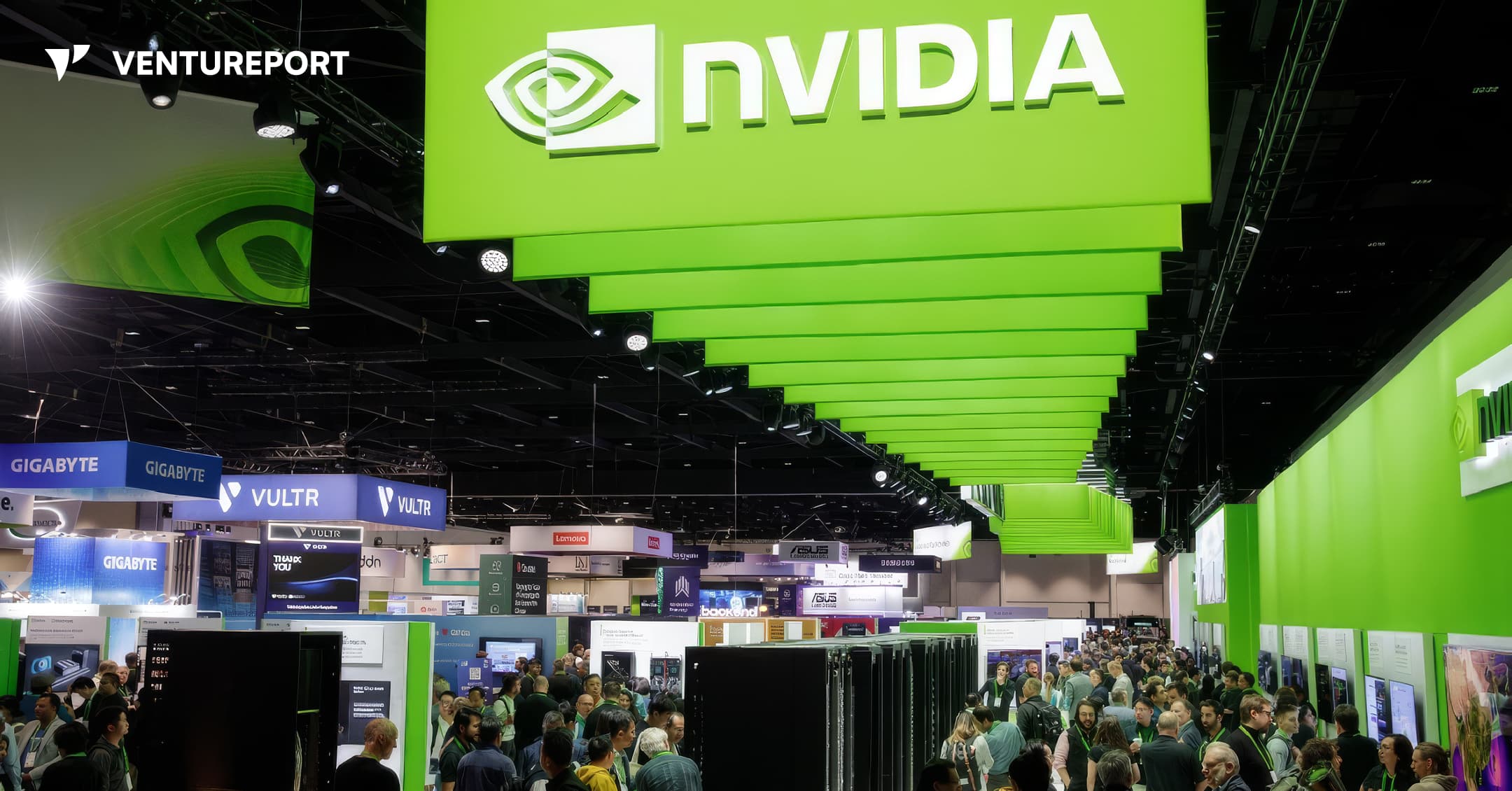
NVIDIA GTC 2026. PHOTO: NVIDIA
At NVIDIA GTC 2026 in Palo Alto, a group of 16 Taiwanese startups used the global AI stage to do more than showcase products—they tested how far their technologies could travel beyond domestic markets. The delegation, led by Startup Island TAIWAN Silicon Valley Hub with support from Taiwan’s National Development Council, reflected a broader shift in the country’s role within the AI ecosystem.
The startups represented a mix of emerging areas including digital twins, robotics, AI agents and healthcare, aligning closely with enterprise AI adoption trends. Some gained formal visibility within NVIDIA’s ecosystem, with companies such as MetAI and Spingence featured in the Inception Program, while six others presented their work in the conference’s poster gallery. These formats allowed them to engage directly with developers, enterprise users and potential partners rather than simply exhibiting technology.
A defining feature of Taiwan’s presence this year was how closely startups operated alongside established hardware companies such as ASUS, AAEON and Compal. This setup reflected a vertically integrated model where infrastructure and applications are developed together, offering a clearer path from product development to deployment. It also underscored Taiwan’s gradual shift from being primarily a hardware supplier to participating more actively across the full AI stack.
Activity around the conference extended well beyond the exhibition floor. A Taiwan Demo Day held during the week drew more than 1,000 registrations and nearly 600 in-person attendees, bringing startups into contact with close to 200 international investors. The event focused on structured introductions and deal flow, positioning startups in front of venture firms and corporate innovation teams looking for AI applications.
Alongside these formal sessions, Taiwan Startup Night provided a more informal but equally strategic setting. With over 100 curated participants, including founders, investors and corporate representatives, the gathering created space for early-stage conversations that could evolve into partnerships or market entry opportunities. These interactions, while less visible than on-stage presentations, are often where initial collaboration takes shape.
Taken together, the events around GTC point to a more coordinated approach to international expansion. Through platforms like Startup Island TAIWAN, the emphasis is not just on visibility but on building continuity—connecting startups with investors, partners and customers across multiple touchpoints in a single week. As AI development increasingly spans chips, systems and applications, Taiwan’s presence at GTC suggests a more integrated role, where the focus is as much on enabling global deployment as it is on developing the technology itself.
Keep Reading
Where smarter storage meets smarter logistics.
Updated
January 8, 2026 6:32 PM
.jpg)
Kioxia's flagship building at Yokohama Technology Campus. PHOTO: KIOXIA
E-commerce keeps growing and with it, the number of products moving through warehouses every day. Items vary more than ever — different shapes, seasonal packaging, limited editions and constantly updated designs. At the same time, many logistics centers are dealing with labour shortages and rising pressure to automate.
But today’s image-recognition AI isn’t built for this level of change. Most systems rely on deep-learning models that need to be adjusted or retrained whenever new products appear. Every update — whether it’s a new item or a packaging change — adds extra time, energy use and operational cost. And for warehouses handling huge product catalogs, these retraining cycles can slow everything down.
KIOXIA, a company known for its memory and storage technologies, is working on a different approach. In a new collaboration with Tsubakimoto Chain and EAGLYS, the team has developed an AI-based image recognition system that is designed to adapt more easily as product lines grow and shift. The idea is to help logistics sites automatically identify items moving through their workflows without constantly reworking the core AI model.
At the center of the system is KIOXIA’s AiSAQ software paired with its Memory-Centric AI technology. Instead of retraining the model each time new products appear, the system stores new product data — images, labels and feature information — directly in high-capacity storage. This allows warehouses to add new items quickly without altering the original AI model.
Because storing more data can lead to longer search times, the system also indexes the stored product information and transfers the index into SSD storage. This makes it easier for the AI to retrieve relevant features fast, using a Retrieval-Augmented Generation–style method adapted for image recognition.
The collaboration will be showcased at the 2025 International Robot Exhibition in Tokyo. Visitors will see the system classify items in real time as they move along a conveyor, drawing on stored product features to identify them instantly. The demonstration aims to illustrate how logistics sites can handle continuously changing inventories with greater accuracy and reduced friction.
Overall, as logistics networks become increasingly busy and product lines evolve faster than ever, this memory-driven approach provides a practical way to keep automation adaptable and less fragile.