
A closer look at how startups are turning local AI into global opportunity
Updated
March 24, 2026 6:25 PM
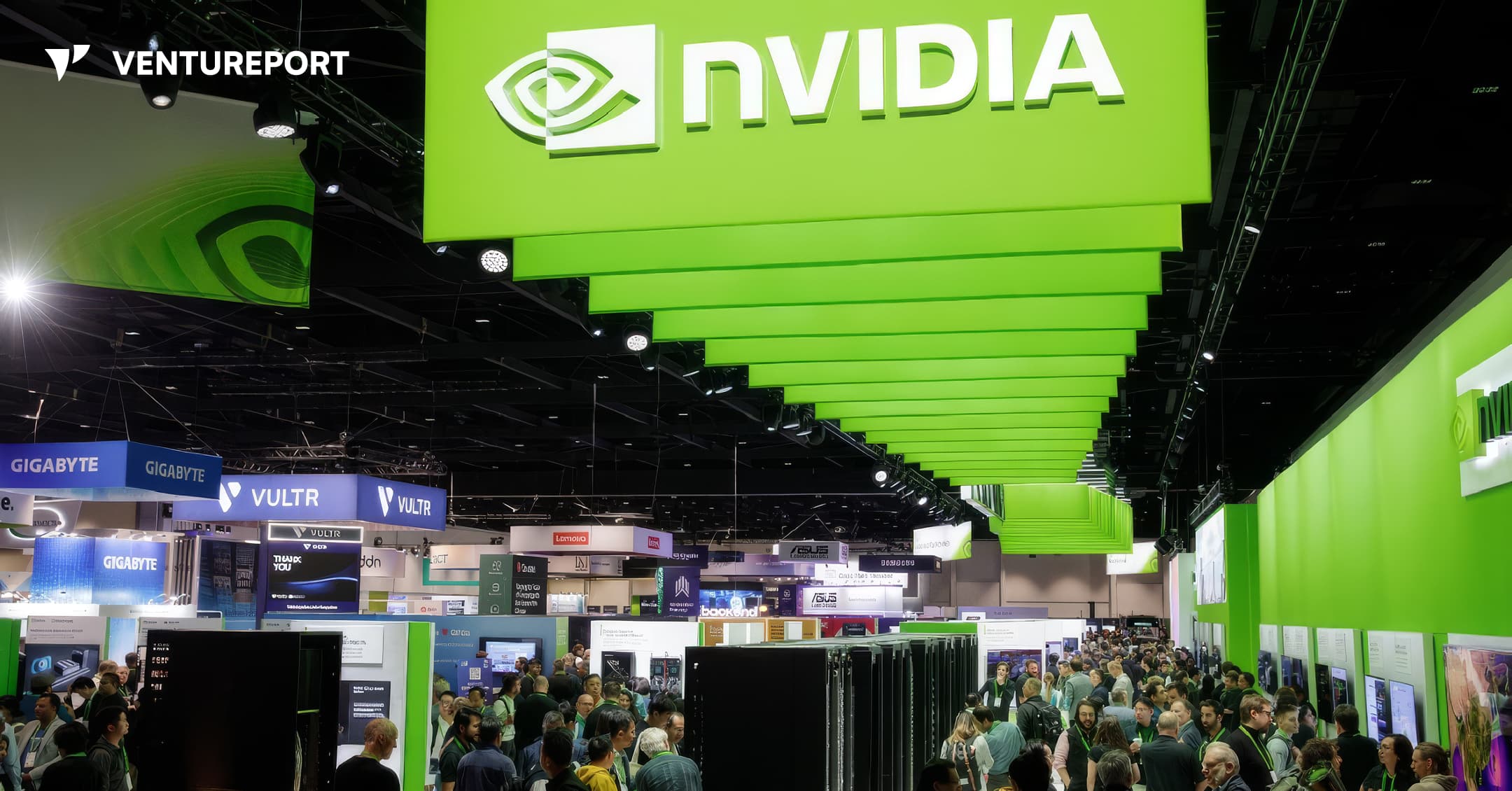
NVIDIA GTC 2026. PHOTO: NVIDIA
At NVIDIA GTC 2026 in Palo Alto, a group of 16 Taiwanese startups used the global AI stage to do more than showcase products—they tested how far their technologies could travel beyond domestic markets. The delegation, led by Startup Island TAIWAN Silicon Valley Hub with support from Taiwan’s National Development Council, reflected a broader shift in the country’s role within the AI ecosystem.
The startups represented a mix of emerging areas including digital twins, robotics, AI agents and healthcare, aligning closely with enterprise AI adoption trends. Some gained formal visibility within NVIDIA’s ecosystem, with companies such as MetAI and Spingence featured in the Inception Program, while six others presented their work in the conference’s poster gallery. These formats allowed them to engage directly with developers, enterprise users and potential partners rather than simply exhibiting technology.
A defining feature of Taiwan’s presence this year was how closely startups operated alongside established hardware companies such as ASUS, AAEON and Compal. This setup reflected a vertically integrated model where infrastructure and applications are developed together, offering a clearer path from product development to deployment. It also underscored Taiwan’s gradual shift from being primarily a hardware supplier to participating more actively across the full AI stack.
Activity around the conference extended well beyond the exhibition floor. A Taiwan Demo Day held during the week drew more than 1,000 registrations and nearly 600 in-person attendees, bringing startups into contact with close to 200 international investors. The event focused on structured introductions and deal flow, positioning startups in front of venture firms and corporate innovation teams looking for AI applications.
Alongside these formal sessions, Taiwan Startup Night provided a more informal but equally strategic setting. With over 100 curated participants, including founders, investors and corporate representatives, the gathering created space for early-stage conversations that could evolve into partnerships or market entry opportunities. These interactions, while less visible than on-stage presentations, are often where initial collaboration takes shape.
Taken together, the events around GTC point to a more coordinated approach to international expansion. Through platforms like Startup Island TAIWAN, the emphasis is not just on visibility but on building continuity—connecting startups with investors, partners and customers across multiple touchpoints in a single week. As AI development increasingly spans chips, systems and applications, Taiwan’s presence at GTC suggests a more integrated role, where the focus is as much on enabling global deployment as it is on developing the technology itself.
Keep Reading
Why investors are backing Applied Brain Research’s on-device voice AI approach.
Updated
January 28, 2026 5:53 PM

Plastic model of a human's brain. PHOTO: UNSPLASH
Applied Brain Research (ABR), a Canada-based startup, has closed its seed funding round to advance its work in “on-device voice AI”. The round was led by Two Small Fish Ventures, with its general partner Eva Lau joining ABR’s board, reflecting investor confidence in the company’s technical direction and market focus.
The round was oversubscribed, meaning more investors wanted to participate than the company had planned for. That response reflects growing interest in technologies that reduce reliance on cloud-based AI systems.
ABR is focused on a clear problem in voice-enabled products today. Most voice features depend on cloud servers to process speech, which can cause delays, increase costs, raise privacy concerns and limit performance on devices with small batteries or limited computing power.
ABR’s approach is built around keeping voice AI fully on-device. Instead of relying on cloud connectivity, its technology allows devices to process speech locally, enabling faster responses and more predictable performance while reducing data exposure.
Central to this approach is the company’s TSP1 chip, a processor designed specifically for handling time-based data such as speech. Built for real-time voice processing at the edge, TSP1 allows tasks like speech recognition and text-to-speech to run on smaller, power-constrained devices.
This specialization is particularly relevant as voice interfaces become more common across emerging products. Many edge devices such as wearables or mobile robotics cannot support traditional voice AI systems without compromising battery life or responsiveness. The TSP1 addresses this limitation by enabling these capabilities at significantly lower power levels than conventional alternatives. According to the company, full speech-to-text and text-to-speech can run at under 30 milliwatts of power, which is roughly 10 to 100 times lower than many existing alternatives. This level of efficiency makes advanced voice interaction feasible on devices where power consumption has long been a limiting factor.
That efficiency makes the technology applicable across a wide range of use cases. In augmented reality glasses, it supports responsive, hands-free voice control. In robotics, it enables real-time voice interaction without cloud latency or ongoing service costs. For wearables, it expands voice functionality without severely impacting battery life. In medical devices, it allows on-device inference while keeping sensitive data local. And in automotive systems, it enables consistent voice experiences regardless of network availability.
For investors, this combination of timing and technology is what stands out. Voice interfaces are becoming more common, while reliance on cloud infrastructure is increasingly seen as a limitation rather than a strength. ABR sits at the intersection of those two shifts.
With fresh funding in place, ABR is now working with partners across AR, robotics, healthcare, automotive and wearables to bring that future closer. For startup watchers, it’s a reminder that some of the most meaningful AI advances aren’t about bigger models but about making intelligence fit where it actually needs to live.