
A closer look at how startups are turning local AI into global opportunity
Updated
March 24, 2026 6:25 PM
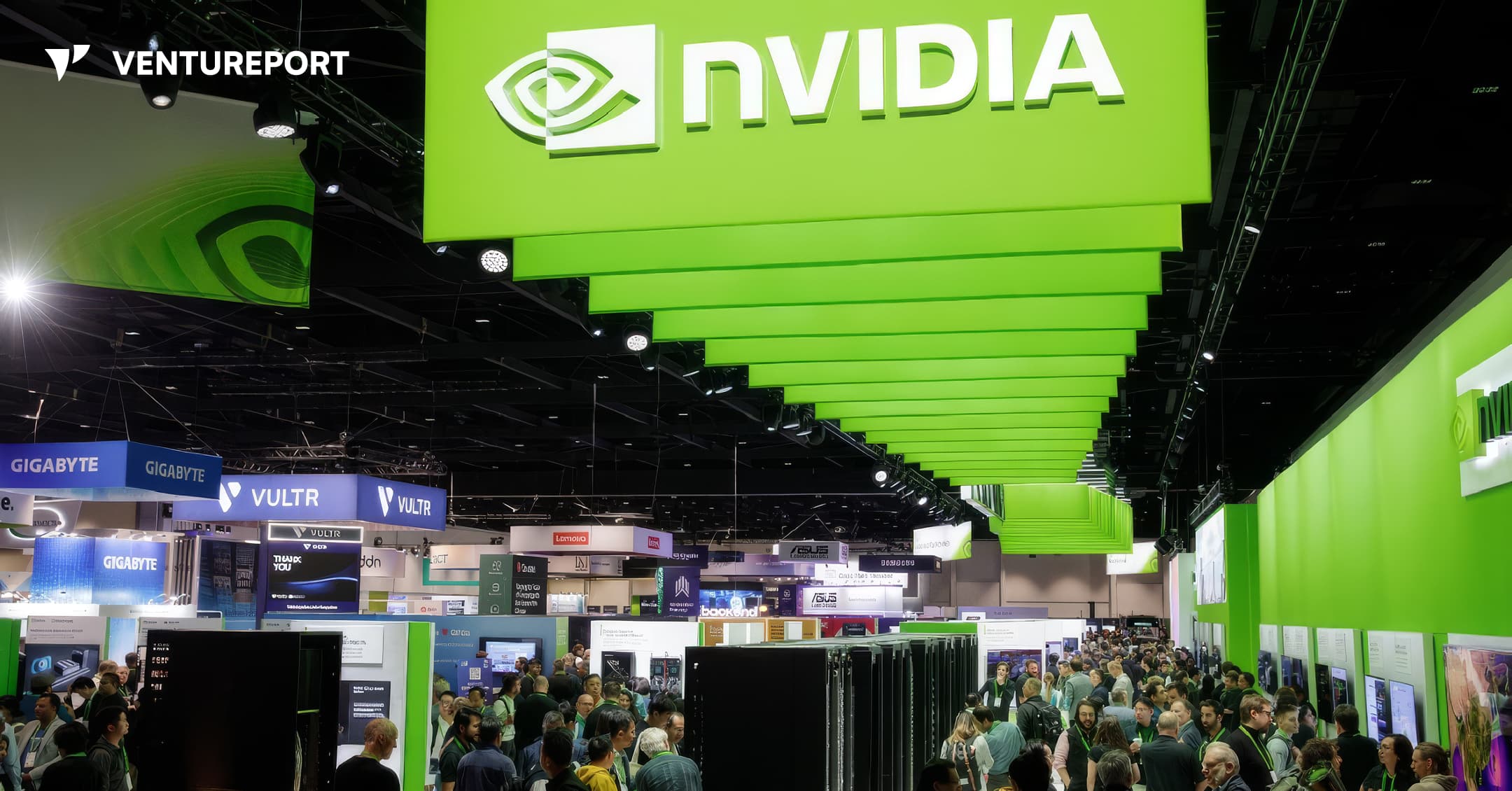
NVIDIA GTC 2026. PHOTO: NVIDIA
At NVIDIA GTC 2026 in Palo Alto, a group of 16 Taiwanese startups used the global AI stage to do more than showcase products—they tested how far their technologies could travel beyond domestic markets. The delegation, led by Startup Island TAIWAN Silicon Valley Hub with support from Taiwan’s National Development Council, reflected a broader shift in the country’s role within the AI ecosystem.
The startups represented a mix of emerging areas including digital twins, robotics, AI agents and healthcare, aligning closely with enterprise AI adoption trends. Some gained formal visibility within NVIDIA’s ecosystem, with companies such as MetAI and Spingence featured in the Inception Program, while six others presented their work in the conference’s poster gallery. These formats allowed them to engage directly with developers, enterprise users and potential partners rather than simply exhibiting technology.
A defining feature of Taiwan’s presence this year was how closely startups operated alongside established hardware companies such as ASUS, AAEON and Compal. This setup reflected a vertically integrated model where infrastructure and applications are developed together, offering a clearer path from product development to deployment. It also underscored Taiwan’s gradual shift from being primarily a hardware supplier to participating more actively across the full AI stack.
Activity around the conference extended well beyond the exhibition floor. A Taiwan Demo Day held during the week drew more than 1,000 registrations and nearly 600 in-person attendees, bringing startups into contact with close to 200 international investors. The event focused on structured introductions and deal flow, positioning startups in front of venture firms and corporate innovation teams looking for AI applications.
Alongside these formal sessions, Taiwan Startup Night provided a more informal but equally strategic setting. With over 100 curated participants, including founders, investors and corporate representatives, the gathering created space for early-stage conversations that could evolve into partnerships or market entry opportunities. These interactions, while less visible than on-stage presentations, are often where initial collaboration takes shape.
Taken together, the events around GTC point to a more coordinated approach to international expansion. Through platforms like Startup Island TAIWAN, the emphasis is not just on visibility but on building continuity—connecting startups with investors, partners and customers across multiple touchpoints in a single week. As AI development increasingly spans chips, systems and applications, Taiwan’s presence at GTC suggests a more integrated role, where the focus is as much on enabling global deployment as it is on developing the technology itself.
Keep Reading
The quiet infrastructure shift powering the next generation of data centers
Updated
February 12, 2026 1:21 PM

Peripheral Component Interconnect Express (PCIe) port on a motherboard, coloured yellow. PHOTO: UNSPLASH
Modern data centers operate on a simple yet fundamental principle: computers require the ability to share data extremely quickly. As AI and cloud systems grow, servers are no longer confined to a single rack. They are spread across many racks, sometimes across entire rooms. When that happens, moving data quickly and cleanly becomes harder.
Montage Technology, a Shanghai-based semiconductor company, builds the chips and connection systems that help servers exchange data without delays. This week, the company announced a new Active Electrical Cable (AEC) solution based on PCIe 6.x and CXL 3.x — two important standards used to connect CPUs, GPUs, network cards and storage inside modern data centers.
In simple terms, Montage’s new AEC product helps different parts of a data center “talk” to each other faster and more reliably, even when those parts are physically far apart.
As data centers grow to support AI and cloud workloads, their architecture is changing. Instead of everything sitting inside one rack, systems now stretch across multiple racks and even multiple rows. This creates a new problem: the longer the distance between machines, the harder it is to keep data signals clean and fast.
This is where Active Electrical Cables come in. Unlike regular copper cables, AECs include small electronic components inside the cable itself. These components strengthen and clean up the data signal as it travels, so information can move farther without getting distorted or delayed.
Montage’s solution uses its own retimer chip based on PCIe 6.x and CXL 3.x. A “retimer” refreshes the data signal so it arrives accurately at the other end. This allows servers, GPUs, storage devices and network cards to stay tightly connected even across longer distances inside large data centers.
The company also uses high-density cable designs and built-in monitoring tools so operators can track performance and fix issues faster. That makes large data centers easier to deploy and maintain.
According to Montage, the solution has already passed interoperability tests with CPUs, xPUs, PCIe switches and network cards. It has also been jointly developed with cable manufacturers in China and validated at the system level.
What makes this development important is not just speed. It is about scale. AI models, cloud services and real-time applications demand massive amounts of data to move continuously between machines. If that movement slows down, everything else slows with it.
By improving how machines connect across racks, Montage’s AEC solution supports the kind of infrastructure that next-generation AI and cloud systems depend on.
Looking ahead, the company plans to expand its high-speed interconnect products further, including work on PCIe 7.0 and Ethernet retimer technologies.
Quietly, in the background of every AI system and cloud service, there is a network of cables and chips doing the hard work of moving data. Montage’s latest launch focuses on making that hidden layer faster, cleaner and ready for the scale that modern computing now demands.