
A closer look at how startups are turning local AI into global opportunity
Updated
March 24, 2026 6:25 PM
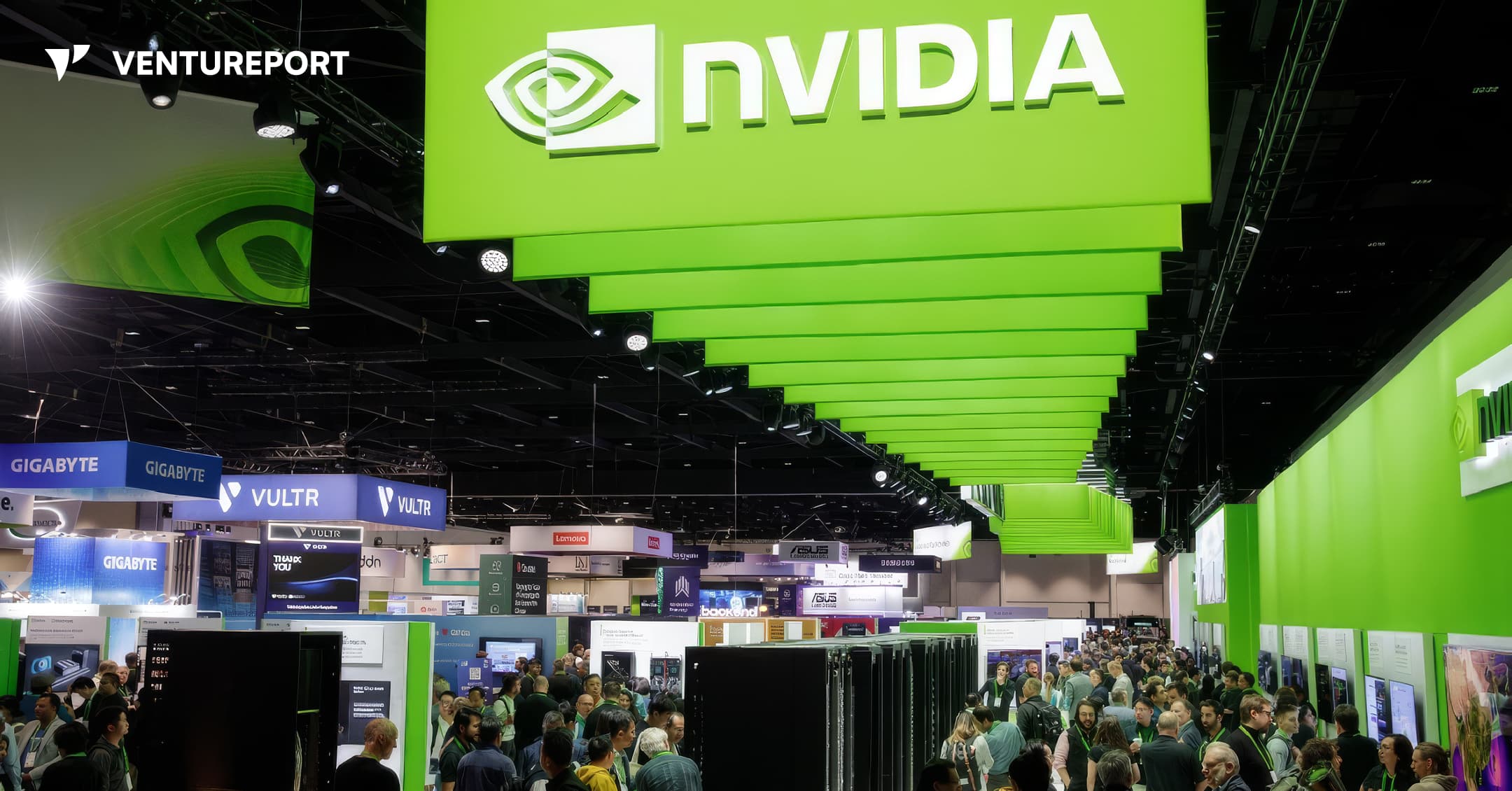
NVIDIA GTC 2026. PHOTO: NVIDIA
At NVIDIA GTC 2026 in Palo Alto, a group of 16 Taiwanese startups used the global AI stage to do more than showcase products—they tested how far their technologies could travel beyond domestic markets. The delegation, led by Startup Island TAIWAN Silicon Valley Hub with support from Taiwan’s National Development Council, reflected a broader shift in the country’s role within the AI ecosystem.
The startups represented a mix of emerging areas including digital twins, robotics, AI agents and healthcare, aligning closely with enterprise AI adoption trends. Some gained formal visibility within NVIDIA’s ecosystem, with companies such as MetAI and Spingence featured in the Inception Program, while six others presented their work in the conference’s poster gallery. These formats allowed them to engage directly with developers, enterprise users and potential partners rather than simply exhibiting technology.
A defining feature of Taiwan’s presence this year was how closely startups operated alongside established hardware companies such as ASUS, AAEON and Compal. This setup reflected a vertically integrated model where infrastructure and applications are developed together, offering a clearer path from product development to deployment. It also underscored Taiwan’s gradual shift from being primarily a hardware supplier to participating more actively across the full AI stack.
Activity around the conference extended well beyond the exhibition floor. A Taiwan Demo Day held during the week drew more than 1,000 registrations and nearly 600 in-person attendees, bringing startups into contact with close to 200 international investors. The event focused on structured introductions and deal flow, positioning startups in front of venture firms and corporate innovation teams looking for AI applications.
Alongside these formal sessions, Taiwan Startup Night provided a more informal but equally strategic setting. With over 100 curated participants, including founders, investors and corporate representatives, the gathering created space for early-stage conversations that could evolve into partnerships or market entry opportunities. These interactions, while less visible than on-stage presentations, are often where initial collaboration takes shape.
Taken together, the events around GTC point to a more coordinated approach to international expansion. Through platforms like Startup Island TAIWAN, the emphasis is not just on visibility but on building continuity—connecting startups with investors, partners and customers across multiple touchpoints in a single week. As AI development increasingly spans chips, systems and applications, Taiwan’s presence at GTC suggests a more integrated role, where the focus is as much on enabling global deployment as it is on developing the technology itself.
Keep Reading
A closer look at PMMI’s FastTrack initiative and why it matters for growing manufacturing firms
Updated
February 13, 2026 10:44 AM

Cardboard boxes in a warehouse. PHOTO: UNSPLASH
Large trade shows are built for scale. But for small and medium-sized manufacturers, that scale often creates distance between what’s on display and what they can actually use. Too many options, too little time, and very few tools designed for companies that are still growing. That mismatch is what PMMI is trying to correct with its new SMB FastTrack Program at PACK EXPO East 2026.
That is the problem PMMI is trying to address with its new SMB FastTrack Program, launching at PACK EXPO East 2026 in Philadelphia.
PMMI — the Association for Packaging and Processing Technologies — is the industry body behind the PACK EXPO trade shows and a central organization in the global packaging and processing sector. Through FastTrack, it has created a program (not an app or a product) designed to help small and mid-sized companies navigate the show more efficiently and connect with solutions that fit their scale.
The idea behind SMB FastTrack is simple: reduce friction. Instead of asking smaller firms to sort through hundreds of exhibitors and sessions on their own, the program curates what is most relevant to them. Exhibitors that offer flexible pricing, right-sized machinery, or SMB-focused services are clearly identified with visual icons in both the online directory and on the show floor. That way, a small manufacturer can quickly distinguish between enterprise-only vendors and partners that are realistically accessible.
The same logic carries into education. Rather than treating all attendees the same, PACK EXPO East 2026 will include a learning track specifically built around SMB realities. These sessions focus on issues that smaller teams actually face—how to hire and train workers, use AI without over-investing, improve food safety, cut operating costs, and adopt technology in stages. The goal is not inspiration, but applicability: content that reflects real constraints, not ideal scenarios.
Planning, too, is built into the structure of the program. Through a dedicated FastTrack landing page, participants can access curated supplier lists, recommended sessions, and planning tools that help organize their time before they ever step onto the show floor. Tools like category search and sustainability finders are meant to narrow choices quickly, turning a massive event into something manageable.
Seen together, these elements point to a broader intention. PMMI is not simply adding features—it is reshaping how smaller manufacturers experience a major industry event. Instead of competing for attention in a space built for scale, SMBs are given clearer paths to the people, tools, and knowledge that match where they actually are in their growth cycle.
What makes SMB FastTrack notable is not the technology behind it, but the intention behind it. PMMI is recognizing that progress for small and mid-sized manufacturers depends less on spectacle and more on fit—solutions that are accessible, affordable, and adaptable. The program is designed to help companies move with purpose, not pressure.
In an industry where visibility often follows size, SMB FastTrack represents a structural shift. It treats small and medium-sized manufacturers not as a subset of the audience, but as a distinct group with distinct needs. By doing so, PMMI is quietly redefining what a trade show can be: not just a marketplace of innovation, but a usable platform for companies still building their next stage of growth.