
A closer look at how startups are turning local AI into global opportunity
Updated
March 24, 2026 6:25 PM
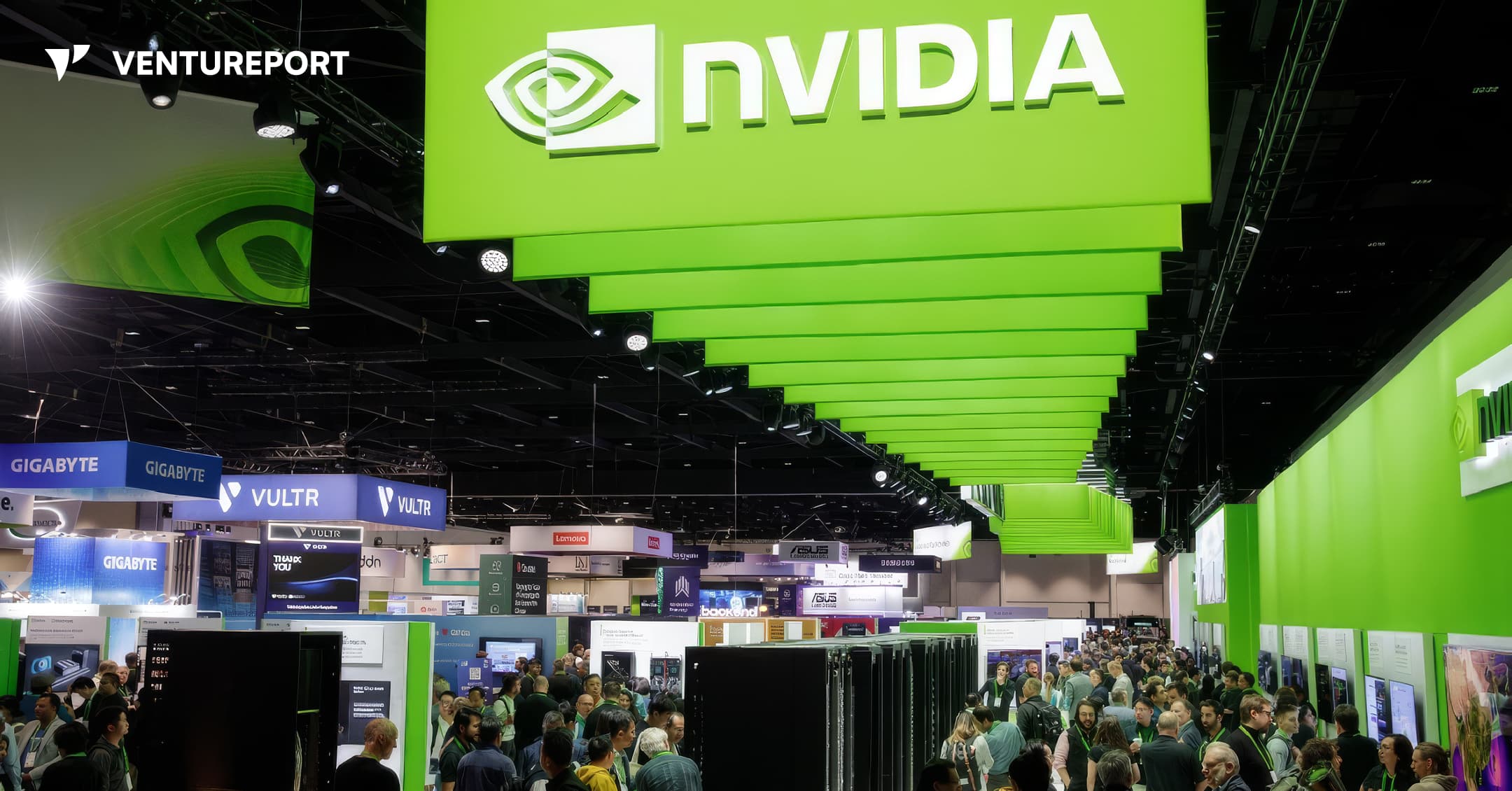
NVIDIA GTC 2026. PHOTO: NVIDIA
At NVIDIA GTC 2026 in Palo Alto, a group of 16 Taiwanese startups used the global AI stage to do more than showcase products—they tested how far their technologies could travel beyond domestic markets. The delegation, led by Startup Island TAIWAN Silicon Valley Hub with support from Taiwan’s National Development Council, reflected a broader shift in the country’s role within the AI ecosystem.
The startups represented a mix of emerging areas including digital twins, robotics, AI agents and healthcare, aligning closely with enterprise AI adoption trends. Some gained formal visibility within NVIDIA’s ecosystem, with companies such as MetAI and Spingence featured in the Inception Program, while six others presented their work in the conference’s poster gallery. These formats allowed them to engage directly with developers, enterprise users and potential partners rather than simply exhibiting technology.
A defining feature of Taiwan’s presence this year was how closely startups operated alongside established hardware companies such as ASUS, AAEON and Compal. This setup reflected a vertically integrated model where infrastructure and applications are developed together, offering a clearer path from product development to deployment. It also underscored Taiwan’s gradual shift from being primarily a hardware supplier to participating more actively across the full AI stack.
Activity around the conference extended well beyond the exhibition floor. A Taiwan Demo Day held during the week drew more than 1,000 registrations and nearly 600 in-person attendees, bringing startups into contact with close to 200 international investors. The event focused on structured introductions and deal flow, positioning startups in front of venture firms and corporate innovation teams looking for AI applications.
Alongside these formal sessions, Taiwan Startup Night provided a more informal but equally strategic setting. With over 100 curated participants, including founders, investors and corporate representatives, the gathering created space for early-stage conversations that could evolve into partnerships or market entry opportunities. These interactions, while less visible than on-stage presentations, are often where initial collaboration takes shape.
Taken together, the events around GTC point to a more coordinated approach to international expansion. Through platforms like Startup Island TAIWAN, the emphasis is not just on visibility but on building continuity—connecting startups with investors, partners and customers across multiple touchpoints in a single week. As AI development increasingly spans chips, systems and applications, Taiwan’s presence at GTC suggests a more integrated role, where the focus is as much on enabling global deployment as it is on developing the technology itself.
Keep Reading
The focus is no longer just AI-generated worlds, but how those worlds become structured digital products
Updated
March 17, 2026 1:01 AM

The inside of a pair of HTC VR goggles. PHOTO: UNSPLASH
As AI tools improve, creating 3D content is becoming faster and easier. However, building that content into interactive experiences still requires time, structure and technical work. That difference between generation and execution is where HTC VIVERSE and World Labs are focusing their new collaboration.
HTC VIVERSE is a 3D content platform developed by HTC. It provides creators with tools to build, refine and publish interactive virtual environments. Meanwhile, World Labs is an AI startup founded by researcher Fei-Fei Li and a team of machine learning specialists. The company recently introduced Marble, a tool that generates full 3D environments from simple text, image or video prompts.
While Marble can quickly create a digital world, that world on its own is not yet a finished experience. It still needs structure, navigation and interaction. This is where VIVERSE fits in. By combining Marble’s world generation with VIVERSE’s building tools, creators can move from an AI-generated scene to a usable, interactive product.
In practice, the workflow works in two steps. First, Marble produces the base 3D environment. Then, creators bring that environment into VIVERSE, where they add game mechanics, scenes and interactive elements. In this model, AI handles the early visual creation, while the human creator defines how users explore and interact with the world.
To demonstrate this process, the companies developed three example projects. Whiskerhill turns a Marble-generated world into a simple quest-based experience. Whiskerport connects multiple AI-generated scenes into a multi-level environment that users navigate through portals. Clockwork Conspiracy, built by VIVERSE, uses Marble’s generation system to create a more structured, multi-scene game. These projects are not just demos. They serve as proof that AI-generated worlds can evolve beyond static visuals and become interactive environments.
This matters because generative AI is often judged by how quickly it produces content. However, speed alone does not create usable products. Digital experiences still require sequencing, design decisions and user interaction. As a result, the real challenge is not generation, but integration — connecting AI output to tools that make it functional.
Seen in this context, the collaboration is less about a single product and more about workflow. VIVERSE provides a system that allows AI-generated environments to be edited and structured. World Labs provides the engine that creates those environments in the first place. Together, they are testing whether AI can fit directly into a full production pipeline rather than remain a standalone tool.
Ultimately, the collaboration reflects a broader change in creative technology. AI is no longer only producing isolated assets. It is beginning to plug into the larger process of building complete experiences. The key question is no longer how quickly a world can be generated, but how easily that world can be turned into something people can actually use and explore.