
What Overstory’s vegetation intelligence reveals about wildfire and outage risk.
Updated
January 15, 2026 8:03 PM

Aerial photograph of a green field. PHOTO: UNSPLASH
Managing vegetation around power lines has long been one of the biggest operational challenges for utilities. A single tree growing too close to electrical infrastructure can trigger outages or, in the worst cases, spark fires. With vast service territories, shifting weather patterns and limited visibility into changing landscape conditions, utilities often rely on inspections and broad wildfire-risk maps that provide only partial insight into where the most serious threats actually are.
Overstory, a company specializing in AI-powered vegetation intelligence, addresses this visibility gap with a platform that uses high-resolution satellite imagery and machine-learning models to interpret vegetation conditions in detail.Instead of assessing risk by region, terrain type or outdated maps, the system evaluates conditions tree by tree. This helps utilities identify precisely where hazards exist and which areas demand immediate intervention—critical in regions where small variations in vegetation density, fuel type or moisture levels can influence how quickly a spark might spread.
At the core of this technology is Overstory’s proprietary Fuel Detection Model, designed to identify vegetation most likely to ignite or accelerate wildfire spread. Unlike broad, publicly available fire-risk maps, the model analyzes the specific fuel conditions surrounding electrical infrastructure. By pinpointing exact locations where certain fuel types or densities create elevated risk, utilities can plan targeted wildfire-mitigation work rather than relying on sweeping, resource-heavy maintenance cycles.
This data-driven approach is reshaping how utilities structure vegetation-management programs. Having visibility into where risks are concentrated—and which trees or areas pose the highest threat—allows teams to prioritize work based on measurable evidence. For many utilities, this shift supports more efficient crew deployment, reduces unnecessary trims and builds clearer justification for preventive action. It also offers a path to strengthening grid reliability without expanding operational budgets.
Overstory’s recent US$43 million Series B funding round, led by Blume Equity with support from Energy Impact Partners and existing investors, reflects growing interest in AI tools that translate environmental data into actionable wildfire-prevention intelligence. The investment will support further development of Overstory’s risk models and help expand access to its vegetation-intelligence platform.
Yet the company’s focus remains consistent: giving utilities sharper, real-time visibility into the landscapes they manage. By converting satellite observations into clear and actionable insights, Overstory’s AI system provides a more informed foundation for decisions that impact grid safety and community resilience. In an environment where a single missed hazard can have far-reaching consequences, early and precise detection has become an essential tool for preventing wildfires before they start.
Keep Reading
Humanoids are moving from research labs into real industries — and capital is finally catching up.
Updated
January 8, 2026 6:31 PM
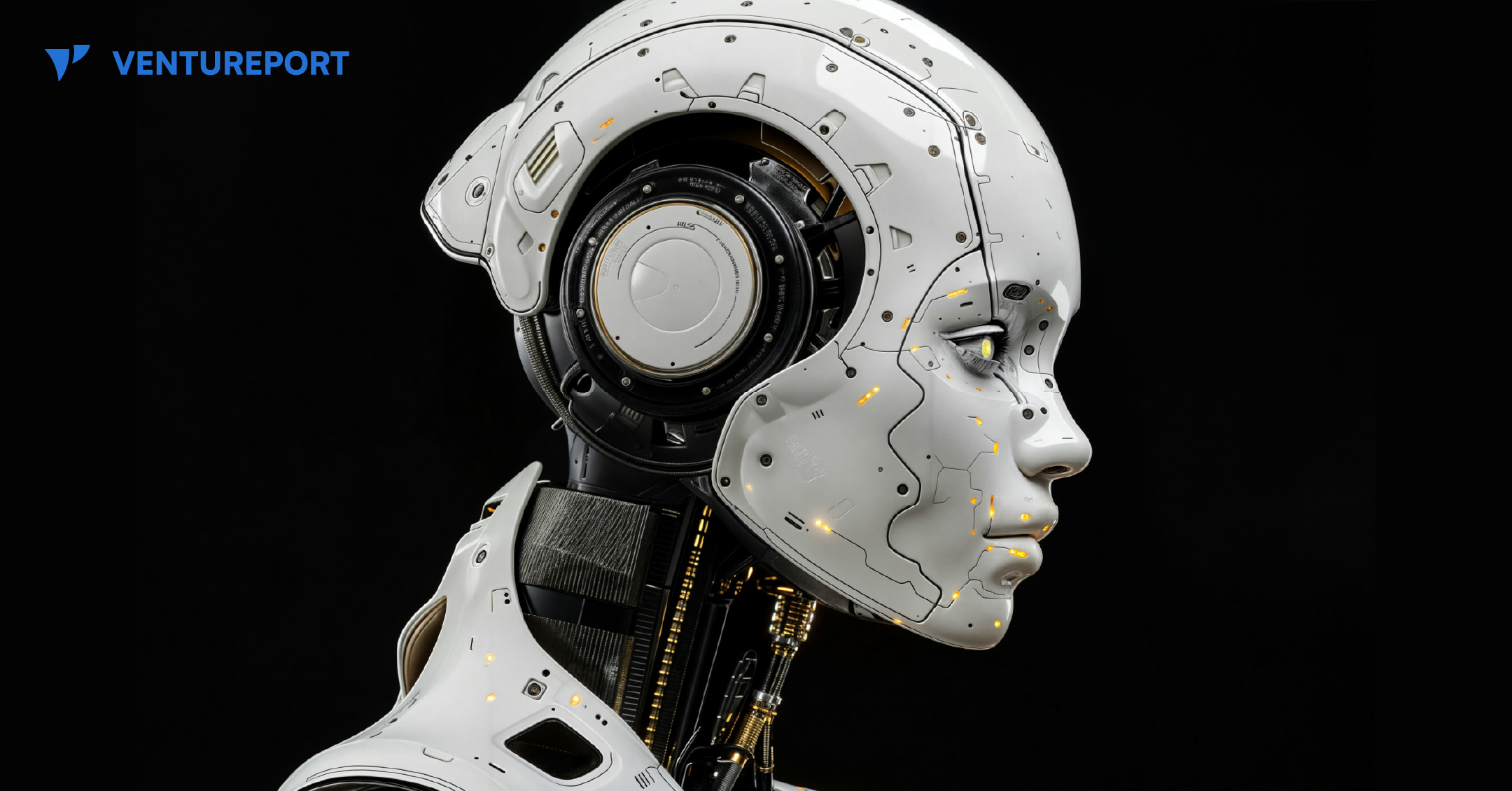
A face of a humanoid robot, side view on black background. PHOTO: UNSPLASH
Humanoid robots are shifting from sci-fi speculation to engineering reality, and the pace of progress is prompting investors to reassess how the next decade of physical automation will unfold. ALM Ventures has launched a new US$100 million early-stage fund aimed squarely at this moment—one where advances in robot control, embodied AI and spatial intelligence are beginning to converge into something commercially meaningful.
ALM Ventures Fund I, is designed for the earliest stages of company formation, targeting seed and pre-seed teams building the foundations of humanoid deployment. It’s a concentrated fund that seeks to take early ownership in a sector that many now consider the next major technological frontier.
For Founder and General Partner Modar Alaoui, the timing is not accidental. “After years of research, humanoids are finally entering a phase where performance, reliability and cost are converging toward commercial viability”, he said. “What the category needs now is focused capital and deep technical diligence to turn prototypes into scalable, enduring companies”.
That framing captures a shift happening across robotics: the field is moving out of the lab and into early commercial readiness. Improvements in perception systems, model-based reasoning and motion control are accelerating the transition. Advances in simulation are also lowering the complexity and cost of integrating humanoid platforms into real environments. As these systems become more capable, the gap between research prototypes and market-ready products is narrowing.
ALM Ventures is positioning itself at this inflection point. Fund I’s thesis centers on the core technologies required to scale humanoids safely and economically. This includes next-generation robot platforms, spatial reasoning engines, embodied intelligence models, world-modeling systems and the infrastructure needed for early deployment. Rather than chasing every robotics trend, the fund is concentrating on the essential layers that will determine whether humanoids can work reliably outside controlled settings.
The firm isn’t starting from zero. During the fund’s formation, ALM Ventures made ten early investments that directly align with its investment focus. The portfolio includes companies building at different layers of the humanoid stack, such as Sanctuary AI, Weave Robotics, Emancro, High Torque Robotics, MicroFactory, Mbodi, Adamo, Haptica Robotics, UMA and O-ID. The list reflects a broad but intentional spread, from hardware to intelligence to manufacturing approaches, all oriented toward enabling scalable physical AI.
Beyond capital, ALM Ventures has been shaping the ecosystem through its global Humanoids Summit series in Silicon Valley, London and Tokyo. The series gives the firm early visibility into emerging technologies, pre-incorporation teams and the senior leaders steering the global robotics landscape. That vantage point has helped the firm identify where commercialization is truly taking root and where bottlenecks still exist.
The rise of humanoids is often compared to the early days of self-driving cars: a long arc of research suddenly meeting an acceleration point. What separates this moment is that advances in embodied AI and spatial intelligence are giving robots a more intuitive understanding of the physical world, making them easier to deploy, teach and scale. ALM Ventures’ Fund I is an attempt to capture that transition while shaping the companies that could define the next technological era.
With US$100 million dedicated to the earliest builders in the space, ALM Ventures is signaling its belief that humanoids are not just another robotics cycle—they may be the next major platform shift in AI.