
The quiet infrastructure shift powering the next generation of data centers
Updated
January 30, 2026 11:42 AM

Peripheral Component Interconnect Express (PCIe) port on a motherboard, coloured yellow. PHOTO: UNSPLASH
Modern data centers operate on a simple yet fundamental principle: computers require the ability to share data extremely quickly. As AI and cloud systems grow, servers are no longer confined to a single rack. They are spread across many racks, sometimes across entire rooms. When that happens, moving data quickly and cleanly becomes harder.
Montage Technology, a Shanghai-based semiconductor company, builds the chips and connection systems that help servers exchange data without delays. This week, the company announced a new Active Electrical Cable (AEC) solution based on PCIe 6.x and CXL 3.x — two important standards used to connect CPUs, GPUs, network cards and storage inside modern data centers.
In simple terms, Montage’s new AEC product helps different parts of a data center “talk” to each other faster and more reliably, even when those parts are physically far apart.
As data centers grow to support AI and cloud workloads, their architecture is changing. Instead of everything sitting inside one rack, systems now stretch across multiple racks and even multiple rows. This creates a new problem: the longer the distance between machines, the harder it is to keep data signals clean and fast.
This is where Active Electrical Cables come in. Unlike regular copper cables, AECs include small electronic components inside the cable itself. These components strengthen and clean up the data signal as it travels, so information can move farther without getting distorted or delayed.
Montage’s solution uses its own retimer chip based on PCIe 6.x and CXL 3.x. A “retimer” refreshes the data signal so it arrives accurately at the other end. This allows servers, GPUs, storage devices and network cards to stay tightly connected even across longer distances inside large data centers.
The company also uses high-density cable designs and built-in monitoring tools so operators can track performance and fix issues faster. That makes large data centers easier to deploy and maintain.
According to Montage, the solution has already passed interoperability tests with CPUs, xPUs, PCIe switches and network cards. It has also been jointly developed with cable manufacturers in China and validated at the system level.
What makes this development important is not just speed. It is about scale. AI models, cloud services and real-time applications demand massive amounts of data to move continuously between machines. If that movement slows down, everything else slows with it.
By improving how machines connect across racks, Montage’s AEC solution supports the kind of infrastructure that next-generation AI and cloud systems depend on.
Looking ahead, the company plans to expand its high-speed interconnect products further, including work on PCIe 7.0 and Ethernet retimer technologies.
Quietly, in the background of every AI system and cloud service, there is a network of cables and chips doing the hard work of moving data. Montage’s latest launch focuses on making that hidden layer faster, cleaner and ready for the scale that modern computing now demands.
Keep Reading
The collaboration between Oversonic Robotics and STMicroelectronics highlights how robotics is beginning to fill gaps traditional automation cannot.
Updated
January 23, 2026 10:41 AM
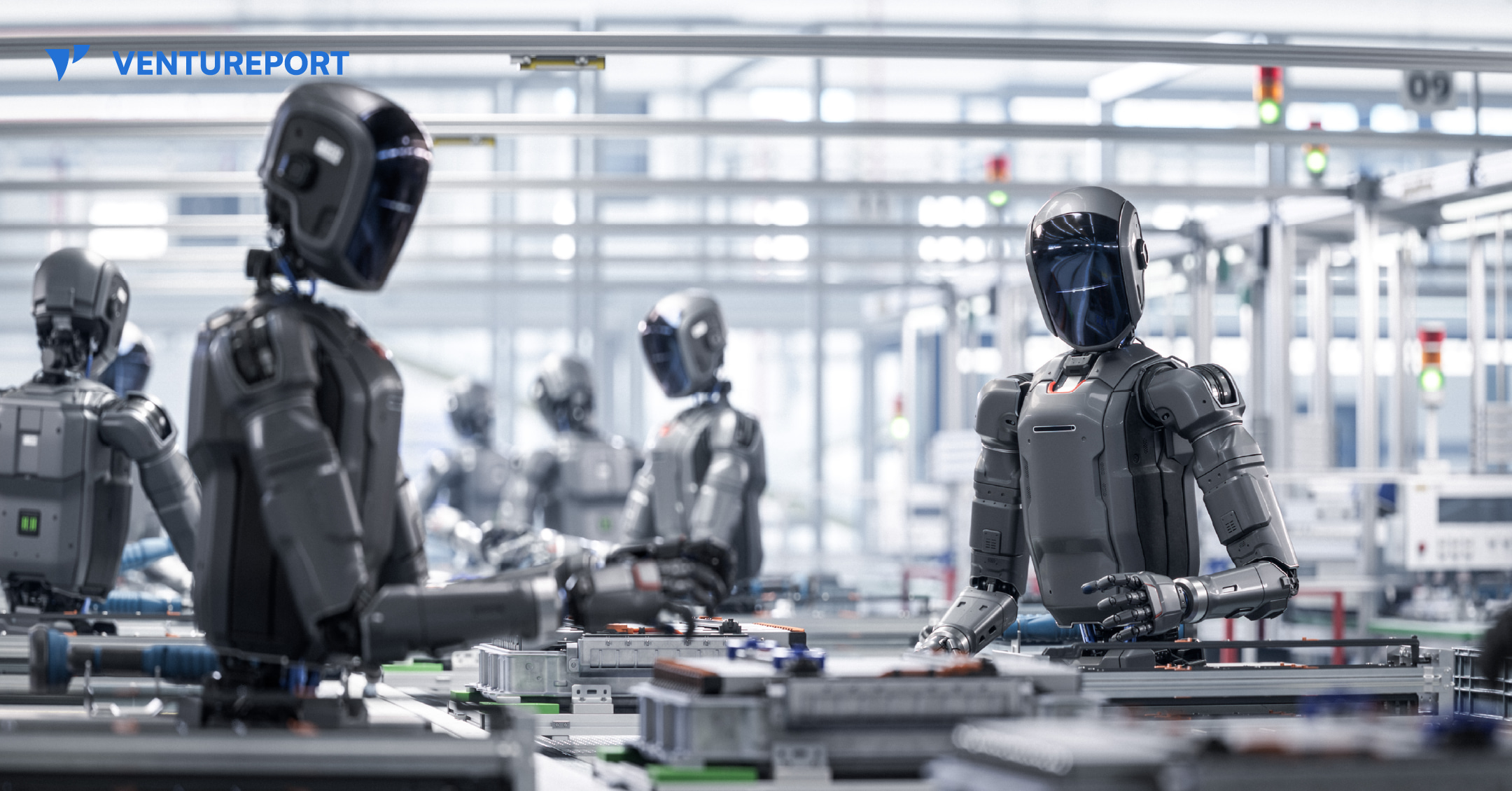
3D render of humanoid robots working in a factory assembly line. PHOTO: ADOBE STOCK
Oversonic Robotics, an Italian company known for building cognitive humanoid robots, has signed an agreement with STMicroelectronics, one of the world’s largest semiconductor manufacturers, to deploy humanoid robots inside semiconductor plants.
According to the companies, this is the first time cognitive humanoid robots will be used operationally inside semiconductor manufacturing facilities. And the first deployment has already taken place at ST’s advanced packaging and test plant in Malta.
At the center of the collaboration is RoBee, Oversonic’s humanoid robot. RoBee is designed to carry out support tasks within industrial environments, particularly where flexibility and interaction with human workers are required. In ST’s factories, the robots will assist with complex manufacturing and logistics flows linked to new semiconductor products. They are intended to work alongside existing automation systems, not replace them.
RoBee is notable for its ability to operate in environments shared with people. It is currently the only humanoid robot certified for use in both industrial and healthcare settings and is already in operation within several Italian companies. The robot is also being used in experimental hospital programs. That background helped position RoBee for deployment in tightly controlled manufacturing environments such as semiconductor plants.
Fabio Puglia, President of Oversonic Robotics, described the agreement as a milestone for deploying humanoid robots in complex industrial settings: “The partnership with STMicroelectronics is a great source of pride for us because it embodies the vision of cognitive robotics that Oversonic has brought to the industrial and healthcare markets. Being the first to introduce cognitive humanoid robots in a sophisticated production context such as semiconductors means measuring ourselves against the highest standards in terms of reliability, safety and operational continuity. This agreement represents a fundamental milestone for Oversonic and, more generally, for the industrial challenges these new machines are called to face in innovative and highly complex environments, alongside people and supporting their quality of work”.
From STMicroelectronics’ side, the use of humanoid robots is framed as part of a broader effort to manage growing manufacturing complexity. he company said RoBee will support complex tasks and help manage the intricate production flows required by newer semiconductor products. It is also expected to contribute to improved product quality and shorter manufacturing cycle times. The robots are designed to integrate with existing automation and software systems, helping improve safety and operational continuity.
In semiconductor manufacturing, precision and reliability leave little room for experimentation. Therefore, introducing humanoid robots into this environment signals a practical shift. It shows how robotics is starting to fill gaps that traditional automation has struggled to address.