
Can innovation truly deliver affordable housing to those who need it most?
Updated
January 8, 2026 6:35 PM

Close up of a 3D printer nozzle pouring concrete. PHOTO: ICON
The affordable housing crisis has become one of the most pressing challenges of our time. Across the globe, millions of people are struggling to secure a roof over their heads. In cities like San Francisco, housing prices are so high that even middle-income families find themselves shut out of the market.
The root of this crisis lies in a persistent imbalance: the supply of housing has failed to keep pace with growing demand. Factors such as high construction costs, bureaucratic hurdles, and limited available land in urban areas have made it increasingly difficult to build enough homes quickly and affordably. The result is a market where housing remains inaccessible to millions, even as the need becomes more urgent.
Technology is now stepping in to address these challenges in ways that were unimaginable just a decade ago. From streamlining construction processes to introducing new financing models and data-driven tools, tech innovations are rethinking how homes are built, financed, and accessed. But while these advancements offer hope, they also raise important questions: can they truly address the root causes of the housing crisis, or are they simply patching up a fractured system?
The housing crisis begins with supply shortage: we simply aren’t building enough homes. Traditional construction methods are expensive, slow, and reliant on labor that is increasingly hard to find. This is where technology is making its most significant impact. Startups likeICON and Veev are leading the charge, using cutting-edge solutions to make housing more efficient and affordable.
ICON, for instance, uses 3D printing to build homes faster and at a lower cost. By printing the structure of a house directly on-site, ICON reduces waste, labor requirements, and construction time. Entire neighborhoods of 3D-printed homes are already being built, showcasing how this technology can scale.
Veev, on the other hand, focuses on prefabricated construction. By manufacturing high-quality components like walls and steel frames in a controlled factory environment, Veev eliminates inefficiencies associated with on-site building. These components are then assembled on location, drastically reducing construction time and costs. This approach mirrors the principles of mass production seen in industries like automotive manufacturing, where efficiency and scalability are key.
While building more homes is essential, access to housing often depend son financing. For many people, especially those with low or irregular incomes, the traditional mortgage system presents insurmountable barriers. Fintech innovations are stepping in to make housing financing more inclusive and flexible.
Access to affordable housing often hinges on financing, and innovative financial technology (fintech) solutions are beginning to change the landscape. Some platforms are offering new ways for individuals to transition from renting to owning, while others are introducing shared equity models that reduce the traditional barriers of large down payments and strict credit requirements. For example, companies like Point use shared-equity financing, where homeowners receive funds in exchange for a percentage of their home’s future value instead of taking on traditional debt. Meanwhile, startups are building tools that automate and simplify and revolutionizing the mortgage process, making it easier for underserved populations to access loans tailored to their needs.
Blockchain technology is also changing the game. By digitizing land titles and creating secure records of financial transactions, blockchain reduces the complexity and difficulty of accessing credit, especially for those with limited traditional credit. This is particularly impactful in regions where informal economies dominate and traditional proof of income is scarce. These tools create a pathway to homeownership for individuals who would otherwise be excluded from the system.
Beyond building and financing, technology is transforming how we understand and address housing needs. Artificial intelligence (AI) is revolutionizing risk assessment in the mortgage industry by analyzing a broader range of financial behaviors, such as rent and utility payments, to provide a more inclusive picture of creditworthiness.
At the same time, AI and big data are helping policymakers and developers make smarter decisions about where and how to build. By analyzing population trends, commuting patterns, and infrastructure needs, these tools ensure that new housing developments are built in the right places, reducing wasteful construction and improving urban planning.
For example, startups are using 3D scanning and machine learning to map informal settlements and identify buildings at risk of collapse. These insights not only improve safety but also guide investment toward areas where housing is most desperately needed.
The housing crisis is one of the most complex challenges of our time, and technology alone cannot solve it. But it can provide powerful tools to address specific pain points, from streamlining construction to expanding access to financing. Startups like ICON, Veev, and Landis are proving that innovation can lower costs, improve efficiency, and make housing more inclusive.
However, the ultimate solution lies in a combination of technology, policy reform, and community engagement. Governments must work alongside tech innovators to create urban environments that prioritize affordability, sustainability, and accessibility.
The future of housing isn’t just about building more homes; it’s about building smarter, greener, and fairer cities where everyone has a place to call home. By integrating cutting-edge technologies with forward-thinking policies, we can move closer to a world where affordable housing is not an aspiration but a reality.
The question is no longer whether technology can solve the housing crisis—it’s how we will use it wisely to create lasting change.
Keep Reading
The collaboration between Oversonic Robotics and STMicroelectronics highlights how robotics is beginning to fill gaps traditional automation cannot.
Updated
January 23, 2026 10:41 AM
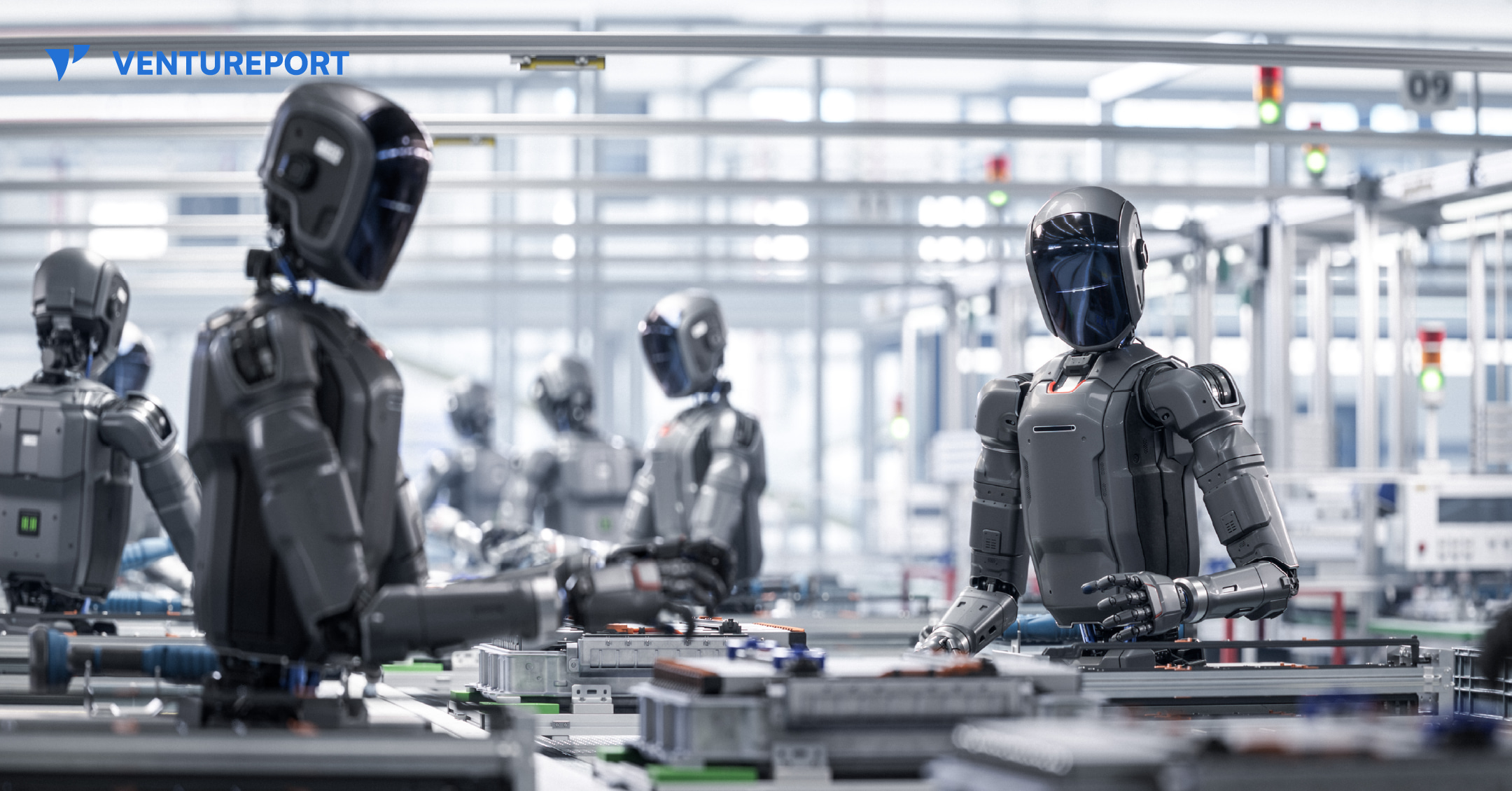
3D render of humanoid robots working in a factory assembly line. PHOTO: ADOBE STOCK
Oversonic Robotics, an Italian company known for building cognitive humanoid robots, has signed an agreement with STMicroelectronics, one of the world’s largest semiconductor manufacturers, to deploy humanoid robots inside semiconductor plants.
According to the companies, this is the first time cognitive humanoid robots will be used operationally inside semiconductor manufacturing facilities. And the first deployment has already taken place at ST’s advanced packaging and test plant in Malta.
At the center of the collaboration is RoBee, Oversonic’s humanoid robot. RoBee is designed to carry out support tasks within industrial environments, particularly where flexibility and interaction with human workers are required. In ST’s factories, the robots will assist with complex manufacturing and logistics flows linked to new semiconductor products. They are intended to work alongside existing automation systems, not replace them.
RoBee is notable for its ability to operate in environments shared with people. It is currently the only humanoid robot certified for use in both industrial and healthcare settings and is already in operation within several Italian companies. The robot is also being used in experimental hospital programs. That background helped position RoBee for deployment in tightly controlled manufacturing environments such as semiconductor plants.
Fabio Puglia, President of Oversonic Robotics, described the agreement as a milestone for deploying humanoid robots in complex industrial settings: “The partnership with STMicroelectronics is a great source of pride for us because it embodies the vision of cognitive robotics that Oversonic has brought to the industrial and healthcare markets. Being the first to introduce cognitive humanoid robots in a sophisticated production context such as semiconductors means measuring ourselves against the highest standards in terms of reliability, safety and operational continuity. This agreement represents a fundamental milestone for Oversonic and, more generally, for the industrial challenges these new machines are called to face in innovative and highly complex environments, alongside people and supporting their quality of work”.
From STMicroelectronics’ side, the use of humanoid robots is framed as part of a broader effort to manage growing manufacturing complexity. he company said RoBee will support complex tasks and help manage the intricate production flows required by newer semiconductor products. It is also expected to contribute to improved product quality and shorter manufacturing cycle times. The robots are designed to integrate with existing automation and software systems, helping improve safety and operational continuity.
In semiconductor manufacturing, precision and reliability leave little room for experimentation. Therefore, introducing humanoid robots into this environment signals a practical shift. It shows how robotics is starting to fill gaps that traditional automation has struggled to address.