
As airports grow more complex, the real innovation lies in making their systems simpler, faster, and easier to act on
Updated
March 24, 2026 5:55 PM

An airplane parked at Josep Tarradellas Barcelona-El Prat Airport. PHOTO: UNSPLASH
Airports are some of the most complex systems in the world. Every day, they manage thousands of flights, passengers, crew schedules, gates and ground operations—all moving at the same time. But much of this still runs on older software that doesn’t connect well, making simple decisions harder than they need to be.
This is the gap companies like AirportLabs are trying to address. Instead of relying on multiple disconnected systems, their approach brings airport operations into one cloud-based platform. The goal is straightforward: take scattered data and turn it into something teams can actually use in real time.
In practice, this means combining core systems like flight databases, resource management and display systems into a single interface. When everything is connected, airport staff can respond faster—whether it’s adjusting gate assignments, managing delays, or coordinating ground crews. Rather than reacting late, decisions can be made as situations unfold.
Another shift is how this technology is built. Traditional airport systems often require heavy on-site infrastructure and long deployment timelines. In contrast, cloud-based platforms remove much of that complexity. Updates are faster, systems are easier to scale and teams spend less time maintaining servers and more time improving operations.
What stands out is the speed of adoption. Instead of multi-year rollouts, newer systems can be implemented in weeks, allowing airports to see improvements much sooner.
At a broader level, this reflects a familiar pattern seen across industries. As operations become more data-heavy, the advantage shifts to those who can simplify complexity. In aviation, that doesn’t just mean better technology—it means making the entire system easier to run.
Keep Reading
The collaboration between Oversonic Robotics and STMicroelectronics highlights how robotics is beginning to fill gaps traditional automation cannot.
Updated
January 23, 2026 10:41 AM
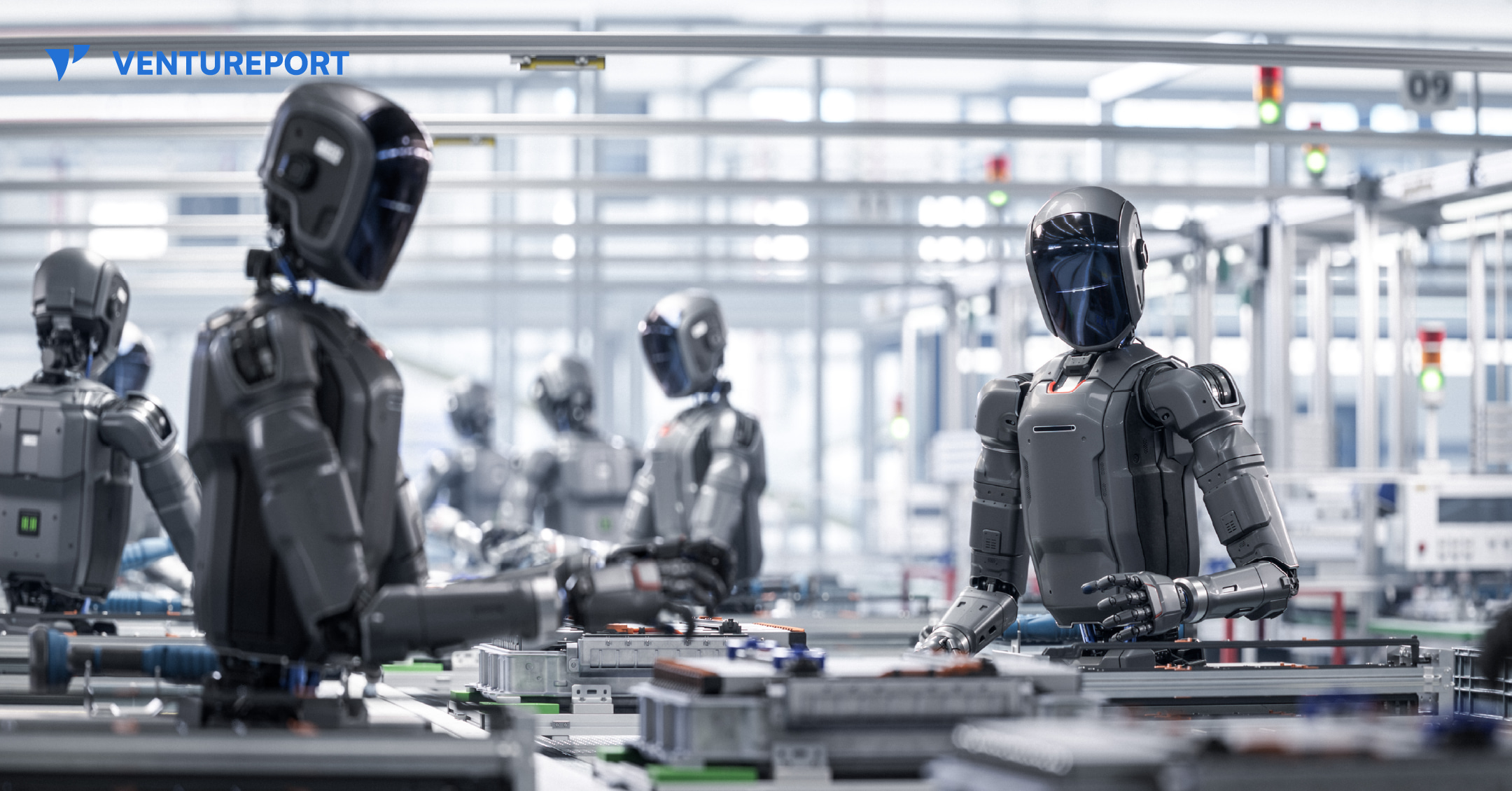
3D render of humanoid robots working in a factory assembly line. PHOTO: ADOBE STOCK
Oversonic Robotics, an Italian company known for building cognitive humanoid robots, has signed an agreement with STMicroelectronics, one of the world’s largest semiconductor manufacturers, to deploy humanoid robots inside semiconductor plants.
According to the companies, this is the first time cognitive humanoid robots will be used operationally inside semiconductor manufacturing facilities. And the first deployment has already taken place at ST’s advanced packaging and test plant in Malta.
At the center of the collaboration is RoBee, Oversonic’s humanoid robot. RoBee is designed to carry out support tasks within industrial environments, particularly where flexibility and interaction with human workers are required. In ST’s factories, the robots will assist with complex manufacturing and logistics flows linked to new semiconductor products. They are intended to work alongside existing automation systems, not replace them.
RoBee is notable for its ability to operate in environments shared with people. It is currently the only humanoid robot certified for use in both industrial and healthcare settings and is already in operation within several Italian companies. The robot is also being used in experimental hospital programs. That background helped position RoBee for deployment in tightly controlled manufacturing environments such as semiconductor plants.
Fabio Puglia, President of Oversonic Robotics, described the agreement as a milestone for deploying humanoid robots in complex industrial settings: “The partnership with STMicroelectronics is a great source of pride for us because it embodies the vision of cognitive robotics that Oversonic has brought to the industrial and healthcare markets. Being the first to introduce cognitive humanoid robots in a sophisticated production context such as semiconductors means measuring ourselves against the highest standards in terms of reliability, safety and operational continuity. This agreement represents a fundamental milestone for Oversonic and, more generally, for the industrial challenges these new machines are called to face in innovative and highly complex environments, alongside people and supporting their quality of work”.
From STMicroelectronics’ side, the use of humanoid robots is framed as part of a broader effort to manage growing manufacturing complexity. he company said RoBee will support complex tasks and help manage the intricate production flows required by newer semiconductor products. It is also expected to contribute to improved product quality and shorter manufacturing cycle times. The robots are designed to integrate with existing automation and software systems, helping improve safety and operational continuity.
In semiconductor manufacturing, precision and reliability leave little room for experimentation. Therefore, introducing humanoid robots into this environment signals a practical shift. It shows how robotics is starting to fill gaps that traditional automation has struggled to address.