
A step forward that could influence how smart contracts are designed and verified.
Updated
January 8, 2026 6:32 PM
ChainGPT's robot mascot. IMAGE: CHAINGPT
A new collaboration between ChainGPT, an AI company specialising in blockchain development tools and Secret Network, a privacy-focused blockchain platform, is redefining how developers can safely build smart contracts with artificial intelligence. Together, they’ve achieved a major industry first: an AI model trained exclusively to write and audit Solidity code is now running inside a Trusted Execution Environment (TEE). For the blockchain ecosystem, this marks a turning point in how AI, privacy and on-chain development can work together.
For years, smart-contract developers have faced a trade-off. AI assistants could speed up coding and security reviews, but only if developers uploaded their most sensitive source code to external servers. That meant exposing intellectual property, confidential logic and even potential vulnerabilities. In an industry where trust is everything, this risk held many teams back from using AI at all.
ChainGPT’s Solidity-LLM aims to solve that problem. It is a specialised large language model trained on over 650,000 curated Solidity contracts, giving it a deep understanding of how real smart contracts are structured, optimised and secured. And now, by running inside SecretVM, the Confidential Virtual Machine that powers Secret Network’s encrypted compute layer, the model can assist developers without ever revealing their code to outside parties.
“Confidential computing is no longer an abstract concept,” said Luke Bowman, COO of the Secret Network Foundation. “We've shown that you can run a complex AI model, purpose-built for Solidity, inside a fully encrypted environment and that every inference can be verified on-chain. This is a real milestone for both privacy and decentralised infrastructure”.
SecretVM makes this workflow possible by using hardware-backed encryption to protect all data while computations take place. Developers don’t interact with the underlying hardware or cryptography. Instead, they simply work inside a private, sealed environment where their code stays invisible to everyone except them—even node operators. For the first time, developers can generate, test and analyse smart contracts with AI while keeping every detail confidential.
This shift opens new possibilities for the broader blockchain community. Developers gain a private coding partner that can streamline contract logic or catch vulnerabilities without risking leaks. Auditors can rely on AI-assisted analysis while keeping sensitive audit material protected. Enterprises working in finance, healthcare or governance finally have a path to adopt AI-driven blockchain automation without raising compliance concerns. Even decentralised organisations can run smart-contract agents that make decisions privately, without exposing internal logic on a public chain.
The system also supports secure model training and fine-tuning on encrypted datasets. This enables collaborative AI development without forcing anyone to share raw data—a meaningful step toward decentralised and privacy-preserving AI at scale.
By combining specialised AI with confidential computing, ChainGPT and Secret Network are shifting the trust model of on-chain development. Instead of relying on centralised cloud AI services, developers now have a verifiable, encrypted environment where they keep full control of their code, their data and their workflow. It’s a practical solution to one of blockchain’s biggest challenges: using powerful AI tools without sacrificing privacy.
As the technology evolves, the roadmap includes confidential model fine-tuning, multi-agent AI systems and cross-chain use cases. But the core advancement is already clear: developers now have a way to use AI for smart contract development that is fast, private and verifiable—without compromising the security standards that decentralised systems rely on.
Keep Reading
From pre-orders to market entry, Rokid’s Taiwan campaign reflects how AI hardware is being introduced to consumers today.
Updated
January 8, 2026 6:30 PM
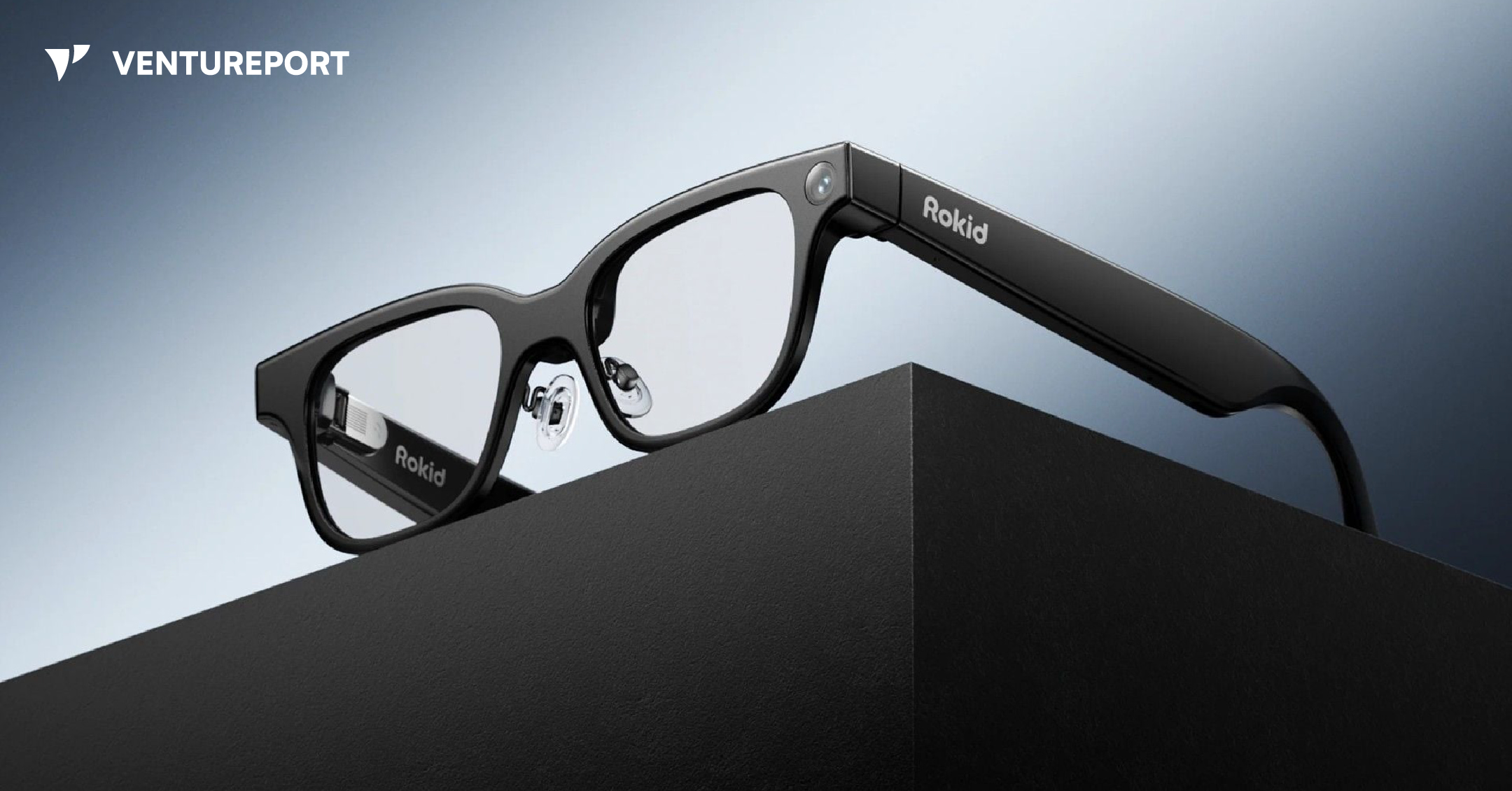
Rokid Glasses, a pair of AR glasses from Rokid. PHOTO: ROKID
Rokid has reached a significant crowdfunding milestone in Taiwan. Its Rokid Glasses campaign surpassed NT$62 million in pre-order funding on zeczec, Taiwan’s creative-oriented crowdfunding platform. The campaign ranked No. 1 across all categories on the platform in 2025 and entered the Top 10 funded campaigns in zeczec’s history, setting new records for AI and XR-related projects.
The campaign launched on October 28 and became one of the platform’s most prominent technology initiatives of the year. According to the company, the outcome followed growing visibility for Rokid Glasses after product showcases in New York, Berlin, Singapore and Paris, positioning the Taiwan campaign within a broader international rollout.
The crowdfunding achievement coincided with Rokid’s official market entry in Taiwan. On December 10, the company debuted Rokid Glasses locally, introducing the product to media, partners and early users in the region. The Taiwan launch mirrored earlier international events and connected the online crowdfunding campaign with a physical market presence.
Rokid Glasses combine augmented reality displays with built-in AI functions, including real-time multilingual translation, live transcription, navigation, object recognition and voice assistance. These capabilities were central to how the product was presented during both the crowdfunding campaign and the Taiwan launch, without framing the project as a traditional consumer electronics release.
The Taiwan campaign builds on Rokid’s prior crowdfunding history. The company previously raised more than US$4 million on Kickstarter, where Rokid Glasses became the highest-funded XR wearable project on the platform. The zeczec campaign extends that track record into one of Asia’s most established consumer electronics markets.
“Taiwan has one of the world's most mature and discerning consumer electronics markets”, said Said Justo Chang, Head of Global Channels at Rokid. “Reaching the top of Taiwan's crowdfunding platform is a great commercial achievement. We are excited to finally introduce Rokid Glasses to Taiwan”.
More broadly, the campaign highlights how crowdfunding platforms continue to function as launch and distribution channels for emerging AI and XR hardware. In Rokid’s case, product rollout, market entry and public participation converged within a single campaign, marking a notable moment for AI-enabled wearables in Taiwan’s technology landscape.