
AutoFlight’s five-tonne Matrix bets on heavy payloads and regional range to prove the case for electric flight
Updated
February 10, 2026 12:56 PM

A multiroter flying through a blue sky. PHOTO: UNSPLASH
The nascent industry of electric vertical takeoff and landing (eVTOL) aircraft has long been defined by a specific set of limitations: small payloads, short distances and a primary focus on urban air taxis. AutoFlight, a Chinese aviation startup, recently moved to shift that narrative by unveiling "Matrix," a five-tonne aircraft that represents a significant leap in scale for electric aviation.
In a demonstration at the company’s flight test center, the Matrix completed a full transition flight—the technically demanding process of switching from vertical lift-off to forward wing-born flight and back to a vertical landing. While small-scale drones and four-seat prototypes have become increasingly common, this marks the first time an electric aircraft of this mass has successfully executed the maneuver.
The sheer scale of the Matrix places it in a different category than the "flying cars" currently being tested for hops over city traffic. With a maximum takeoff weight of 5,700 kilograms (roughly 12,500 pounds), the aircraft has the footprint of a traditional regional turboprop, boasting a 20-meter wingspan. Its size allows for configurations that the industry has previously struggled to accommodate, including a ten-seat business class cabin or a cargo hold capable of carrying 1,500 kilograms of freight.
This increased capacity is more than just a feat of engineering; it is a direct attempt to solve the financial hurdles that have plagued the sector, specifically addressing the skepticism industry analysts have often expressed regarding the economic viability of smaller eVTOLs. These critics frequently cite the high cost of operation relative to the low passenger count as a barrier to entry.
AutoFlight’s founder and CEO, Tian Yu, suggested the Matrix is a direct response to those concerns. “Matrix is not just a rising star in the aviation industry, but also an ambitious disruptor,” Yu stated. “It will eliminate the industry perception that eVTOL = short-haul, low payload and reshape the rules of eVTOL routes. Through economies of scale, it significantly reduces transportation costs per seat-kilometer and per ton-kilometer, thus revolutionizing costs and driving profitability.”
To achieve this, the aircraft utilizes a "lift and cruise" configuration. In simple terms, this means the plane uses one set of dedicated rotors to lift it off the ground like a helicopter, but once it reaches a certain speed, it uses a separate propeller to fly forward like a traditional airplane, allowing the wings to provide the lift. This design is paired with a distinctive "triplane" layout—three layers of wings—and a six-arm structure to keep the massive frame stable.
These features allow the Matrix to serve a variety of roles. For the "low-altitude economy" being promoted by Chinese regulators, the startup is offering a pure electric model with a 250-kilometer range for regional hops, alongside a hybrid-electric version capable of traveling 1,500 kilometers. The latter version, equipped with a forward-opening door to fit standard air freight containers, targets a logistics sector still heavily reliant on carbon-intensive trucking.
However, the road to commercial flight remains a steep one. Despite the successful flight demonstration, AutoFlight faces the same formidable headwinds as its competitors, such as a complex global regulatory landscape and the rigorous demands of airworthiness certification. While the Matrix validates the company's high-power propulsion, moving from a test-center demonstration to a commercial fleet will require years of safety data.
Nevertheless, the debut of the Matrix signals a maturation of the startup’s ambitions. Having previously developed smaller models for autonomous logistics and urban mobility, AutoFlight is now betting that the future of electric flight isn't just in avoiding gridlock, but in hauling the weight of regional commerce. Whether the infrastructure and regulators are ready to accommodate a five-tonne electric disruptor remains the industry's unanswered question.
Keep Reading
Humanoids are moving from research labs into real industries — and capital is finally catching up.
Updated
January 8, 2026 6:31 PM
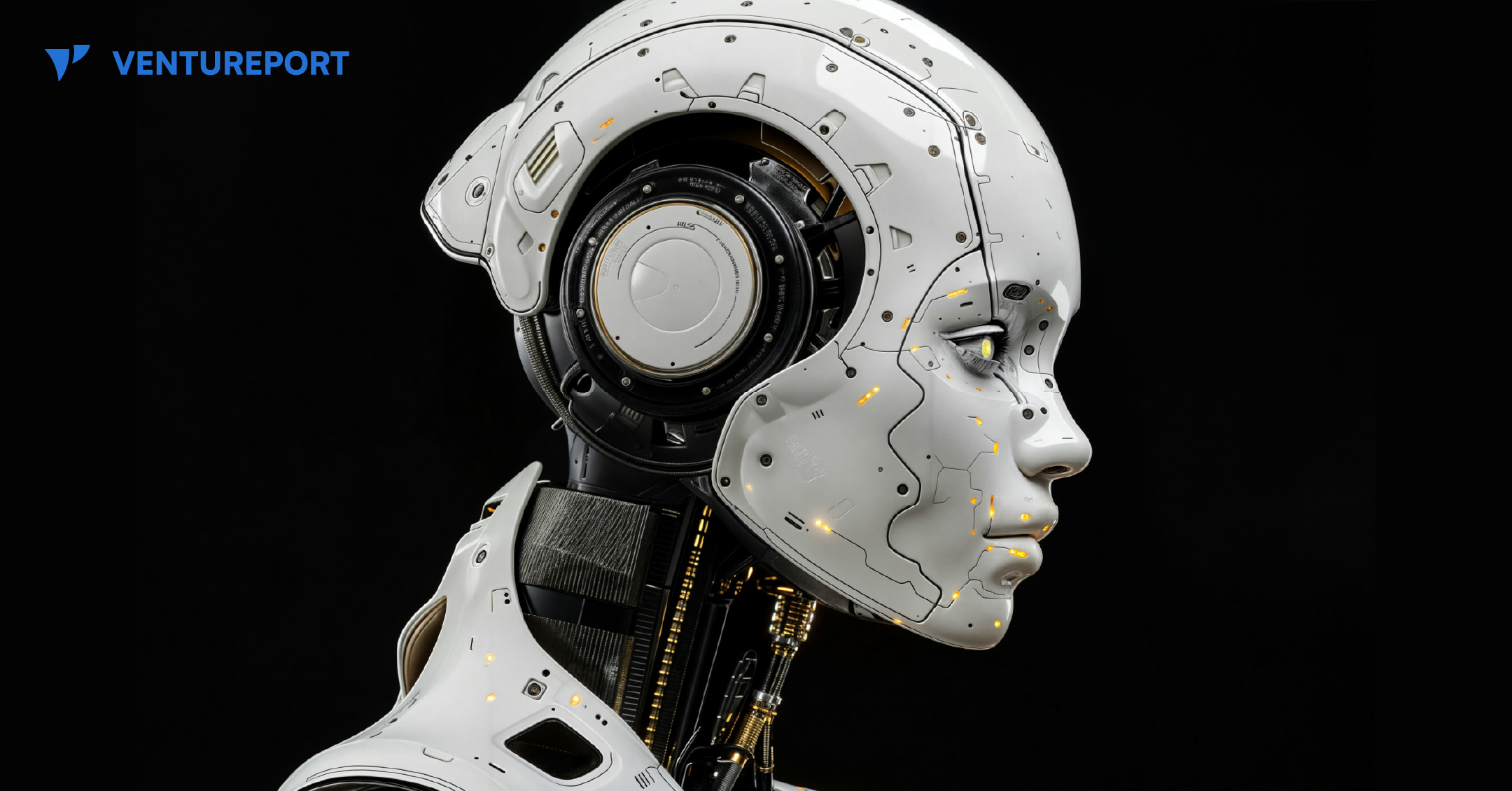
A face of a humanoid robot, side view on black background. PHOTO: UNSPLASH
Humanoid robots are shifting from sci-fi speculation to engineering reality, and the pace of progress is prompting investors to reassess how the next decade of physical automation will unfold. ALM Ventures has launched a new US$100 million early-stage fund aimed squarely at this moment—one where advances in robot control, embodied AI and spatial intelligence are beginning to converge into something commercially meaningful.
ALM Ventures Fund I, is designed for the earliest stages of company formation, targeting seed and pre-seed teams building the foundations of humanoid deployment. It’s a concentrated fund that seeks to take early ownership in a sector that many now consider the next major technological frontier.
For Founder and General Partner Modar Alaoui, the timing is not accidental. “After years of research, humanoids are finally entering a phase where performance, reliability and cost are converging toward commercial viability”, he said. “What the category needs now is focused capital and deep technical diligence to turn prototypes into scalable, enduring companies”.
That framing captures a shift happening across robotics: the field is moving out of the lab and into early commercial readiness. Improvements in perception systems, model-based reasoning and motion control are accelerating the transition. Advances in simulation are also lowering the complexity and cost of integrating humanoid platforms into real environments. As these systems become more capable, the gap between research prototypes and market-ready products is narrowing.
ALM Ventures is positioning itself at this inflection point. Fund I’s thesis centers on the core technologies required to scale humanoids safely and economically. This includes next-generation robot platforms, spatial reasoning engines, embodied intelligence models, world-modeling systems and the infrastructure needed for early deployment. Rather than chasing every robotics trend, the fund is concentrating on the essential layers that will determine whether humanoids can work reliably outside controlled settings.
The firm isn’t starting from zero. During the fund’s formation, ALM Ventures made ten early investments that directly align with its investment focus. The portfolio includes companies building at different layers of the humanoid stack, such as Sanctuary AI, Weave Robotics, Emancro, High Torque Robotics, MicroFactory, Mbodi, Adamo, Haptica Robotics, UMA and O-ID. The list reflects a broad but intentional spread, from hardware to intelligence to manufacturing approaches, all oriented toward enabling scalable physical AI.
Beyond capital, ALM Ventures has been shaping the ecosystem through its global Humanoids Summit series in Silicon Valley, London and Tokyo. The series gives the firm early visibility into emerging technologies, pre-incorporation teams and the senior leaders steering the global robotics landscape. That vantage point has helped the firm identify where commercialization is truly taking root and where bottlenecks still exist.
The rise of humanoids is often compared to the early days of self-driving cars: a long arc of research suddenly meeting an acceleration point. What separates this moment is that advances in embodied AI and spatial intelligence are giving robots a more intuitive understanding of the physical world, making them easier to deploy, teach and scale. ALM Ventures’ Fund I is an attempt to capture that transition while shaping the companies that could define the next technological era.
With US$100 million dedicated to the earliest builders in the space, ALM Ventures is signaling its belief that humanoids are not just another robotics cycle—they may be the next major platform shift in AI.