
AutoFlight’s five-tonne Matrix bets on heavy payloads and regional range to prove the case for electric flight
Updated
March 17, 2026 1:02 AM

A multiroter flying through a blue sky. PHOTO: UNSPLASH
The nascent industry of electric vertical takeoff and landing (eVTOL) aircraft has long been defined by a specific set of limitations: small payloads, short distances and a primary focus on urban air taxis. AutoFlight, a Chinese aviation startup, recently moved to shift that narrative by unveiling "Matrix," a five-tonne aircraft that represents a significant leap in scale for electric aviation.
In a demonstration at the company’s flight test center, the Matrix completed a full transition flight—the technically demanding process of switching from vertical lift-off to forward wing-born flight and back to a vertical landing. While small-scale drones and four-seat prototypes have become increasingly common, this marks the first time an electric aircraft of this mass has successfully executed the maneuver.
The sheer scale of the Matrix places it in a different category than the "flying cars" currently being tested for hops over city traffic. With a maximum takeoff weight of 5,700 kilograms (roughly 12,500 pounds), the aircraft has the footprint of a traditional regional turboprop, boasting a 20-meter wingspan. Its size allows for configurations that the industry has previously struggled to accommodate, including a ten-seat business class cabin or a cargo hold capable of carrying 1,500 kilograms of freight.
This increased capacity is more than just a feat of engineering; it is a direct attempt to solve the financial hurdles that have plagued the sector, specifically addressing the skepticism industry analysts have often expressed regarding the economic viability of smaller eVTOLs. These critics frequently cite the high cost of operation relative to the low passenger count as a barrier to entry.
AutoFlight’s founder and CEO, Tian Yu, suggested the Matrix is a direct response to those concerns. “Matrix is not just a rising star in the aviation industry, but also an ambitious disruptor,” Yu stated. “It will eliminate the industry perception that eVTOL = short-haul, low payload and reshape the rules of eVTOL routes. Through economies of scale, it significantly reduces transportation costs per seat-kilometer and per ton-kilometer, thus revolutionizing costs and driving profitability.”
To achieve this, the aircraft utilizes a "lift and cruise" configuration. In simple terms, this means the plane uses one set of dedicated rotors to lift it off the ground like a helicopter, but once it reaches a certain speed, it uses a separate propeller to fly forward like a traditional airplane, allowing the wings to provide the lift. This design is paired with a distinctive "triplane" layout—three layers of wings—and a six-arm structure to keep the massive frame stable.
These features allow the Matrix to serve a variety of roles. For the "low-altitude economy" being promoted by Chinese regulators, the startup is offering a pure electric model with a 250-kilometer range for regional hops, alongside a hybrid-electric version capable of traveling 1,500 kilometers. The latter version, equipped with a forward-opening door to fit standard air freight containers, targets a logistics sector still heavily reliant on carbon-intensive trucking.
However, the road to commercial flight remains a steep one. Despite the successful flight demonstration, AutoFlight faces the same formidable headwinds as its competitors, such as a complex global regulatory landscape and the rigorous demands of airworthiness certification. While the Matrix validates the company's high-power propulsion, moving from a test-center demonstration to a commercial fleet will require years of safety data.
Nevertheless, the debut of the Matrix signals a maturation of the startup’s ambitions. Having previously developed smaller models for autonomous logistics and urban mobility, AutoFlight is now betting that the future of electric flight isn't just in avoiding gridlock, but in hauling the weight of regional commerce. Whether the infrastructure and regulators are ready to accommodate a five-tonne electric disruptor remains the industry's unanswered question.
Keep Reading
Bitmo Lab is testing an ultra-thin, bendable tracker built to fit inside items traditional trackers can’t
Updated
March 17, 2026 1:02 AM
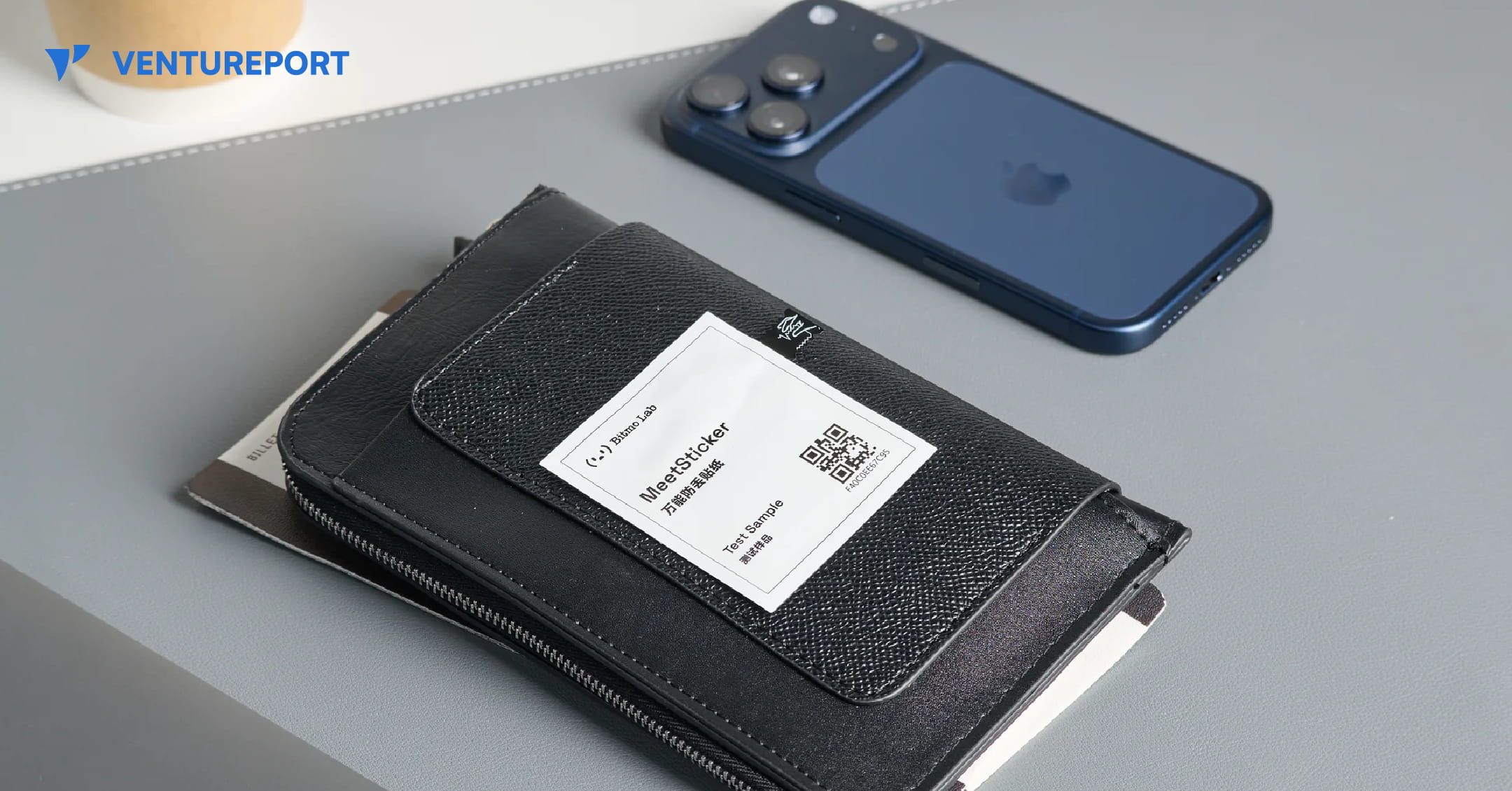
Bitmo Lab's MeetSticker tracker. PHOTO: BITMO LAB
Location trackers have become everyday accessories for keys, bags and luggage. But as personal items grow slimmer and more design-focused — from minimalist wallets to passport sleeves and specialised gear — tracking them has become less straightforward. Most trackers are built as small, rigid discs that assume the presence of space, loops or compartments. That assumption has created a growing mismatch between modern product design and the technology meant to secure it.
Hong Kong–based startup Bitmo Lab is attempting to address that gap with a device called MeetSticker. Instead of the solid plastic casing typical of most trackers, MeetSticker is engineered to be flexible and ultra-thin, measuring just 0.8 millimetres thick. The bendable design allows it to sit within narrow compartments or along curved surfaces without altering the shape of the object. Rather than attaching to an item externally, it is intended to integrate discreetly inside it.
That structural shift is the core of the product’s proposition. By removing the rigid shell that defines conventional tracking hardware, MeetSticker can be placed in items that previously had no practical way to accommodate a tracker. Bitmo Lab states that the device connects through a proprietary network and a companion application compatible with both iOS and Android, positioning it as a cross-platform solution rather than one tied to a single ecosystem.
The implications extend beyond form factor. Objects without obvious attachment points — such as compact travel accessories or specialised tools — could potentially be monitored without visible add-ons. In doing so, the device broadens the scope of tracking technology into categories where aesthetics, aerodynamics or compact design matter as much as functionality.
Before moving toward retail distribution, however, the company is focusing on validation. Bitmo Lab has launched a five-week global alpha testing programme beginning February 9. Sixty participants will receive a prototype unit and early access to the app. According to the company, the programme is designed to assess durability, usability and real-world performance before a wider commercial release. Participants who provide feedback will receive a retail unit upon launch.
Such testing is particularly relevant for flexible electronics. Unlike rigid devices, bendable hardware must withstand repeated flexing, daily handling and environmental exposure. Early user data can help refine manufacturing processes and software optimisation before scaling production.
As with other connected tracking devices, privacy considerations remain part of the equation. Bitmo Lab has stated that data collected during the alpha programme will be used strictly for testing purposes and deleted once the programme concludes.
Whether flexible trackers will redefine the category will depend on how they perform outside controlled testing environments. Still, the introduction of a near-invisible, bendable tracking device reflects a broader shift in consumer technology. As everyday products become thinner and more design-conscious, the tools built to protect them may need to adapt just as seamlessly.