
AI actor Tilly Norwood releases a musical video arguing that artificial intelligence can expand creativity in film
Updated
March 13, 2026 2:18 PM

AI Actor Tilly Norwood. PHOTO: INSTAGRAM@TILLYNORWOOD
As Hollywood prepares for this weekend’s Oscars, a different kind of performer is stepping into the spotlight — one that doesn’t physically exist.
Tilly Norwood, described as the world’s first AI actor, has released her debut musical comedy video, Take the Lead. The project arrives at a moment when artificial intelligence has become one of the most contentious topics in the film industry.
The message of the song is simple. AI should not be seen as a threat to actors. Instead, it can become another creative tool. The release also offers a first look at what Norwood’s creators call the “Tillyverse”. It is envisioned as a cloud-based entertainment world where AI characters can live, interact and perform.
Behind the character is actor and producer Eline van der Velden. She is the CEO of production company Particle6 and AI talent studio Xicoia. Van der Velden created Tilly as a way to experiment with how artificial intelligence could be used in storytelling.
The timing is not accidental. The entertainment industry has spent the past few years debating the role AI should play in filmmaking and acting. Questions about digital replicas, automated performances and creative ownership continue to divide artists and studios.
Norwood’s musical video enters that debate with a different tone. Instead of warning about AI replacing actors, the project suggests that the technology could expand what performers are able to do.
The video itself also serves as a technical experiment. The song Take the Lead was generated using the AI music platform Suno. The video was then produced using a combination of widely available AI tools and Particle6’s own creative process.
One of the newer techniques used in the project is performance capture. Van der Velden physically acted out Tilly’s movements and expressions so the digital character could mirror a human performance. But the production was far from automated. According to Particle6, a team of 18 people worked on the video. The group included a director, editor, production designer, costume designer, comedy writer and creative technologist. In other words, the project still relied heavily on human creativity.
“Tilly has always been a vehicle to test the creative capabilities and boundaries of AI,” van der Velden said. “It’s not about taking anyone’s job”. She added that even with powerful tools, good AI content still takes time, taste and creative direction.
The project also reflects how quickly production technology is evolving. Tools that once required large studios are now accessible to smaller creative teams experimenting with AI-driven storytelling.
For Particle6, the character of Tilly Norwood acts as a testing ground. Each project explores how AI performers might be developed, directed and integrated into entertainment. Whether audiences embrace digital actors remains an open question. Many in the industry are still wary of how AI could reshape creative work.
But projects like Take the Lead show another possibility. Instead of replacing performers, artificial intelligence could become part of the creative process itself. In that sense, Tilly Norwood may represent something more than a virtual performer. She is also an experiment in how humans and machines might collaborate in the future of entertainment.
Keep Reading
How a Korean biotech startup is using AI to move drug discovery from trial-and-error to precision design
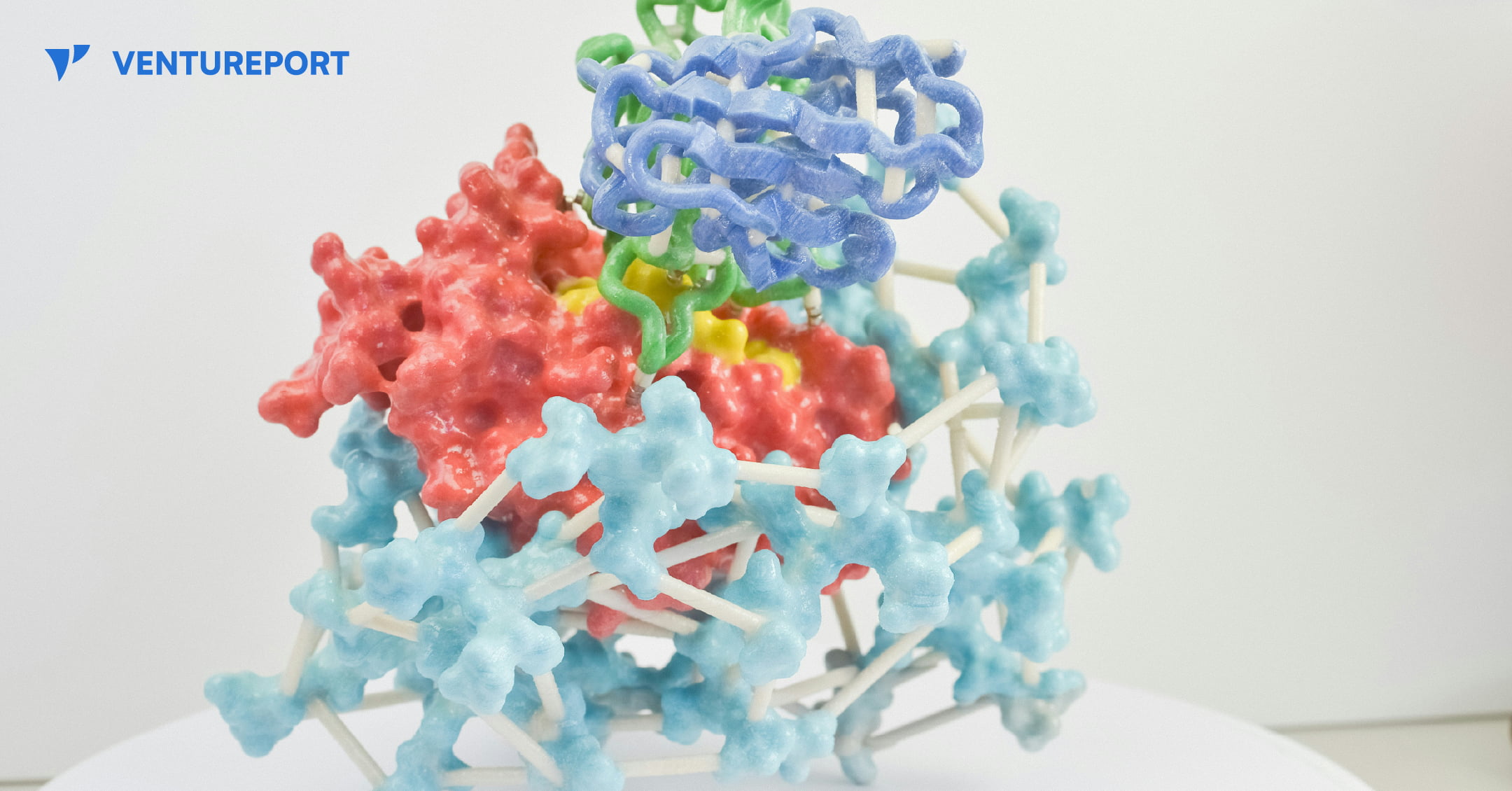
A close up of a protein structure model. PHOTO: UNSPLASH
For decades, drug discovery has relied on trial and error, with scientists testing thousands of molecules to find one that works. Galux, a South Korean biotech startup, is changing that by using AI to design proteins from scratch. This method, called “de novo” design, makes it possible to build precise new therapies instead of searching through existing ones.
The company recently announced a US$29 million Series B funding round, bringing its total capital to US$47 million.This significant investment attracted a substantial roster of institutional backers, including the Korea Development Bank (KDB), Yuanta Investment, SL Investment and NCORE Ventures. These firms joined existing investors such as InterVest, DAYLI Partners and PATHWAY Investment, as well as new participants including SneakPeek Investments, Korea Investment & Securities and Mirae Asset Securities.
At the core of the company’s work is a platform called GaluxDesign. Unlike many AI tools that only predict how existing proteins fold, this system uses deep learning and physics to create entirely new therapeutic antibodies. This “from scratch” approach lets the team go after so-called “undruggable” proteins. These are targets that traditional small-molecule drugs can’t reach because they lack clear binding pockets. By designing proteins to fit these complex shapes, Galux aims to unlock treatments that have stayed out of reach for decades. And that’s exactly why investors are paying attention.
The pharmaceutical industry is actively looking for faster and more efficient ways to develop new drugs, and Galux is built for exactly that. The company connects its AI platform directly to its own wet lab, where designs can be tested in real time. Each result feeds straight back into the system, sharpening the next round of models. This continuous loop speeds up discovery and improves precision at every step. It’s also why partners like Celltrion, LG Chem and Boehringer Ingelheim are already working with Galux.
Galux is no longer just trying to make drugs that stick to a target. The company now wants its AI to design medicines that actually work in the body and can be made at scale. In simple terms, a drug has to do more than bind to a disease—it must be stable, safe and strong enough to change how the illness behaves. Galux is moving into tougher targets such as ion channels and GPCRs. These play key roles in heart function and sensory signals. Ultimately, the goal is to show that AI-driven design can turn complex biology into real treatments. And instead of hunting blindly for a solution, the team is building exactly what they need.