
From plush figures to digital pets, a new class of AI toys is emerging — built not around screens or sensors, but around memory, language and emotional awareness
Updated
March 17, 2026 1:02 AM

Spielwarenmesse toy fair. PHOTO: SPIELWARENMESSE
Spielwarenmesse in Nuremberg is the global meeting point for the toy industry, where brands and designers preview what will shape how children play and learn next. At this year’s fair, one message stood out clearly: toys are no longer built just to entertain, but to listen, respond and grow with children. Tuya Smart, a global AI cloud platform company, used the event to show how AI-powered toys are turning familiar formats into interactive companions that can talk, react emotionally and adapt over time.
The company’s central argument was simple but far-reaching. The next generation of artificial intelligence toys will not be defined by motors, sensors or screens alone, but by how well they understand human behavior. Instead of being single-function objects, smart toys for children are becoming systems that combine language models, emotion recognition and memory to support ongoing interaction.
One of the most talked-about examples was Tuya Smart’s Nebula Plush AI Toy. At first glance, it looks like a soft, expressive plush figure. Inside, it uses emotional recognition to change its LED facial expressions in real time. If a child sounds sad or excited, the toy’s eyes respond visually. It supports natural conversation, reacts to hugs and touch and combines storytelling, news-style updates and interactive games. Over time, it builds memory, allowing it to behave less like a gadget and more like an interactive AI toy that recalls past interactions.
Another example was Walulu, also developed using Tuya’s AI toy platform. Walulu is an AI pet built around personalization. It can detect up to 19 emotional states and speak more than 60 languages. It connects to major large language models such as ChatGPT, Gemini, DeepSeek, Qwen and Doubao. Through simple app-based controls, users choose traits like cheerful, quiet, curious or thoughtful. Those choices shape how Walulu talks and reacts. Instead of repeating scripts, it adjusts its tone and behavior over time. The result is not a novelty item, but an emotionally responsive AI toy that feels consistent in daily use.
Tuya also showed how educational AI toys can extend into learning and exploration. Its AI Learning Camera blends computer vision with interactive content. When it recognizes an object, it links it to cultural and learning material. If a child points it at a foreign word, it offers real-time pronunciation and translation. It can also turn drawings into digital artwork, encouraging active creativity rather than passive screen time. In this sense, AI toys for kids are becoming tools for learning as much as play.
These products point to a larger strategy. Tuya is not just making toys — it is building the AI toy development platform behind them. Through its AI Toy Solution, developers can design a toy’s personality, memory logic and behavior without training models from scratch. The system integrates with leading AI models and supports multi-turn conversation and emotional feedback, turning standard hardware into responsive AI companions.
The platform supports multiple development paths. Brands can use ready-to-market OEM solutions, add AI to existing products or build custom toys around their own characters. Plush toys, robots, educational tools and wearables can all become AI-powered toys without changing their physical design.
Because these products are made for children and families, safety is built in. Tuya’s system includes parental controls, conversation history review and content management. It supports standards such as GDPR and CCPA with encryption and data localization.
From a business standpoint, Tuya’s pitch is speed and scale. The company says its AI toy infrastructure can cut development time by more than half and reduce R&D costs by up to 50 percent. Its AIoT network spans over 200 countries and supports more than 60 languages, making global deployment of AI toys easier.
What emerged at Spielwarenmesse 2026 was not just a lineup of smart gadgets, but a clear shift in the category. AI toys are evolving into emotionally aware systems that talk, listen, remember and adapt. Their value lies not in sounding clever, but in fitting naturally into everyday life.
The fair did not present AI toys as a distant future. It showed them as products already entering the mainstream. The real question now is not whether toys will use AI, but how carefully that intelligence is designed for children.
Keep Reading
When farm challenges grow, smart tools need to grow with them.
Updated
January 8, 2026 6:32 PM
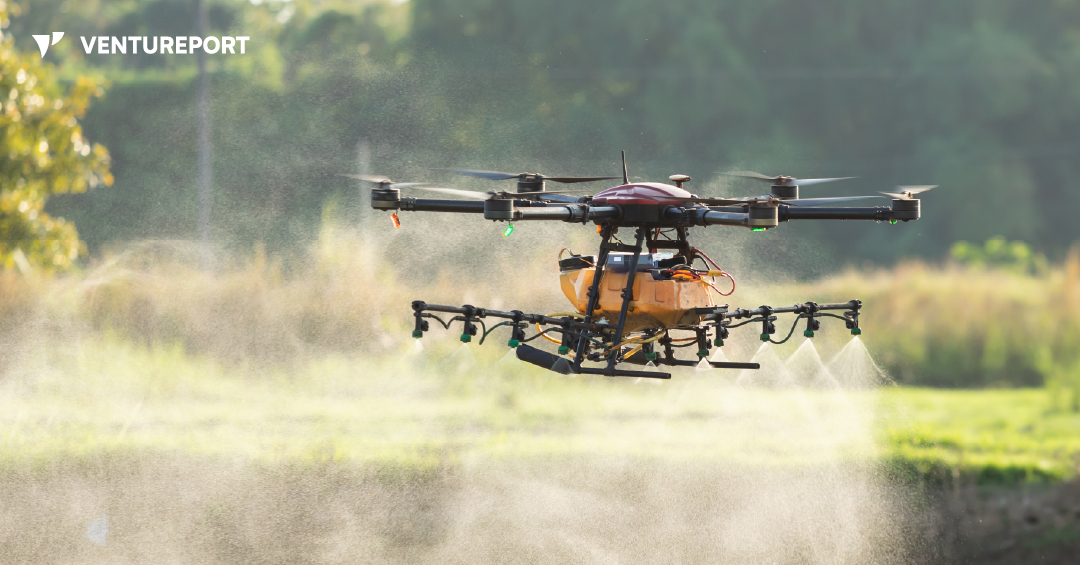
A drone spraying water over an agricultural field. PHOTO: FREEPIK
Farms today are under pressure. Fields are getting bigger, workers are harder to find and many jobs still rely on long hours of manual labor. XAG’s new P150 Max agricultural drone is designed for exactly this reality. Instead of replacing farmers, it takes over the heavy, repetitive fieldwork that slows them down, making farm operations more efficient and more precise.
The P150 Max is built around one simple idea: a single machine that can handle multiple farming tasks. Most farm drones focus only on spraying or mapping, but this one is fully modular. With a quick switch of attachments, it can spray crops, spread seeds or fertilizer, map fields or transport supplies. This flexibility helps farmers keep up with changing tasks throughout the day without needing different machines, improving both productivity and cost-efficiency.
A key challenge in agriculture is that fields are rarely smooth or predictable. Tractors can get stuck, smaller drones can’t carry much and some areas—like orchards or hilly plots—are simply hard to reach. The P150 Max fills that gap with an 80-kilogram payload and fast flight speed, letting it cover more ground per trip. Fewer takeoffs mean less downtime and more work completed before weather or daylight cuts operations short.
When it’s time to spray, the drone uses a smart spraying system that allows farmers to adjust droplet size based on the crop’s needs. This matters because precise spraying reduces waste and improves targeting. With an output of up to 46 liters per minute, the drone can serve both large open fields and dense orchards where consistent coverage is traditionally difficult.
The spreading system applies the same logic. Instead of dropping seeds or fertilizer unevenly, the vertical mechanism spreads material smoothly and resists wind drift. This ensures uniform application across irregular or hard-to-reach land—an ongoing challenge for modern farms aiming for higher yield and better resource use.
Another everyday issue for farmers is understanding and surveying the land before working on it. The P150 Max helps here with a built-in mapping tool that covers up to 20 hectares per flight and instantly converts the images into detailed maps. With AI detecting obstacles like trees or irrigation lines, the drone can plan safe and efficient autonomous routes, reducing manual planning time.
Beyond spraying and spreading, the drone can transport tools, produce and farm supplies using a sling attachment. This is particularly helpful after heavy rain, when vehicles cannot easily move across muddy or flooded fields.
Under all these functions is XAG’s upgraded flight control system, which provides centimeter-level accuracy even when network signals are weak. Integrated sensors—including 4D radar and a wide-angle camera—help the drone recognize hazards such as poles and wires. Farmers can manage all operations through the XAG One app or a handheld controller, both of which automatically generate the best route based on field shape and terrain.
Since long field days require long operating hours, the fast-charging battery system can recharge in about seven minutes using a dedicated kit. This supports continuous drone use throughout the day with minimal interruptions.
After years of testing, the XAG P150 Max is essentially an effort to make practical, scalable farm automation more accessible. By combining spraying, spreading, mapping and transport into one heavy-duty platform, it offers a way to ease labor shortages while keeping operations efficient and sustainable. Instead of focusing on one task, the drone aims to take over the time-consuming physical work so farmers can focus on decisions, planning and crop management.