
A closer look at how machine intelligence is helping doctors see cancer in an entirely new light.
Updated
January 8, 2026 6:33 PM

Serratia marcescens colonies on BTB agar medium. PHOTO: UNSPLASH
Artificial intelligence is beginning to change how scientists understand cancer at the cellular level. In a new collaboration, Bio-Techne Corporation, a global life sciences tools provider, and Nucleai, an AI company specializing in spatial biology for precision medicine, have unveiled data from the SECOMBIT clinical trial that could reshape how doctors predict cancer treatment outcomes. The results, presented at the Society for Immunotherapy of Cancer (SITC) 2025 Annual Meeting, highlight how AI-powered analysis of tumor environments can reveal which patients are more likely to benefit from specific therapies.
Led in collaboration with Professor Paolo Ascierto of the University of Napoli Federico II and Istituto Nazionale Tumori IRCCS Fondazione Pascale, the study explores how spatial biology — the science of mapping where and how cells interact within tissue — can uncover subtle immune behaviors linked to survival in melanoma patients.
Using Bio-Techne’s COMET platform and a 28-plex multiplex immunofluorescence panel, researchers analyzed 42 pre-treatment biopsies from patients with metastatic melanoma, an advanced stage of skin cancer. Nucleai’s multimodal AI platform integrated these imaging results with pathology and clinical data to trace patterns of immune cell interactions inside tumors.
The findings revealed that therapy sequencing significantly influences immune activity and patient outcomes. Patients who received targeted therapy followed by immunotherapy showed stronger immune activation, marked by higher levels of PD-L1+ CD8 T-cells and ICOS+ CD4 T-cells. Those who began with immunotherapy benefited most when PD-1+ CD8 T-cells engaged closely with PD-L1+ CD4 T-cells along the tumor’s invasive edge. Meanwhile, in patients alternating between targeted and immune treatments, beneficial antigen-presenting cell (APC) and T-cell interactions appeared near tumor margins, whereas macrophage activity in the outer tumor environment pointed to poorer prognosis.
“This study exemplifies how our innovative spatial imaging and analysis workflow can be applied broadly to clinical research to ultimately transform clinical decision-making in immuno-oncology”, said Matt McManus, President of the Diagnostics and Spatial Biology Segment at Bio-Techne.
The collaboration between the two companies underscores how AI and high-plex imaging together can help decode complex biological systems. As Avi Veidman, CEO of Nucleai, explained, “Our multimodal spatial operating system enables integration of high-plex imaging, data and clinical information to identify predictive biomarkers in clinical settings. This collaboration shows how precision medicine products can become more accurate, explainable and differentiated when powered by high-plex spatial proteomics – not limited by low-plex or H&E data alone”.
Dr. Ascierto described the SECOMBIT trial as “a milestone in demonstrating the possible predictive power of spatial biomarkers in patients enrolled in a clinical study”.
The study’s broader message is clear: understanding where immune cells are and how they interact inside a tumor could become just as important as knowing what they are. As AI continues to map these microscopic landscapes, oncology may move closer to genuinely personalized treatment — one patient, and one immune network, at a time.
Keep Reading
The IT services firm strengthens its collaboration with Google Cloud to help enterprises move AI from pilot projects to production systems
Updated
February 18, 2026 8:11 PM
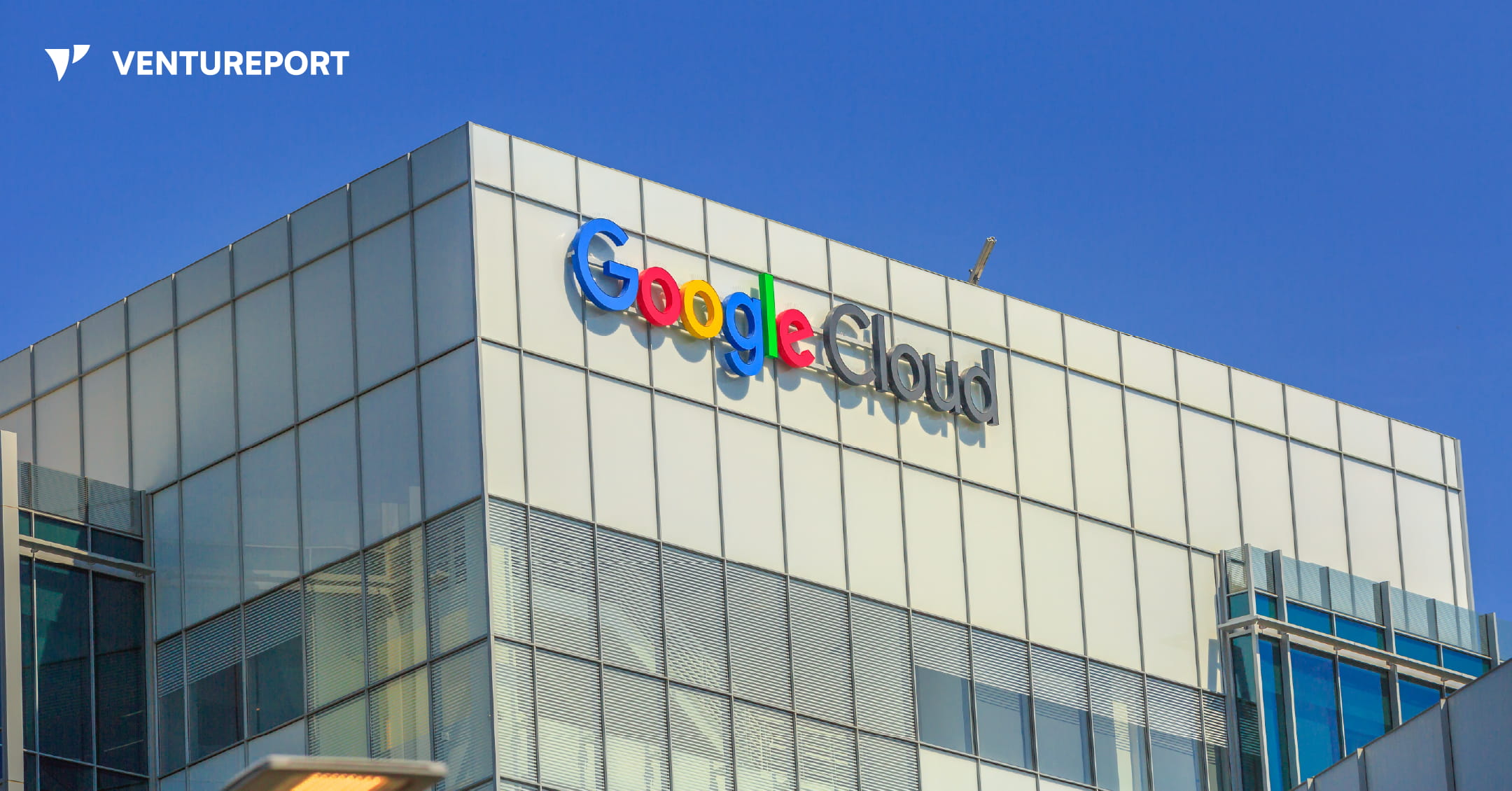
Google Cloud building. PHOTO: ADOBE STOCK
Enterprise interest in AI has moved quickly from experimentation to execution. Many organizations have tested generative tools, but turning those tools into systems that can run inside daily operations remains a separate challenge. Cognizant, an IT services firm, is expanding its partnership with Google Cloud to help enterprises move from AI pilots to fully deployed, production-ready systems.
Cognizant and Google Cloud are deepening their collaboration around Google’s Gemini Enterprise and Google Workspace. Cognizant is deploying these tools across its own workforce first, using them to support internal productivity and collaboration. The idea is simple: test and refine the systems internally, then package similar capabilities for clients.
The focus of the partnership is what Cognizant calls “agentic AI.” In practical terms, this refers to AI systems that can plan, act and complete tasks with limited human input. Instead of generating isolated outputs, these systems are designed to fit into business workflows and carry out structured tasks.
To make that workable at scale, Cognizant is building delivery infrastructure around the technology. The company is setting up a dedicated Gemini Enterprise Center of Excellence and formalizing an Agent Development Lifecycle. This framework covers the full process, from early design and blueprinting to validation and production rollout. The aim is to give enterprises a clearer path from the AI concept to a deployed system.
Cognizant also plans to introduce a bundled productivity offering that combines Gemini Enterprise with Google Workspace. The targeted use cases are operational rather than experimental. These include collaborative content creation, supplier communications and other workflow-heavy processes that can be standardized and automated.
Beyond productivity tools, Cognizant is integrating Gemini into its broader service platforms. Through Cognizant Ignition, enabled by Gemini, the company supports early-stage discovery and prototyping while helping clients strengthen their data foundations. Its Agent Foundry platform provides pre-configured and no-code capabilities for specific use cases such as AI-powered contact centers and intelligent order management. These tools are designed to reduce the amount of custom development required for each deployment.
Scaling is another element of the strategy. Cognizant, a multi-year Google Cloud Data Partner of the Year award winner, says it will rely on a global network of Gemini-trained specialists to deliver these systems. The company is also expanding work tied to Google Distributed Cloud and showcasing capabilities through its Google Experience Zones and Gen AI Studios.
For Google Cloud, the partnership reinforces its enterprise AI ecosystem. Cloud providers can offer models and infrastructure, but enterprise adoption often depends on service partners that can integrate tools into existing systems and manage ongoing operations. By aligning closely with Cognizant, Google strengthens its ability to move Gemini from platform capability to production deployment.
The announcement does not introduce a new AI model. Instead, it reflects a shift in emphasis. The core question is no longer whether AI tools exist, but how they are implemented, governed and scaled across large organizations. Cognizant’s expanded role suggests that execution frameworks, internal deployment and structured delivery models are becoming central to how enterprises approach AI.
In that sense, the partnership is less about new technology and more about operational maturity. It highlights how AI is moving from isolated pilots to managed systems embedded in business processes — a transition that will likely define the next phase of enterprise adoption.