
A turbine-inspired generator shows how overlooked industrial airflow could quietly become a new source of usable power
Updated
February 3, 2026 11:23 AM

Campus building of Chung-Ang University. PHOTO: CHUNG-ANG UNIVERSITY
Compressed air is used across factories, data centers and industrial plants to move materials, cool systems and power tools. Once it has done that job, the air is usually released — and its remaining energy goes unused.
That everyday waste is what caught the attention of a research team at Chung-Ang University in South Korea. They are investigating how this overlooked airflow can be harnessed to generate electricity instead of disappearing into the background.
Most of the world’s power today comes from systems like turbines, which turn moving fluids into energy or solar cells, which convert sunlight into electricity. The Chung-Ang team has built a device that uses compressed air to generate electricity without relying on traditional blades or sunlight.
At the center of the work is a simple question: what happens when high-pressure air spins through a specially shaped device at very high speed? The answer lies in the air itself. The researchers found that tiny particles naturally present in the air carry an electric charge. When that air moves rapidly across certain surfaces, it can transfer charge without physical contact. This creates electricity through a process known as the “particulate static effect.”
To use that effect, the team designed a generator based on a Tesla turbine. Unlike conventional turbines with blades, a Tesla turbine uses smooth rotating disks and relies on the viscosity of air to create motion. Compressed air enters the device, spins the disks at high speed and triggers charge buildup on specially layered surfaces inside.
What makes this approach different is that the system does not depend on friction between parts rubbing together. Instead, the charge comes from particles in the air interacting with the surfaces as they move past. This reduces wear and allows the generator to operate at very high speeds. And those speeds translate into real output.
In lab tests, the device produced strong electrical power. The researchers also showed that this energy could be used in practical ways. It ran small electronic devices, helped pull moisture from the air and removed dust particles from its surroundings.
The problem this research is addressing is straightforward.
Compressed air is already everywhere in industry, but its leftover energy is usually ignored. This system is designed to capture part of that unused motion and convert it into electricity without adding complex equipment or major safety risks.
Earlier methods of harvesting static electricity from particles showed promise, but they came with dangers. Uncontrolled discharge could cause sparks or even ignition. By using a sealed, turbine-based structure, the Chung-Ang University team offers a safer and more stable way to apply the same physical effect.
As a result, the technology is still in the research stage, but its direction is easy to see. It points toward a future where energy is not only generated in power plants or stored in batteries, but also recovered from everyday industrial processes.
Keep Reading
A new bet on early heart failure detection and why women’s health is at the center.
Updated
January 8, 2026 6:28 PM
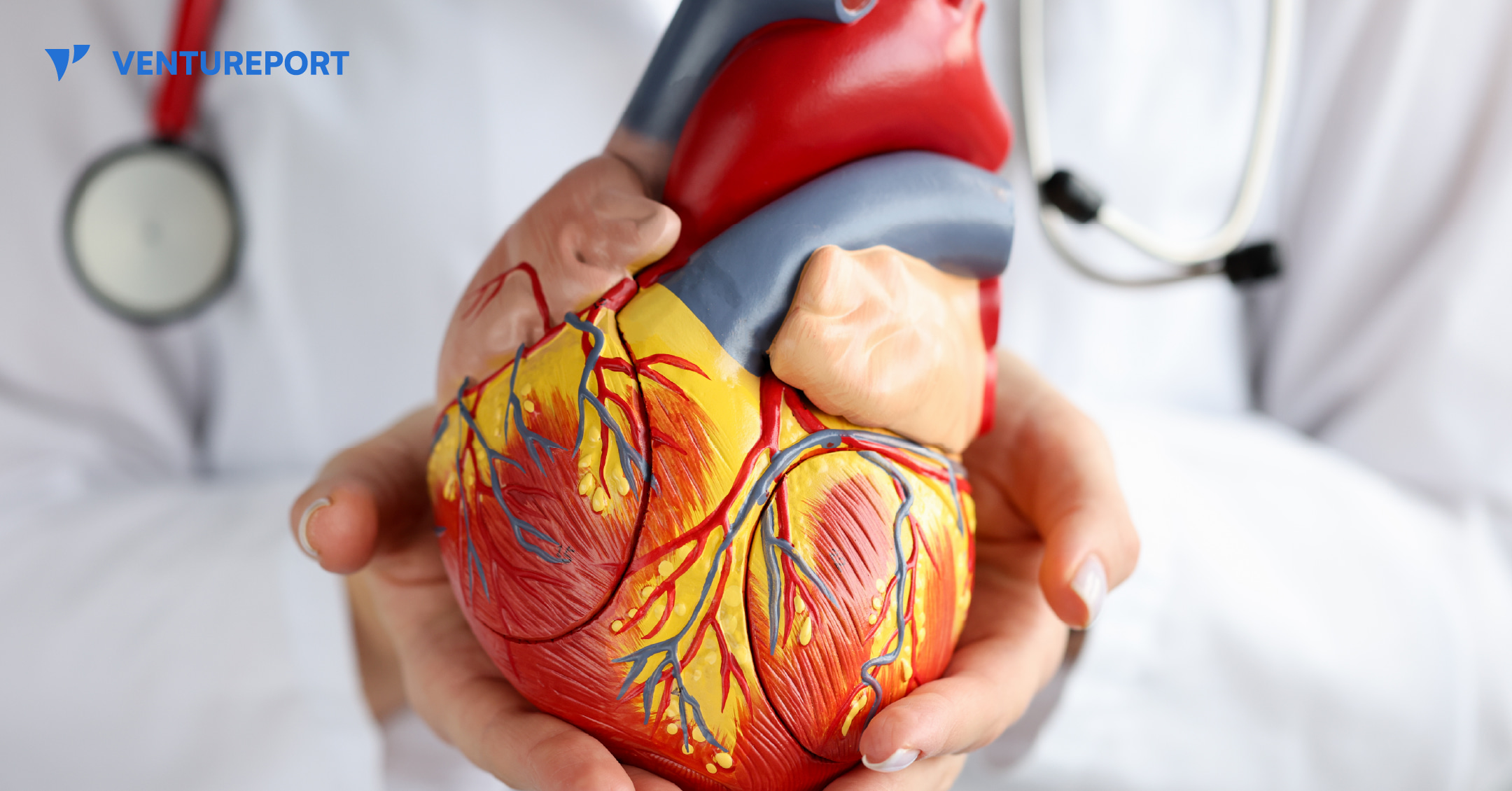
A doctor holding an artificial heart model. PHOTO: ADOBE STOCK
Heart disease does not always announce itself clearly, especially in women. Many of the symptoms are ordinary, including fatigue, shortness of breath and swelling. These signs are frequently dismissed or explained away. As a result, many women are diagnosed late, when treatment options are narrower and outcomes are worse. That diagnostic gap is the context behind a recent investment involving Ultromics and the American Heart Association’s Go Red for Women Venture Fund.
Ultromics is a health technology company that uses artificial intelligence to help doctors spot early signs of heart failure from routine heart scans. It has received a strategic investment from the American Heart Association’s Go Red for Women Venture Fund.
The focus of the investment is a long-standing blind spot in cardiac care. Heart failure with preserved ejection fraction, or HFpEF, affects millions of people worldwide, with women disproportionately impacted. It is one of the most common forms of heart failure, yet also one of the hardest to diagnose. Studies even show women are twice as likely as men to develop the condition and around 64% of cases go undiagnosed in routine clinical practice.
Ultromics works with a tool most patients already experience during heart care: the echocardiogram. There is no new scan and no added burden for patients. Its software analyzes standard heart ultrasound images and looks for subtle patterns that point to early heart failure. The goal is clarity. Give clinicians better signals earlier, before the disease advances.
“Heart failure with preserved ejection fraction is one of the most complex and overlooked diseases in cardiology. For too long, clinicians have been expected to diagnose it using tools that weren't built to detect it and as a result, many patients are identified too late,” said Ross Upton, PhD, CEO and Founder of Ultromics. “By augmenting physicians' decision making with EchoGo, we can help them recognize disease at an earlier stage and treat it more effectively.”
The stakes are high. Research suggests women are twice as likely as men to develop the condition and that a majority of cases are missed in routine clinical practice. That delay matters. New therapies can reduce hospitalizations and improve survival, but only if patients are diagnosed in time.
This is why early detection has become a priority for mission-driven investors. “Closing the diagnostic gap by recognizing disease before irreversible damage occurs is critical to improving health for women—and everyone,” said Tracy Warren, Senior Managing Director, Go Red for Women Venture Fund. “We are gratified to see technologies, such as this one, that are accepted by leading institutions as advances in the field of cardiovascular diagnostics. That's the kind of progress our fund was created to accelerate.”
Ultromics’ platform is already cleared by regulators for clinical use and is being deployed in hospitals across the US and UK. The company says its technology has analyzed hundreds of thousands of heart scans, helping clinicians reach clearer conclusions when traditional methods fall short.
Taken together, the investment reflects a broader shift in healthcare. Attention is shifting earlier—toward detection instead of reaction. Toward tools that fit into existing care rather than complicate it. In this case, the funding is not about introducing something new into the system. It is about seeing what has long been missed—and doing so in time.