
Quantara AI launches a continuous platform designed to estimate the financial impact of cyber risk as companies move beyond periodic assessments
Updated
February 20, 2026 6:43 PM

A person tightrope walking between two cliffs. PHOTO: UNSPLASH
Cyber risk is increasingly treated as a financial issue. Boards want to know how much a cyber incident could cost the company, how it could affect earnings, and whether current security spending is justified.
Yet many organizations still measure cyber risk through periodic reviews. These assessments are often conducted once or twice a year, supported by consultants and spreadsheet models. By the time the report reaches senior leadership, the company’s systems may have changed and new threats may have emerged. The way risk is measured does not always match how quickly it evolves.
This gap is where Quantara AI is positioning its new platform. Quantara AI, a Boise-based cybersecurity startup, has introduced what it describes as the industry’s first persistent AI-powered cyber risk solution. The system is designed to run continuously rather than rely on occasional assessments.
The company’s core argument is straightforward: not every security weakness carries the same financial consequence. Instead of ranking issues only by technical severity, the platform analyzes active threats, identifies which company systems are exposed, and estimates how much money a successful attack could cost. It uses statistical models, including Value at Risk (VaR), to calculate potential losses. It also estimates how specific security improvements could reduce that projected loss.
The timing aligns with a broader market shift. International Data Corporation (IDC) projects that by 2028, 40% of enterprises will adopt AI-based cyber risk quantification platforms. These tools convert security data into financial estimates that can guide budgeting and investment decisions. The forecast reflects growing pressure on security leaders to present risk in terms that boards and regulators understand.
Traditional compliance and risk management systems often focus on meeting regulatory standards. Vulnerability management programs typically score weaknesses based on technical characteristics. Consultant-led risk studies provide detailed analysis, but they are usually performed at set intervals. In fast-changing threat environments, that model can leave decision-makers working with outdated information.
Quantara’s platform attempts to replace that periodic process with continuous measurement. It brings together threat data, internal system information and financial modeling in one system. The goal is to show, at any given time, which specific weaknesses could lead to the largest financial losses.
Cyber risk quantification as a concept is not new. What is changing is the expectation that these calculations be updated regularly and tied directly to financial decision-making. As cyber incidents carry clearer monetary consequences, companies are looking for ways to measure exposure with greater precision.
The broader question is whether enterprises will shift fully toward continuous, AI-driven risk analysis or continue relying on periodic external assessments. What is clear is that cybersecurity discussions are moving closer to financial reporting — and tools that estimate potential loss in dollar terms are becoming central to that shift.
Keep Reading
The hidden cost of scaling AI: infrastructure, energy, and the push for liquid cooling.
Updated
January 8, 2026 6:31 PM
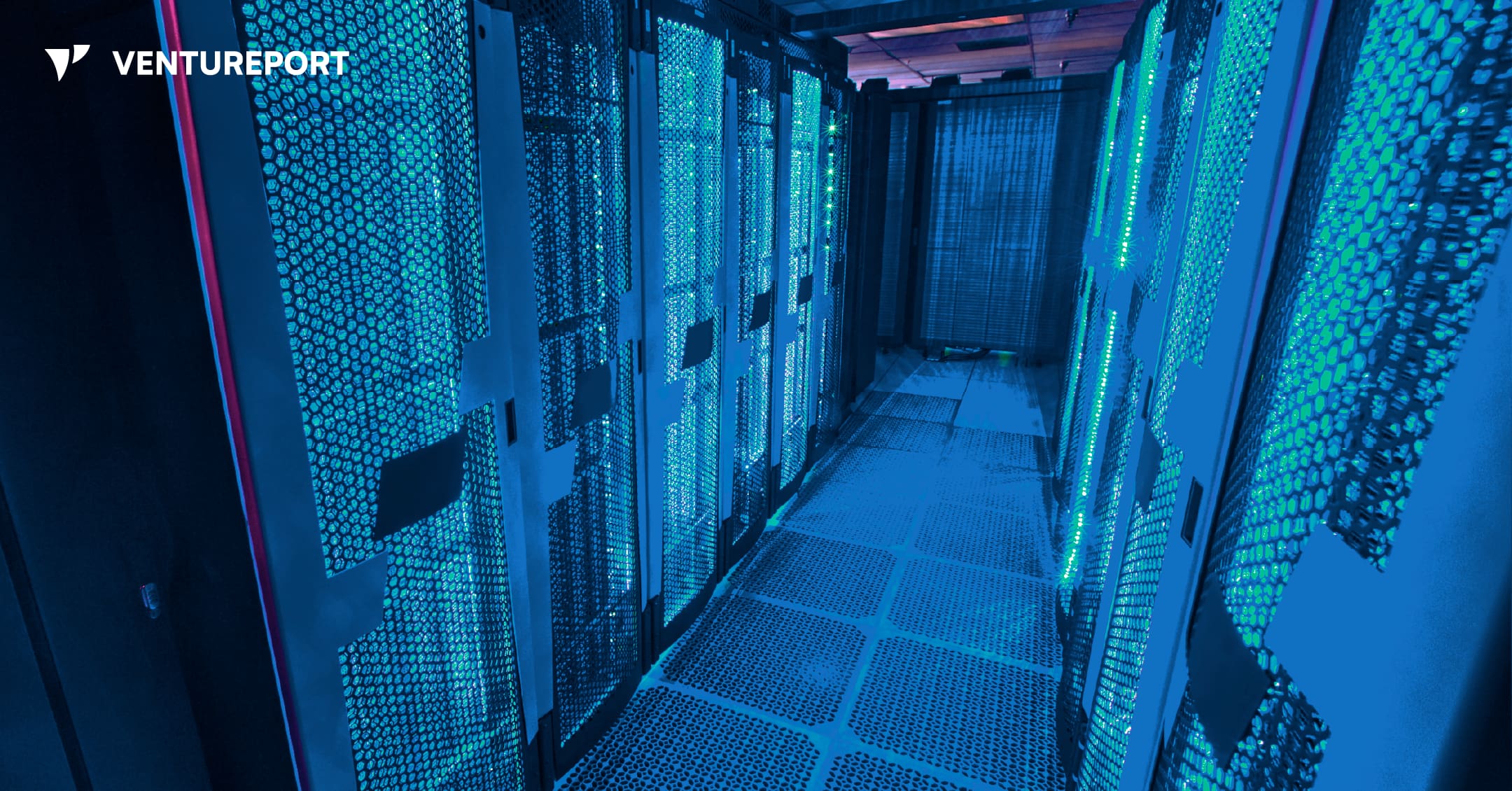
The inside of a data centre, with rows of server racks. PHOTO: FREEPIK
As artificial intelligence models grow larger and more demanding, the quiet pressure point isn’t the algorithms themselves—it’s the AI infrastructure that has to run them. Training and deploying modern AI models now requires enormous amounts of computing power, which creates a different kind of challenge: heat, energy use and space inside data centers. This is the context in which Supermicro and NVIDIA’s collaboration on AI infrastructure begins to matter.
Supermicro designs and builds large-scale computing systems for data centers. It has now expanded its support for NVIDIA’s Blackwell generation of AI chips with new liquid-cooled server platforms built around the NVIDIA HGX B300. The announcement isn’t just about faster hardware. It reflects a broader effort to rethink how AI data center infrastructure is built as facilities strain under rising power and cooling demands.
At a basic level, the systems are designed to pack more AI chips into less space while using less energy to keep them running. Instead of relying mainly on air cooling—fans, chillers and large amounts of electricity, these liquid-cooled AI servers circulate liquid directly across critical components. That approach removes heat more efficiently, allowing servers to run denser AI workloads without overheating or wasting energy.
Why does that matter outside a data center? Because AI doesn’t scale in isolation. As models become more complex, the cost of running them rises quickly, not just in hardware budgets, but in electricity use, water consumption and physical footprint. Traditional air-cooling methods are increasingly becoming a bottleneck, limiting how far AI systems can grow before energy and infrastructure costs spiral.
This is where the Supermicro–NVIDIA partnership fits in. NVIDIA supplies the computing engines—the Blackwell-based GPUs designed to handle massive AI workloads. Supermicro focuses on how those chips are deployed in the real world: how many GPUs can fit in a rack, how they are cooled, how quickly systems can be assembled and how reliably they can operate at scale in modern data centers. Together, the goal is to make high-density AI computing more practical, not just more powerful.
The new liquid-cooled designs are aimed at hyperscale data centers and so-called AI factories—facilities built specifically to train and run large AI models continuously. By increasing GPU density per rack and removing most of the heat through liquid cooling, these systems aim to ease a growing tension in the AI boom: the need for more computers without an equally dramatic rise in energy waste.
Just as important is speed. Large organizations don’t want to spend months stitching together custom AI infrastructure. Supermicro’s approach packages compute, networking and cooling into pre-validated data center building blocks that can be deployed faster. In a world where AI capabilities are advancing rapidly, time to deployment can matter as much as raw performance.
Stepping back, this development says less about one product launch and more about a shift in priorities across the AI industry. The next phase of AI growth isn’t only about smarter models—it’s about whether the physical infrastructure powering AI can scale responsibly. Efficiency, power use and sustainability are becoming as critical as speed.