
CES 2026 and the move toward wearable robots you don’t wear all day.
Updated
January 28, 2026 5:53 PM

The π6 exoskeleton from VIGX. PHOTO: VIGX
CES 2026 highlighted how robotics is taking many different forms. VIGX, a wearable robotics company, used the event to introduce the π6, a portable exoskeleton robot designed to be carried and worn only when needed. Unveiled in Las Vegas, the device reflects a broader shift at CES toward robotics that move with people rather than staying fixed in industrial or clinical settings.
Exoskeletons have existed for years, most commonly in controlled environments such as factories, rehabilitation facilities and specialised research settings. In these contexts, they have tended to be large, fixed systems intended for long sessions of supervised use rather than something a person could deploy on their own.
Against that backdrop, the π6 explores a more personal and flexible approach to assistance. Instead of treating an exoskeleton as permanent equipment, it is designed to be something users carry with them and wear only when a task or situation calls for extra support.
The π6 weighs 1.9 kilograms and folds down to a size that fits into a bag. When worn, it sits around the waist and legs, providing mechanical assistance during activities such as walking, climbing or extended movement. Rather than altering how people move, the system adds controlled rotational force at key joints to reduce physical strain over time.
According to the company, the device delivers up to 800 watts of peak power and 16 Nm of rotational force. In practical terms, this means the system is designed to help users sustain effort for longer periods, especially during physically demanding activities_ by easing the body's load rather than pushing it beyond normal limits.
The π6 is designed to support users weighing between 45 kilograms and 120 kilograms and is intended for intermittent use. This reinforces its role as a wearable companion — something taken out when needed and set aside when not — rather than a device meant to be worn continuously.
Another aspect of the system is how it responds to different environments. Using onboard sensors and processing, the exoskeleton can detect changes such as slopes or uneven ground and adjust the level of assistance accordingly. This reduces the need for manual adjustments and helps maintain a consistent walking experience across varied terrain, with software fine-tuning how assistance is applied rather than directing movement itself.
The hardware design follows a similar logic. The power belt contains a detachable battery, allowing users to remove or swap it without handling the entire system. This keeps the wearable components lighter and makes the exoskeleton easier to transport. The battery can also be used as a general power source for small electronic devices, adding a layer of practicality beyond the exoskeleton’s core function.
VIGX frames its work around accessibility rather than industrial automation. “To empower ordinary people,” said founder Bob Yu, explaining why the company chose to focus on exoskeleton robotics. “VIGX is dedicated to expanding the physical limits of humans, enabling deeper outdoor adventures, making running and cycling easier and more enjoyable and allowing people to sustain their outdoor pursuits regardless of age.”
Placed within the wider context of CES, the π6 sits alongside a growing number of portable robots and wearable systems that prioritise convenience, mobility and personal use. By reducing the physical and practical barriers to wearing an exoskeleton, VIGX is testing whether assistive robotics can move beyond niche environments and into everyday life. If that experiment succeeds, wearable robots may become less about dramatic augmentation and more about quiet support — present when needed and easy to put away when not.
Keep Reading
Humanoids are moving from research labs into real industries — and capital is finally catching up.
Updated
January 8, 2026 6:31 PM
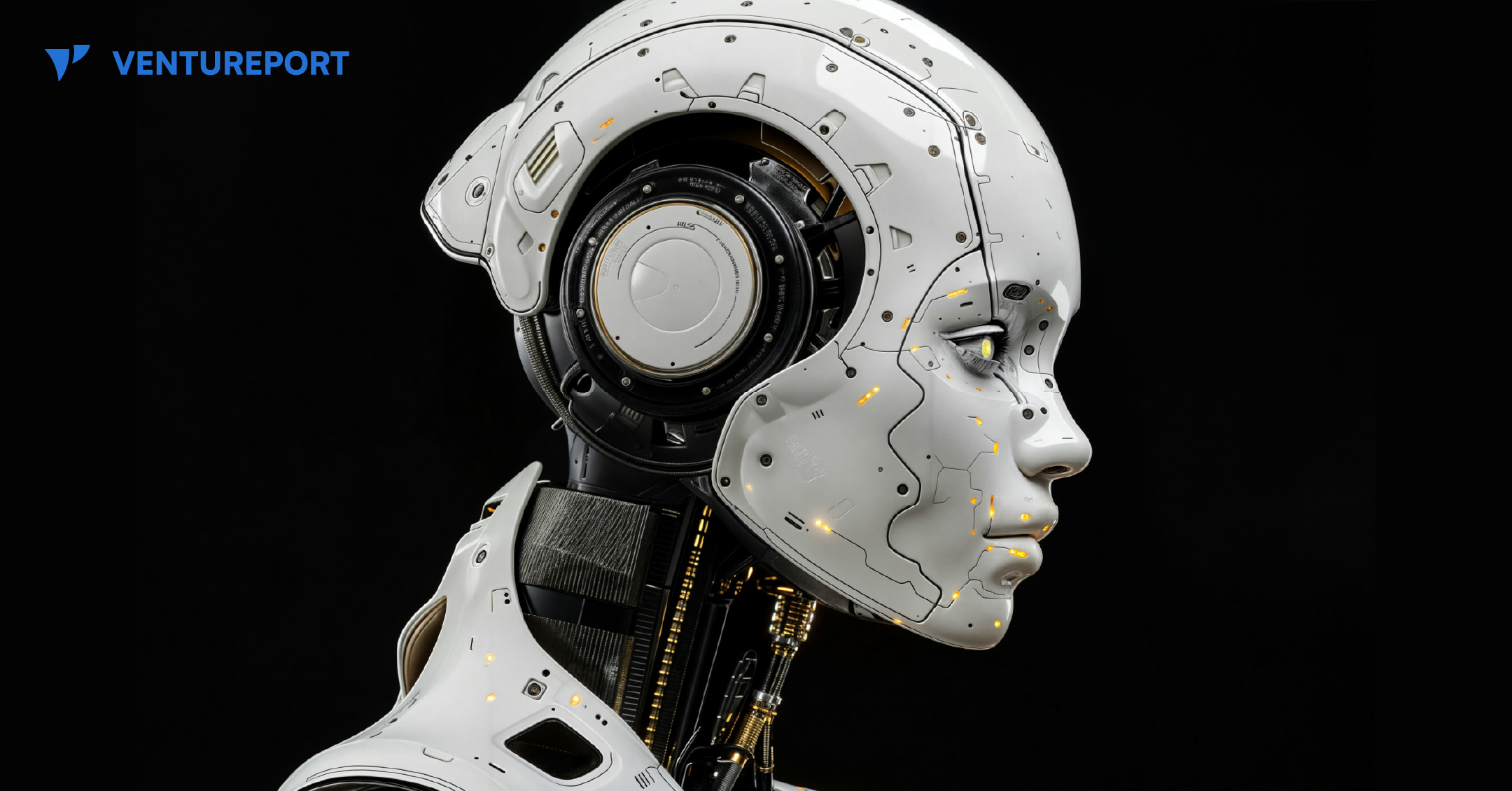
A face of a humanoid robot, side view on black background. PHOTO: UNSPLASH
Humanoid robots are shifting from sci-fi speculation to engineering reality, and the pace of progress is prompting investors to reassess how the next decade of physical automation will unfold. ALM Ventures has launched a new US$100 million early-stage fund aimed squarely at this moment—one where advances in robot control, embodied AI and spatial intelligence are beginning to converge into something commercially meaningful.
ALM Ventures Fund I, is designed for the earliest stages of company formation, targeting seed and pre-seed teams building the foundations of humanoid deployment. It’s a concentrated fund that seeks to take early ownership in a sector that many now consider the next major technological frontier.
For Founder and General Partner Modar Alaoui, the timing is not accidental. “After years of research, humanoids are finally entering a phase where performance, reliability and cost are converging toward commercial viability”, he said. “What the category needs now is focused capital and deep technical diligence to turn prototypes into scalable, enduring companies”.
That framing captures a shift happening across robotics: the field is moving out of the lab and into early commercial readiness. Improvements in perception systems, model-based reasoning and motion control are accelerating the transition. Advances in simulation are also lowering the complexity and cost of integrating humanoid platforms into real environments. As these systems become more capable, the gap between research prototypes and market-ready products is narrowing.
ALM Ventures is positioning itself at this inflection point. Fund I’s thesis centers on the core technologies required to scale humanoids safely and economically. This includes next-generation robot platforms, spatial reasoning engines, embodied intelligence models, world-modeling systems and the infrastructure needed for early deployment. Rather than chasing every robotics trend, the fund is concentrating on the essential layers that will determine whether humanoids can work reliably outside controlled settings.
The firm isn’t starting from zero. During the fund’s formation, ALM Ventures made ten early investments that directly align with its investment focus. The portfolio includes companies building at different layers of the humanoid stack, such as Sanctuary AI, Weave Robotics, Emancro, High Torque Robotics, MicroFactory, Mbodi, Adamo, Haptica Robotics, UMA and O-ID. The list reflects a broad but intentional spread, from hardware to intelligence to manufacturing approaches, all oriented toward enabling scalable physical AI.
Beyond capital, ALM Ventures has been shaping the ecosystem through its global Humanoids Summit series in Silicon Valley, London and Tokyo. The series gives the firm early visibility into emerging technologies, pre-incorporation teams and the senior leaders steering the global robotics landscape. That vantage point has helped the firm identify where commercialization is truly taking root and where bottlenecks still exist.
The rise of humanoids is often compared to the early days of self-driving cars: a long arc of research suddenly meeting an acceleration point. What separates this moment is that advances in embodied AI and spatial intelligence are giving robots a more intuitive understanding of the physical world, making them easier to deploy, teach and scale. ALM Ventures’ Fund I is an attempt to capture that transition while shaping the companies that could define the next technological era.
With US$100 million dedicated to the earliest builders in the space, ALM Ventures is signaling its belief that humanoids are not just another robotics cycle—they may be the next major platform shift in AI.