
Cyberport Venture Capital Forum (CVCF) 2025 Returns Under the Theme "The Innovation–Venture Nexus: Igniting Transformative Success"
Updated
January 8, 2026 6:34 PM
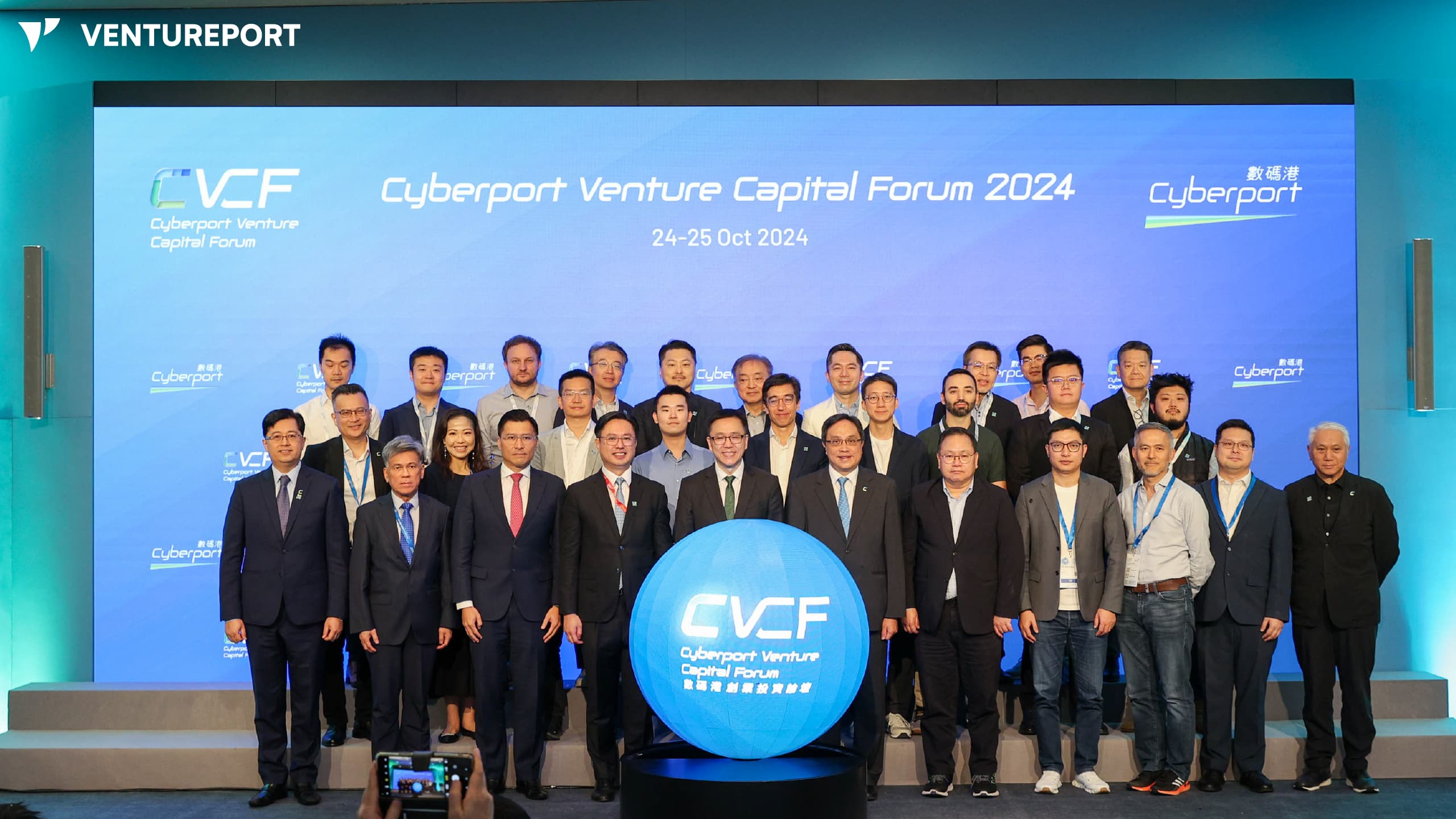
As the venture capital world recalibrates amid global uncertainty, Cyberport Venture Capital Forum (CVCF) 2025 returns on November 6-7 under the theme “The Innovation–Venture Nexus: Igniting Transformative Success”. PHOTO: CYBERPORT
The two-day forum will once again bring together global and local leaders to explore how technology, capital and collaboration intersect to drive the next wave of growth. Entrepreneurs, investors and innovators will exchange insights on artificial intelligence, digital assets and Web 3.0—technologies that are reshaping industries and redefining both risk and opportunity.
As industries face challenges from geopolitical shifts, regulatory changes and market volatility, CVCF will serve as a platform to address a defining question: How can innovation remain bold and visionary in an ever-evolving funding landscape? Through keynotes, panel discussions and interactive sessions, the forum will spotlight the transformative potential of technologies like artificial intelligence (AI), Web 3.0 and digital assets while offering practical strategies to turn disruption into market advantage.
With investor matching, power pitches, start-up clinics and workshops, CVCF 2025 offers a front-row seat to emerging markets across Asia, the Middle East, the United States and Europe, connecting forward-thinking investors with visionary entrepreneurs. It is not just a conference—it’s a bridge between ideas and investment designed to ignite breakthroughs and foster growth in the global innovation ecosystem. It provides a unique platform for startups and investors to navigate the complexities of today’s economy while seizing new opportunities for collaboration and growth.
To preview the conversations ahead, three speakers share perspectives on trends shaping the future of innovation, investment and entrepreneurship, setting the stage for the discussions that will unfold at CVCF 2025.

Co-founder and CEO, AIFT
Session: Riding the Middle East Momentum — Capitalizing Unique Innovation and Investment Strengths
As the Middle East accelerates its shift from oil dependence toward digital diversification, the region is becoming a focal point for blockchain and AI investment. In his upcoming session, Alvin Kwock will explore the region’s innovation potential — and here, he shares some of his views on the opportunities shaping that transformation.
Alvin Kwock, co-founder and CEO of AIFT, oversees operations across three verticals: AI and cybersecurity (Vulcan and Cymetrics), blockchain (OneInfinity and OneSavie) and pet and B2C (OneDegree). With local operations spanning Asia and the Middle East, AIFT is expanding rapidly.
When asked about the Middle East’s rapid rise as a global innovation hub, Kwock said that the region is shifting from a petroleum-dependent economy to one increasingly diversified through technology and innovation, with markets advancing blockchain and AI technologies. AIFT is prioritizing expansion in the UAE and Saudi Arabia, where AI investment and regulatory openness create immense potential. Hong Kong’s expertise in financial risk management acts as a “confidence anchor” for international markets, allowing AIFT to deliver compliant solutions tailored for emerging markets while developing Sharia-compliant, regulation-aligned technologies.
“Hong Kong’s storied expertise in financial risk management acts as a ‘confidence anchor’ for international markets.”
He also noted that the region’s accelerating digital adoption opens unique opportunities for AI, insurtech and fintech. The UAE and Bahrain’ embrace of virtual assets, combined with Hong Kong’s proven frameworks, provide a foundation for localized solutions. By integrating risk oversight and regulatory best practices, AIFT supports stable market growth and delivers specialized insurance to enhance resilience in emerging markets.
On managing geopolitical risk, Kwock explained that AIFT mitigates exposure through local partnerships, regulatory alignment and cultural understanding. By hiring Arab employees and ensuring operations align with Islamic values, AIFT strengthens Hong Kong–Middle East collaboration. This approach, he said, offers a blueprint for startups: prioritize local engagement and flexibility to balance risk and growth.
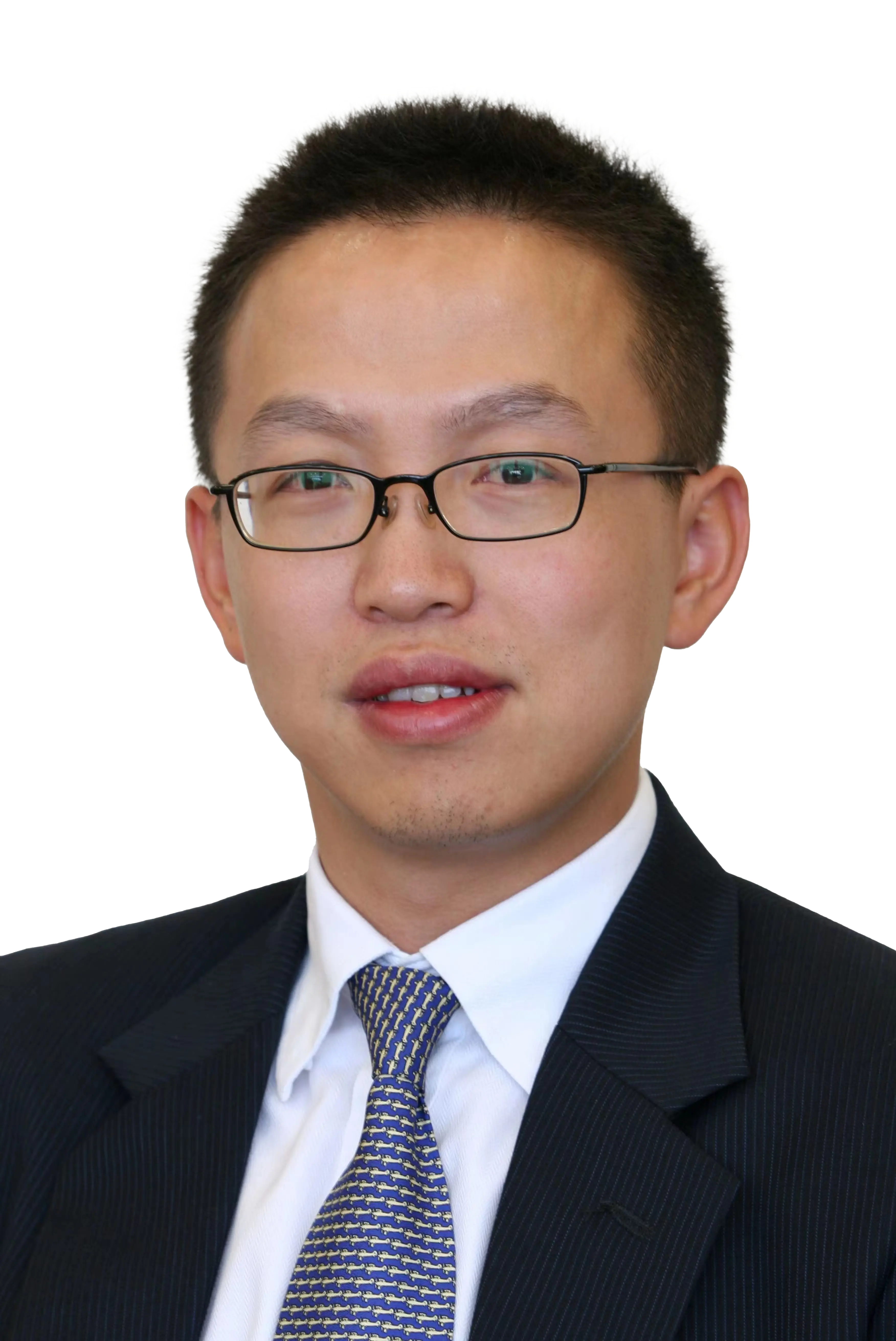
Founder, Hash Global Advisory Company Ltd.
Session: From Hype to Holdings — Where Smart Money Goes in Digital Assets 2025–2027
With institutional frameworks for Web 3.0 maturing, investors are increasingly focused on sustainable value creation. In his session, Kang Shen will discuss how smart capital is moving beyond speculation toward real-world utility—themes echoed in his reflections shared ahead of the forum.
Kang Shen, founder of Hash Global Advisory, applies value-investing principles to the Web 3.0 sector. A graduate of Fudan University and the University of Chicago Booth School of Business and a Chartered Financial Analyst (CFA), Shen has more than 20 years of financial industry experience with roles at the Industrial Bank of Japan, PIMCO and Bosera Asset Management.
On the tokenization of real-world assets, Shen observed that the RWA sector remains in its early phase of regulatory and infrastructure development. Over the next two years, as compliance systems mature, scalable projects with tangible value will emerge. For now, his approach remains cautious, focusing on fundamentals rather than inflated market narratives.
He also shared his optimism for three areas with the most potential upside: Web 3.0 Culture and Entertainment—including projects like Meet48 and Offgrid; Web 3.0 E-Commerce and Payments—with ventures such as WSPN, RD Technologies and Bitgoods; and On-Chain Data and Data Assets—such as Chainbase and Data Dance Chain. These, he noted, represent meaningful real-world applications of Web 3.0 technologies.
“Web 3.0 is currently undergoing a process of value realignment.”
Shen emphasized that Hash Global has always been committed to applying value-investing principles to the field of digital asset management. As early as 2019, the firm proposed using a monetary equation framework to evaluate ecosystem tokens and recently defined a new class—“Value-Functional Tokens”. He believes Web 3.0 is now undergoing a process of value realignment, where genuine utility will determine long-term worth.

Founder and CEO, Zhejiang Linctex Digital Technology Co., Ltd. (Style3D)
Session: Strategic Exits — IPO Paths for Expanding Rapid-Growth Companies
The fashion and textile industry is undergoing rapid digital transformation. Against this backdrop, Eric Liu will join CVCF 2025 to discuss strategic growth and expansion paths for fast-scaling companies.
Eric Liu, founder and CEO of Zhejiang Linctex Digital Technology Co., Ltd. (Style3D), holds dual master’s degrees in applied computing and molecular biology from VUB University in Belgium and a PhD in Electronic Information Engineering from Zhejiang University. A serial entrepreneur in the textile industry, Liu founded Style3D to drive digital transformation through AI and 3D technology.
He explained that Style3D’s fusion of AI and 3D technology builds a full-chain digital ecosystem. AI-driven design tools powered by large language models shorten design cycles from weeks to hours, while 3D simulation reduces prototyping costs by 30 percent. The company’s self-developed simulation engine supports virtual fashion shows and sustainability initiatives by optimizing fabric usage.
“Style3D’s fusion of AI and 3D technology builds a full-chain digital ecosystem.”
On the company’s origins, Liu said that traditional fashion R&D cycles are slow and costly. By integrating AI for pattern generation and 3D for design-to-production links, Style3D overcomes these barriers. With over 200 core patents and an extensive database of 2.3 million fabric properties and 1.2 million garment templates, the company leads digital fashion innovation.
Looking ahead, Liu noted that Style3D reinvests 40 percent of annual revenue into R&D, develops AI-driven trend prediction tools and expands innovation hubs in Paris and Milan. By leading the standardization of “3D Digital Fashion Infrastructure”, Style3D is setting the industry benchmark for the next era of intelligent manufacturing.
As global innovators prepare to gather at CVCF 2025, the forum promises to ignite ideas, discoveries and partnerships that will shape the future of technology and investment. From cutting-edge insights to practical strategies, the conversations starting here are just the beginning of a journey to redefine what’s possible in the global innovation ecosystem.
.jpg)
Keep Reading
Can SPhotonix’s optical memory technology protect data better than today’s storage?
Updated
January 8, 2026 6:32 PM

SPhotonix's 5D Memory Crystals™. PHOTO: SPHOTONIX
SPhotonix, a young deep-tech startup, is working on something unexpected for the data storage world: tiny, glass-like crystals that can hold enormous amounts of information for extremely long periods of time. The company works where light and data meet, using photonics—the science of shaping and guiding light—to build optical components and explore a new form of memory called “5D optical storage”.
It’s based on research that began more than twenty years ago, when Professor Peter Kazansky showed that a small crystal could preserve data—from the human genome to the entire Wikipedia—essentially forever.
Their new US$4.5 million pre-seed round, led by Creator Fund and XTX Ventures, is meant to turn that science into real products. And the timing aligns with a growing problem: the world is generating far more digital data than current storage systems can handle. Most of it isn’t needed every day, but it can’t be thrown away either. This long-term, rarely accessed cold data is piling up faster than existing storage infrastructure can manage and maintaining giant warehouses of servers just to keep it all alive is becoming expensive and environmentally unsustainable.
This is the problem SPhotonix is stepping in to solve. They want to store huge amounts of information in a stable format that doesn’t degrade, doesn’t need electricity to preserve data and doesn’t require constant swapping of hardware. Instead of racks of spinning drives, the idea is a durable optical crystal storage system that could last for generations.
The company’s underlying technology—called FemtoEtch™—uses ultrafast lasers to engrave microscopic patterns inside fused silica. These precisely etched structures can function as high-performance optical components for fields like aerospace, microscopy and semiconductor manufacturing. But the same ultra-controlled process can also encode information in five dimensions within the crystal, transforming the material into a compact, long-lasting archive capable of holding massive amounts of information in a very small footprint.
The new funding allows SPhotonix to expand its engineering team, grow its R&D facility in Switzerland and prepare the technology for real-world deployment. Investors say the opportunity is significant: global data generation has more than doubled in recent years and traditional storage systems—drives, disks, tapes—weren’t designed for the scale or longevity modern data demands.
While the company has been gaining attention in research circles (and even made an appearance in the latest Mission Impossible film), its next step is all about practical adoption. If the technology reaches commercial viability, it could offer an alternative to the energy-hungry, short-lived storage hardware that underpins much of today’s digital infrastructure.
As digital information continues to multiply, preserving it safely and sustainably is becoming one of the biggest challenges in modern computing. SPhotonix’s work points toward a future where long-lasting, low-maintenance optical data storage becomes a practical alternative to today’s fragile systems. It offers a more resilient way to preserve knowledge for the decades ahead.