
Where Hollywood magic meets AI intelligence — Hong Kong becomes the new stage for virtual humans
Updated
February 7, 2026 2:18 PM

William Wong, Chairman and CEO of Digital Domain. PHOTO: YORKE YU
In an era where pixels and intelligence converge, few companies bridge art and science as seamlessly as Digital Domain. Founded three decades ago by visionary filmmaker James Cameron, the company built its name through cinematic wizardry—bringing to life the impossible worlds of Titanic, The Curious Case of Benjamin Button and the Marvel universe. But today, its focus has evolved far beyond Hollywood: Digital Domain is reimagining the future of AI-driven virtual humans—and it’s doing so from right here in Hong Kong.
.jpg)
“AI and visual technology are merging faster than anyone imagined,” says William Wong, Chairman and CEO of Digital Domain. “For us, the question is not whether AI will reshape entertainment—it already has. The question is how we can extend that power into everyday life.”
Though globally recognized for its work on blockbuster films and AAA games, Digital Domain’s story is also deeply connected to Asia. A Hong Kong–listed company, it operates a network of production and research centers across North America, China and India. In 2024, it announced a major milestone—setting up a new R&D hub at Hong Kong Science Park focused on advancing artificial intelligence and virtual human technologies. “Our roots are in visual storytelling, but AI is unlocking a new frontier,” Wong says. “Hong Kong has been very proactive in promoting innovation and research, and with the right partnerships, we see real potential to make this a global R&D base.”
Building on that commitment, the company plans to invest about HK$200 million over five years, assembling a team of more than 40 professional talents specializing in computer vision, machine learning and digital production. For now, the team is still growing and has room to expand. “Talent is everything,” says Wong. “We want to grow local expertise while bringing in global experience to accelerate the learning curve.”

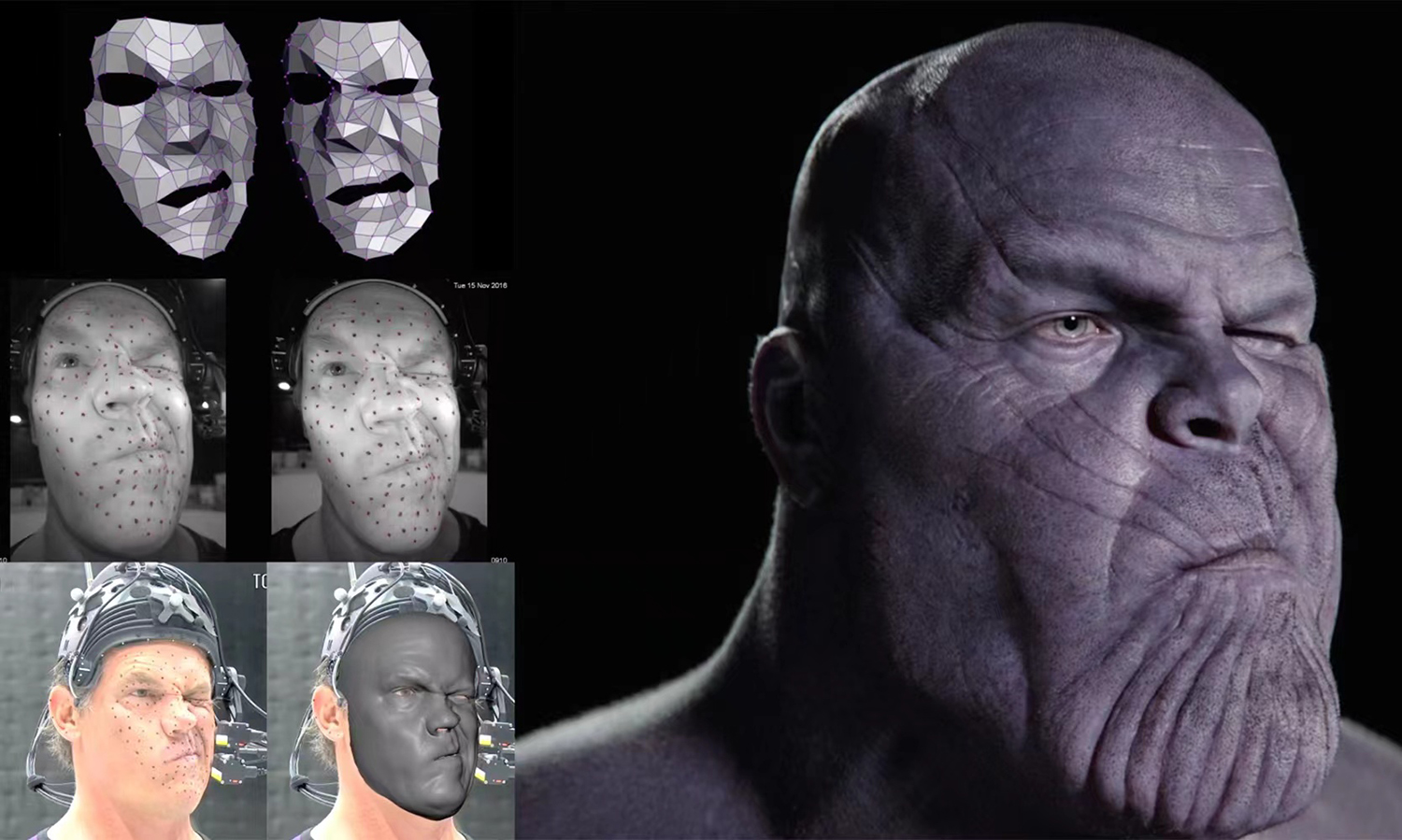
Digital Domain’s latest chapter revolves around one of AI’s most fascinating frontiers: the creation of virtual humans.
These are hyperrealistic, AI-powered virtual humans capable of speaking, moving and responding in real time. Using the advanced motion-capture and rendering techniques that transformed Hollywood visual effects, the company now builds digital personalities that appear on screens and in physical environments—serving in media, education, retail and even public services.
One of its most visible projects is “Aida”, the AI-powered presenter who delivers nightly weather reports on the Radio Television Hong Kong (RTHK). Another initiative, now in testing, will soon feature AI-powered concierges greeting travelers at airports, able to communicate in multiple languages and provide real-time personalized services. Similar collaborations are under way in healthcare, customer service and education.
“What’s exciting,” says Wong, “is that our technologies amplify human capability, helping to deliver better experiences, greater efficiency and higher capacity. AI-powered virtual humans can interact naturally, emotionally and in any language. They can help scale creativity and service, not replace it.”
To make that possible, Digital Domain has designed its system for compatibility and flexibility. It can connect to major AI models—from OpenAI and Google to Baidu—and operate across cloud platforms like AWS, Alibaba Cloud and Microsoft Azure. “It’s about openness,” says Wong. “Our clients can choose the AI brain that best fits their business.”
Establishing a permanent R&D base in Hong Kong marks a turning point for the company—and, in a broader sense, for the city’s technology ecosystem. With the support of the Office for Attracting Strategic Enterprises (OASES) in Hong Kong, Digital Domain hopes to make the city a creative hub where AI meets visual arts. “Hong Kong is the perfect meeting point,” Wong says. “It combines international exposure with a growing innovation ecosystem. We want to make it a hub for creative AI.”
As part of this effort, the company is also collaborating with universities such as the University of Hong Kong, City University of Hong Kong and Hong Kong Baptist University to co-develop new AI solutions and nurture the next generation of engineers. “The goal,” Wong notes, “is not just R&D for the sake of research—but R&D that translates into real-world impact.”

The collaboration with OASES underscores how both the company and the city share a vision for innovation-led growth. As Peter Yan King-shun, Director-General of OASES, notes, the initiative reflects Hong Kong’s growing strength as a global innovation and technology hub. “OASES was set up to attract high-potential enterprises from around the world across key sectors such as AI, data science, and cultural and creative technology,” he says. “Digital Domain’s new R&D center is a strong example of how Hong Kong can combine world-class talent, technology and creativity to drive innovation and global competitiveness.”
Digital Domain’s story mirrors the evolution of Hong Kong’s own innovation landscape—where creativity, technology and global ambition converge. From the big screen to the next generation of intelligent avatars, the company continues to prove that imagination is not bound by borders, but powered by the courage to reinvent what’s possible.
Keep Reading
From TV to YouTube, the Oscars’ global shift reveals how entertainment, access and platforms are reshaping cultural institutions.
Updated
January 8, 2026 6:29 PM

Youtube app on a mobile device. PHOTO: UNSPLASH
The Oscars are moving to YouTube. Beginning in 2029, the Academy of Motion Picture Arts and Sciences has signed a multi-year agreement that makes YouTube the exclusive global home of the Oscars through 2033. From the ceremony itself to red carpet coverage, behind-the-scenes access and the Governors Ball, the entire experience will live on a platform most people already open every day.
On the surface, it looks like a distribution shift. In reality, it signals a broader strategic reset. For decades, television delivered scale for cultural institutions. Today, reach and discovery live on platforms, not channels. By choosing YouTube, the Academy is quietly acknowledging that cultural relevance today is built where audiences already are. In that context, YouTube is no longer just a place to watch clips but an emerging piece of cultural infrastructure.
What also stands out is how the Oscars are being reframed. This partnership is not limited to one night a year. Alongside the ceremony, YouTube will host year-round Academy programming through the Oscars YouTube channel. That includes nominations announcements, the Governors Awards, the Student Academy Awards, the Scientific and Technical Awards, filmmaker interviews, podcasts and education programs. Instead of a single broadcast moment, the Oscars are turning into an always-on ecosystem.
Accessibility is another central pillar of the deal. The Oscars will be free to watch globally, supported by closed captioning and audio tracks in multiple languages. This is less about nice-to-have features and more about staying relevant in a global, digital-first world. Younger audiences and viewers outside traditional Western markets expect access by default. The Academy is clearly building with that expectation in mind.
There is also a deeper exchange happening between heritage and technology. YouTube gains cultural weight by hosting one of the world’s most established creative institutions. The Academy, in turn, gains technological legitimacy and a clearer path into the future.
That balance extends to how the transition is being handled. The Academy’s domestic broadcast partnership with Disney ABC will continue through the 100th Oscars in 2028 and the international arrangement with Disney’s Buena Vista International remains in place until then. This is not an abrupt break from legacy media but a carefully phased shift. Change is being managed without burning bridges.
“We are thrilled to enter into a multifaceted global partnership with YouTube to be the future home of the Oscars and our year-round Academy programming,” said Academy CEO Bill Kramer and Academy President Lynette Howell Taylor. “The Academy is an international organization and this partnership will allow us to expand access to the work of the Academy to the largest worldwide audience possible — which will be beneficial for our Academy members and the film community. This collaboration will leverage YouTube’s vast reach and infuse the Oscars and other Academy programming with innovative opportunities for engagement while honoring our legacy. We will be able to celebrate cinema, inspire new generations of filmmakers and provide access to our film history on an unprecedented global scale.”
From YouTube’s side, the partnership places the platform firmly in the center of global cultural moments. “The Oscars are one of our essential cultural institutions, honoring excellence in storytelling and artistry,” said Neal Mohan, CEO, YouTube. “Partnering with the Academy to bring this celebration of art and entertainment to viewers all over the world will inspire a new generation of creativity and film lovers while staying true to the Oscars’ storied legacy.”
Google Arts & Culture extends the partnership beyond the ceremony. Select Academy Museum exhibitions and materials from the Academy’s 52-million-item collection will be made digitally accessible worldwide, bringing film history and education onto the same platform.
Taken together, the deal is less about where the Oscars will stream and more about how cultural institutions are adapting to the changing landscape. The Academy is positioning itself to be present year-round, globally accessible and aligned with the platforms that shape everyday viewing.