
Where Hollywood magic meets AI intelligence — Hong Kong becomes the new stage for virtual humans
Updated
January 28, 2026 1:42 PM

William Wong, Chairman and CEO of Digital Domain. PHOTO: YORKE YU
In an era where pixels and intelligence converge, few companies bridge art and science as seamlessly as Digital Domain. Founded three decades ago by visionary filmmaker James Cameron, the company built its name through cinematic wizardry—bringing to life the impossible worlds of Titanic, The Curious Case of Benjamin Button and the Marvel universe. But today, its focus has evolved far beyond Hollywood: Digital Domain is reimagining the future of AI-driven virtual humans—and it’s doing so from right here in Hong Kong.
.jpg)
“AI and visual technology are merging faster than anyone imagined,” says William Wong, Chairman and CEO of Digital Domain. “For us, the question is not whether AI will reshape entertainment—it already has. The question is how we can extend that power into everyday life.”
Though globally recognized for its work on blockbuster films and AAA games, Digital Domain’s story is also deeply connected to Asia. A Hong Kong–listed company, it operates a network of production and research centers across North America, China and India. In 2024, it announced a major milestone—setting up a new R&D hub at Hong Kong Science Park focused on advancing artificial intelligence and virtual human technologies. “Our roots are in visual storytelling, but AI is unlocking a new frontier,” Wong says. “Hong Kong has been very proactive in promoting innovation and research, and with the right partnerships, we see real potential to make this a global R&D base.”
Building on that commitment, the company plans to invest about HK$200 million over five years, assembling a team of more than 40 professional talents specializing in computer vision, machine learning and digital production. For now, the team is still growing and has room to expand. “Talent is everything,” says Wong. “We want to grow local expertise while bringing in global experience to accelerate the learning curve.”

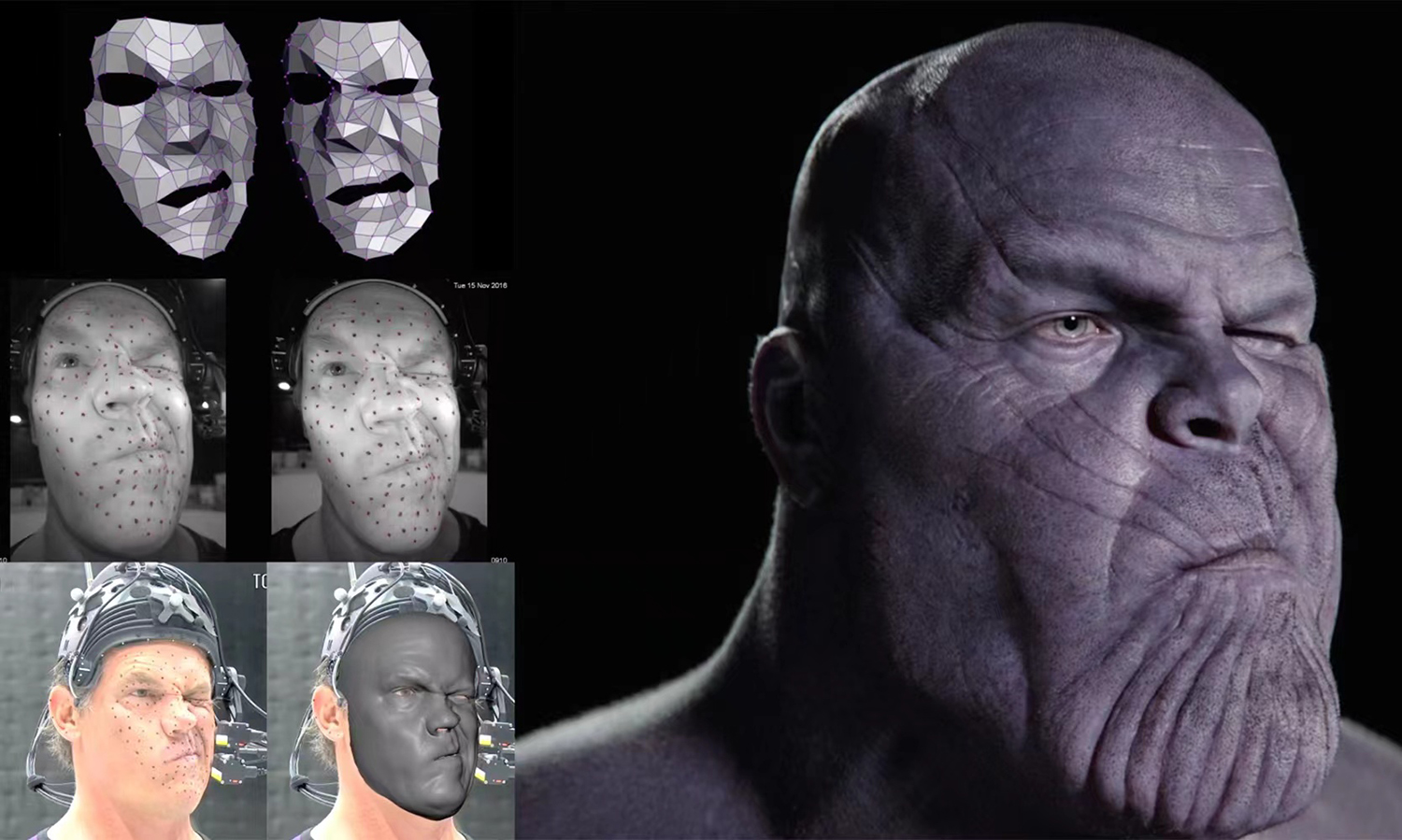
Digital Domain’s latest chapter revolves around one of AI’s most fascinating frontiers: the creation of virtual humans.
These are hyperrealistic, AI-powered virtual humans capable of speaking, moving and responding in real time. Using the advanced motion-capture and rendering techniques that transformed Hollywood visual effects, the company now builds digital personalities that appear on screens and in physical environments—serving in media, education, retail and even public services.
One of its most visible projects is “Aida”, the AI-powered presenter who delivers nightly weather reports on the Radio Television Hong Kong (RTHK). Another initiative, now in testing, will soon feature AI-powered concierges greeting travelers at airports, able to communicate in multiple languages and provide real-time personalized services. Similar collaborations are under way in healthcare, customer service and education.
“What’s exciting,” says Wong, “is that our technologies amplify human capability, helping to deliver better experiences, greater efficiency and higher capacity. AI-powered virtual humans can interact naturally, emotionally and in any language. They can help scale creativity and service, not replace it.”
To make that possible, Digital Domain has designed its system for compatibility and flexibility. It can connect to major AI models—from OpenAI and Google to Baidu—and operate across cloud platforms like AWS, Alibaba Cloud and Microsoft Azure. “It’s about openness,” says Wong. “Our clients can choose the AI brain that best fits their business.”
Establishing a permanent R&D base in Hong Kong marks a turning point for the company—and, in a broader sense, for the city’s technology ecosystem. With the support of the Office for Attracting Strategic Enterprises (OASES) in Hong Kong, Digital Domain hopes to make the city a creative hub where AI meets visual arts. “Hong Kong is the perfect meeting point,” Wong says. “It combines international exposure with a growing innovation ecosystem. We want to make it a hub for creative AI.”
As part of this effort, the company is also collaborating with universities such as the University of Hong Kong, City University of Hong Kong and Hong Kong Baptist University to co-develop new AI solutions and nurture the next generation of engineers. “The goal,” Wong notes, “is not just R&D for the sake of research—but R&D that translates into real-world impact.”

The collaboration with OASES underscores how both the company and the city share a vision for innovation-led growth. As Peter Yan King-shun, Director-General of OASES, notes, the initiative reflects Hong Kong’s growing strength as a global innovation and technology hub. “OASES was set up to attract high-potential enterprises from around the world across key sectors such as AI, data science, and cultural and creative technology,” he says. “Digital Domain’s new R&D center is a strong example of how Hong Kong can combine world-class talent, technology and creativity to drive innovation and global competitiveness.”
Digital Domain’s story mirrors the evolution of Hong Kong’s own innovation landscape—where creativity, technology and global ambition converge. From the big screen to the next generation of intelligent avatars, the company continues to prove that imagination is not bound by borders, but powered by the courage to reinvent what’s possible.
Keep Reading
From information gaps to global access — how AI is reshaping the pursuit of knowledge.
Updated
January 8, 2026 6:33 PM
.jpg)
Paper cut-outs of robots sitting on a pile of books. PHOTO: FREEPIK
Encyclopaedias have always been mirrors of their time — from heavy leather-bound volumes in the 19th century to Wikipedia’s community-edited pages online. But as the world’s information multiplies faster than humans can catalogue it, even open platforms struggle to keep pace. Enter Botipedia, a new project from INSEAD, The Business School for the World, that reimagines how knowledge can be created, verified and shared using artificial intelligence.
At its core, Botipedia is powered by proprietary AI that automates the process of writing encyclopaedia entries. Instead of relying on volunteers or editors, it uses a system called Dynamic Multi-method Generation (DMG) — a method that combines hundreds of algorithms and curated datasets to produce high-quality, verifiable content. This AI doesn’t just summarise what already exists; it synthesises information from archives, satellite feeds and data libraries to generate original text grounded in facts.
What makes this innovation significant is the gap it fills in global access to knowledge. While Wikipedia hosts roughly 64 million English-language entries, languages like Swahili have fewer than 40,000 articles — leaving most of the world’s population outside the circle of easily available online information. Botipedia aims to close that gap by generating over 400 billion entries across 100 languages, ensuring that no subject, event or region is overlooked.
"We are creating Botipedia to provide everyone with equal access to information, with no language left behind", says Phil Parker, INSEAD Chaired Professor of Management Science, creator of Botipedia and holder of one of the pioneering patents in the field of generative AI. "We focus on content grounded in data and sources with full provenance, allowing the user to see as many perspectives as possible, as opposed to one potentially biased source".
Unlike many generative AI tools that depend on large language models (LLMs), Botipedia adapts its methods based on the type of content. For instance, weather data is generated using geo-spatial techniques to cover every possible coordinate on Earth. This targeted, multi-method approach helps boost both the accuracy and reliability of what it produces — key challenges in today’s AI-driven content landscape.
Additionally, the innovation is also energy-efficient. Its DMG system operates at a fraction of the processing power required by GPU-heavy models like ChatGPT, making it a sustainable alternative for large-scale content generation.
By combining AI precision, linguistic inclusivity and academic credibility, Botipedia positions itself as more than a digital library — it’s a step toward universal, unbiased access to verified knowledge.
"Botipedia is one of many initiatives of the Human and Machine Intelligence Institute (HUMII) that we are establishing at INSEAD", says Lily Fang, Dean of Research and Innovation at INSEAD. "It is a practical application that builds on INSEAD-linked IP to help people make better decisions with knowledge powered by technology. We want technologies that enhance the quality and meaning of our work and life, to retain human agency and value in the age of intelligence".
By harnessing AI to bridge gaps of language, geography and credibility, Botipedia points to a future where access to knowledge is no longer a privilege, but a shared global resource.