
A new safety layer aims to help robots sense people in real time without slowing production
Updated
February 13, 2026 10:44 AM
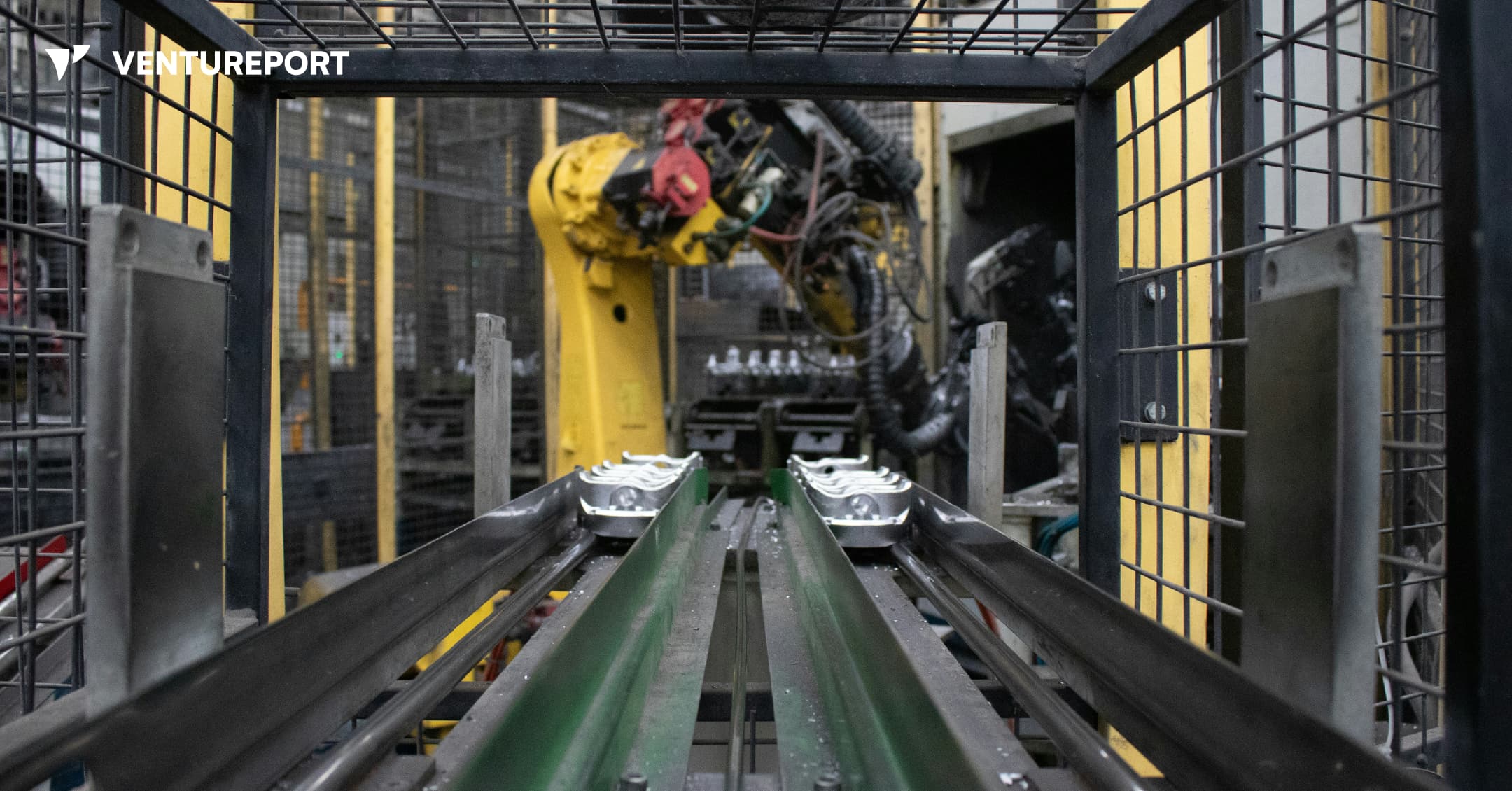
An industrial robot in a factory. PHOTO: UNSPLASH
Algorized has raised US$13 million in a Series A round to advance its AI-powered safety and sensing technology for factories and warehouses. The California- and Switzerland-based robotics startup says the funding will help expand a system designed to transform how robots interact with people. The round was led by Run Ventures, with participation from the Amazon Industrial Innovation Fund and Acrobator Ventures, alongside continued backing from existing investors.
At its core, Algorized is building what it calls an intelligence layer for “physical AI” — industrial robots and autonomous machines that function in real-world settings such as factories and warehouses. While generative AI has transformed software and digital workflows, bringing AI into physical environments presents a different challenge. In these settings, machines must not only complete tasks efficiently but also move safely around human workers.
This is where a clear gap exists. Today, most industrial robots rely on camera-based monitoring systems or predefined safety zones. For instance, when a worker steps into a marked area near a robotic arm, the system is programmed to slow down or stop the machine completely. This approach reduces the risk of accidents. However, it also means production lines can pause frequently, even when there is no immediate danger. In high-speed manufacturing environments, those repeated slowdowns can add up to significant productivity losses.
Algorized’s technology is designed to reduce that trade-off between safety and efficiency. Instead of relying solely on cameras, the company utilizes wireless signals — including Ultra-Wideband (UWB), mmWave, and Wi-Fi — to detect movement and human presence. By analysing small changes in these radio signals, the system can detect motion and breathing patterns in a space. This helps machines determine where people are and how they are moving, even in conditions where cameras may struggle, such as poor lighting, dust or visual obstruction.
Importantly, this data is processed locally at the facility itself — not sent to a remote cloud server for analysis. In practical terms, this means decisions are made on-site, within milliseconds. Reducing this delay, or latency, allows robots to adjust their movements immediately instead of defaulting to a full stop. The aim is to create machines that can respond smoothly and continuously, rather than reacting in a binary stop-or-go manner.
With the new funding, Algorized plans to scale commercial deployments of its platform, known as the Predictive Safety Engine. The company will also invest in refining its intent-recognition models, which are designed to anticipate how humans are likely to move within a workspace. In parallel, it intends to expand its engineering and support teams across Europe and the United States. These efforts build on earlier public demonstrations and ongoing collaborations with manufacturing partners, particularly in the automotive and industrial sectors.
For investors, the appeal goes beyond safety compliance. As factories become more automated, even small improvements in uptime and workflow continuity can translate into meaningful financial gains. Because Algorized’s system works with existing wireless infrastructure, manufacturers may be able to upgrade machine awareness without overhauling their entire hardware setup.
More broadly, the company is addressing a structural limitation in industrial automation. Robotics has advanced rapidly in precision and power, yet human-robot collaboration is still governed by rigid safety systems that prioritise stopping over adapting. By combining wireless sensing with edge-based AI models, Algorized is attempting to give machines a more continuous awareness of their surroundings from the start.
Keep Reading
The Influencer Evolution: Recognizing the Power and Potential of Each Type.
Updated
January 8, 2026 6:35 PM
.jpg)
A group of people filming a video for social media. PHOTO: UNSPLASH
In an era where social media reigns supreme, influencers have emerged as powerful players in the marketing game. They have the ability to sway opinions, drive trends, and create waves of engagement that brands can only dream of. But not all influencers are created equal; they come in various shapes and sizes, each with a unique approach to connecting with their audience. Under standing the different types of influencers can illuminate how they impact our daily lives and the choices we make. Let’s dive into the captivating world of influencers and explore the diverse categories that define them.
When you think of influencers, mega influencers are often the first that come to mind. These are the A-list celebrities, athletes, and global icons with millions of followers on platforms like Instagram, TikTok, and YouTube. Their immense reach allows brands to tap into vast audiences, making them highly sought after for endorsements.
Mega influencers have the power to generate instant buzz around a product or campaign. Their celebrity status lends credibility, and fans are often eager to emulate their lifestyles. However, this type of influencer can come with a hefty price tag, making them suitable for brands with substantial marketing budgets.
Just below the mega influencers are macro influencers, who typically boast between 100,000to 1 million followers. While they may not have the same level of fame as celebrities, macro influencers often command a loyal and engaged audience. They are usually experts in specific niches, such as fitness, beauty, travel, or technology.
Macro influencers combine reach with relevance. Their targeted expertise allows brands to connect with specific demographics, making them an ideal choice for campaigns aimed at niche markets. Their followers often view them as relatable and trustworthy, which can lead to higher engagement rates.
Micro influencers are the rising stars of the influencer world, typically having between 10,000 to 100,000 followers. What sets them apart is their authentic connection with their audience. They often have a more intimate relationship with their followers, leading to higher engagement and trust.
Brands are increasingly turning to micro influencers for their ability to create genuine conversations around products. The cost-effectiveness of partnering with micro influencers also allows brands to run multiple campaigns across different influencers, amplifying their reach while maintaining authenticity.
At the bottom of the influencer hierarchy are nano influencers, who have 1,000 to 10,000 followers. While their follower count may be modest, nano influencers often possess a highly engaged audience that views them as close friends, families or peers rather than celebrities.
Nano influencers are perfect for brands looking to create grassroots campaigns. Their genuine enthusiasm and relatability can lead to strong word-of-mouth marketing. Engaging with nano influencers often comes at a lower cost, making them an attractive option for small businesses and startups.
Brand ambassadors are influencers who have a long-term relationship with a brand, often representing them across multiple campaigns. They can fall into any of the previous categories but are distinguished by their commitment to the brand and its values.
By cultivating brand ambassadors, companies can create consistent messaging and foster loyalty among customers. These influencers often resonate with audiences more deeply, as they embody the brand’s identity and promote its products authentically over time.
The world of influencers is as diverse as it is dynamic, with each type offering unique advantages for brands looking to connect with consumers. From the glitzy allure of mega influencers to the genuine relatability of nano influencers, understanding these categories can help brands make informed choices in their marketing strategies. As the digital landscape continues to evolve, the role of influencers will only grow, shaping trends and driving engagement in ways we are just beginning to comprehend. By leveraging the right type of influencer, brands can effectively navigate this vibrant ecosystem, ensuring their message resonates with the audiences that matter most.