
Robots that learn on the job: AgiBot tests reinforcement learning in real-world manufacturing.
Updated
January 8, 2026 6:34 PM

A humanoid robot works on a factory line, showcasing advanced automation in real-world production. PHOTO: AGIBOT
Shanghai-based robotics firm AgiBot has taken a major step toward bringing artificial intelligence into real manufacturing. The company announced that its Real-World Reinforcement Learning (RW-RL) system has been successfully deployed on a pilot production line run in partnership with Longcheer Technology. It marks one of the first real applications of reinforcement learning in industrial robotics.
The project represents a key shift in factory automation. For years, precision manufacturing has relied on rigid setups: robots that need custom fixtures, intricate programming and long calibration cycles. Even newer systems combining vision and force control often struggle with slow deployment and complex maintenance. AgiBot’s system aims to change that by letting robots learn and adapt on the job, reducing the need for extensive tuning or manual reconfiguration.
The RW-RL setup allows a robot to pick up new tasks within minutes rather than weeks. Once trained, the system can automatically adjust to variations, such as changes in part placement or size tolerance, maintaining steady performance throughout long operations. When production lines switch models or products, only minor hardware tweaks are needed. This flexibility could significantly cut downtime and setup costs in industries where rapid product turnover is common.
The system’s main strengths lie in faster deployment, high adaptability and easier reconfiguration. In practice, robots can be retrained quickly for new tasks without needing new fixtures or tools — a long-standing obstacle in consumer electronics production. The platform also works reliably across different factory layouts, showing potential for broader use in complex or varied manufacturing environments.
Beyond its technical claims, the milestone demonstrates a deeper convergence between algorithmic intelligence and mechanical motion.Instead of being tested only in the lab, AgiBot’s system was tried in real factory settings, showing it can perform reliably outside research conditions.
This progress builds on years of reinforcement learning research, which has gradually pushed AI toward greater stability and real-world usability. AgiBot’s Chief Scientist Dr. Jianlan Luo and his team have been at the forefront of that effort, refining algorithms capable of reliable performance on physical machines. Their work now underpins a production-ready platform that blends adaptive learning with precision motion control — turning what was once a research goal into a working industrial solution.
Looking forward, the two companies plan to extend the approach to other manufacturing areas, including consumer electronics and automotive components. They also aim to develop modular robot systems that can integrate smoothly with existing production setups.
Keep Reading
The IT services firm strengthens its collaboration with Google Cloud to help enterprises move AI from pilot projects to production systems
Updated
February 18, 2026 8:11 PM
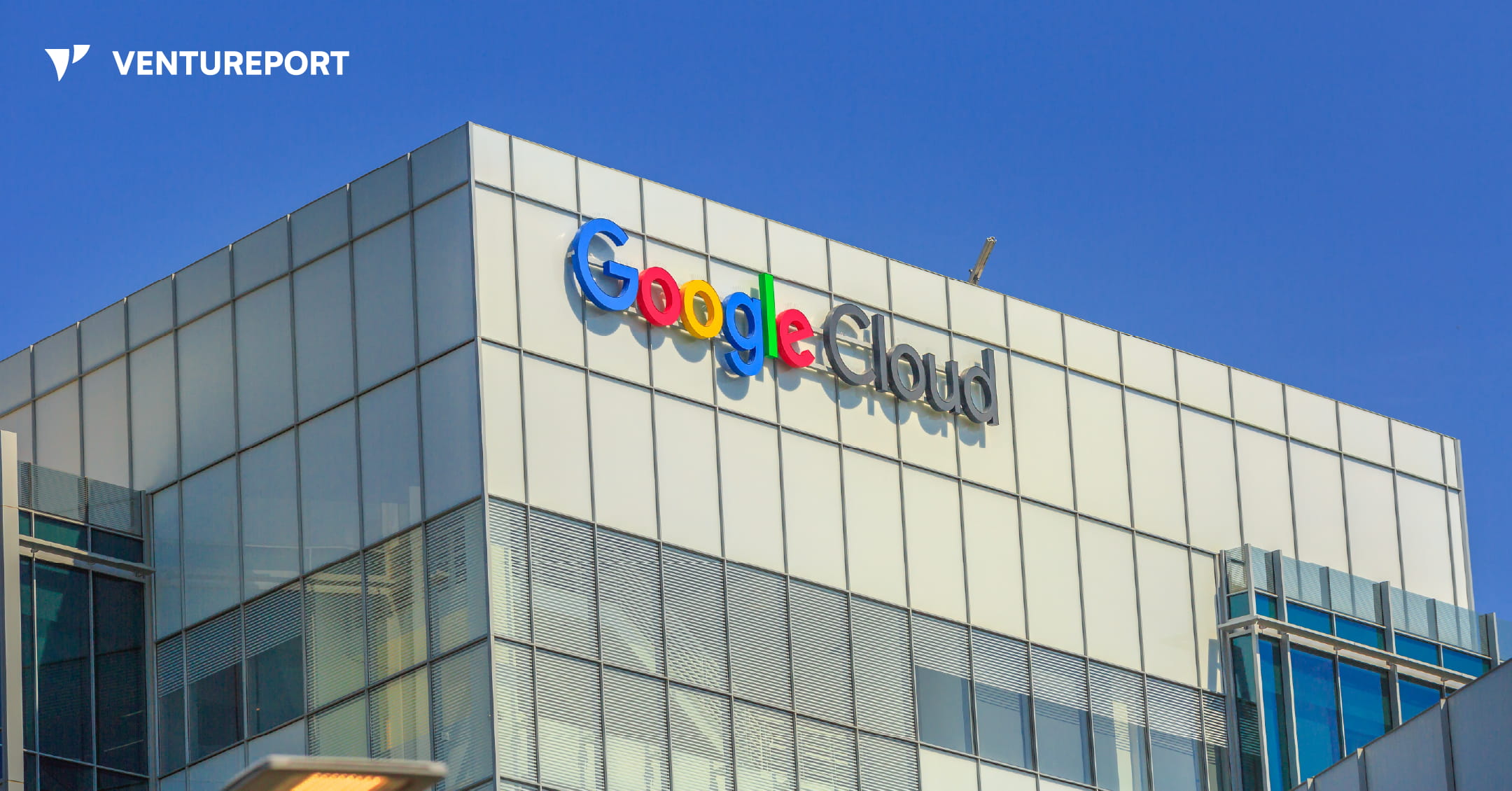
Google Cloud building. PHOTO: ADOBE STOCK
Enterprise interest in AI has moved quickly from experimentation to execution. Many organizations have tested generative tools, but turning those tools into systems that can run inside daily operations remains a separate challenge. Cognizant, an IT services firm, is expanding its partnership with Google Cloud to help enterprises move from AI pilots to fully deployed, production-ready systems.
Cognizant and Google Cloud are deepening their collaboration around Google’s Gemini Enterprise and Google Workspace. Cognizant is deploying these tools across its own workforce first, using them to support internal productivity and collaboration. The idea is simple: test and refine the systems internally, then package similar capabilities for clients.
The focus of the partnership is what Cognizant calls “agentic AI.” In practical terms, this refers to AI systems that can plan, act and complete tasks with limited human input. Instead of generating isolated outputs, these systems are designed to fit into business workflows and carry out structured tasks.
To make that workable at scale, Cognizant is building delivery infrastructure around the technology. The company is setting up a dedicated Gemini Enterprise Center of Excellence and formalizing an Agent Development Lifecycle. This framework covers the full process, from early design and blueprinting to validation and production rollout. The aim is to give enterprises a clearer path from the AI concept to a deployed system.
Cognizant also plans to introduce a bundled productivity offering that combines Gemini Enterprise with Google Workspace. The targeted use cases are operational rather than experimental. These include collaborative content creation, supplier communications and other workflow-heavy processes that can be standardized and automated.
Beyond productivity tools, Cognizant is integrating Gemini into its broader service platforms. Through Cognizant Ignition, enabled by Gemini, the company supports early-stage discovery and prototyping while helping clients strengthen their data foundations. Its Agent Foundry platform provides pre-configured and no-code capabilities for specific use cases such as AI-powered contact centers and intelligent order management. These tools are designed to reduce the amount of custom development required for each deployment.
Scaling is another element of the strategy. Cognizant, a multi-year Google Cloud Data Partner of the Year award winner, says it will rely on a global network of Gemini-trained specialists to deliver these systems. The company is also expanding work tied to Google Distributed Cloud and showcasing capabilities through its Google Experience Zones and Gen AI Studios.
For Google Cloud, the partnership reinforces its enterprise AI ecosystem. Cloud providers can offer models and infrastructure, but enterprise adoption often depends on service partners that can integrate tools into existing systems and manage ongoing operations. By aligning closely with Cognizant, Google strengthens its ability to move Gemini from platform capability to production deployment.
The announcement does not introduce a new AI model. Instead, it reflects a shift in emphasis. The core question is no longer whether AI tools exist, but how they are implemented, governed and scaled across large organizations. Cognizant’s expanded role suggests that execution frameworks, internal deployment and structured delivery models are becoming central to how enterprises approach AI.
In that sense, the partnership is less about new technology and more about operational maturity. It highlights how AI is moving from isolated pilots to managed systems embedded in business processes — a transition that will likely define the next phase of enterprise adoption.