
Skip the slogans—real Women’s Day campaigns create impact that lasts
Updated
March 6, 2026 1:23 AM

Mother Armenia monument in Victory Park, Gyumri city, Armenia. PHOTO: ADOBE STOCK
Women’s Day offers brands an opportunity to show what they stand for through meaningful action. But the strongest International Women’s Day campaigns do more than say “thank you”. They speak to women’s everyday lives.
Instead of big, vague empowerment slogans, some brands focus on small moments that shape confidence and wellbeing. Think about how we compliment young girls, how safe public spaces feel, what comfort really looks like and how friendship plays help women grow. When a campaign is built on a real insight and backed by something practical, it lands harder and lasts longer.
If you’re a startup planning a Women’s Day initiative, there’s value in studying what actually works. The examples below show how clarity, credibility and usefulness can turn International Women’s Day into something that feels meaningful and on-brand.

To celebrate the International Day of the Girl on October 11, 2025, Dove launched #ChangeTheCompliment—a campaign that asked parents and caregivers to rethink how they praise girls. Instead of defaulting to looks-based comments, Dove encouraged adults to acknowledge qualities like resilience, intelligence and determination alongside beauty.
The idea was grounded in data from Dove’s 2024 Real State of Beauty report, which found that more than 60% of girls feel pressure to be beautiful. Dove brought the message to life through a digital film showing parents broadening their praise in everyday moments.
In Canada, the campaign expanded through a partnership with psychologist Dr. Vanessa Lapointe, who helped anchor #ChangeTheCompliment in expert insight. She linked the campaign’s core message to Dove’s long-running Self-Esteem Project, launched in 2004 to provide free, evidence-based tools developed with psychologists and body image experts. Some of these tools included “Confident Me”, a classroom workshop on body confidence and “Amazing Me”, age-appropriate lessons designed to support self-esteem at school.
What worked here is that it didn’t stay inside a brand video. Parents, teachers and creators joined in by sharing their own examples online, posting revised compliments, building quick classroom activities or filming short clips where they swapped appearance-based praise for character-based words. From social posts to simple at-home conversations, the idea travelled beyond the original film and made participation easy.
Startup takeaway: Don’t build a Women’s Day campaign around a fuzzy theme. Focus on specific, everyday behaviors your audience relates to and design your campaign to shift them. Specificity makes your message practical and memorable.
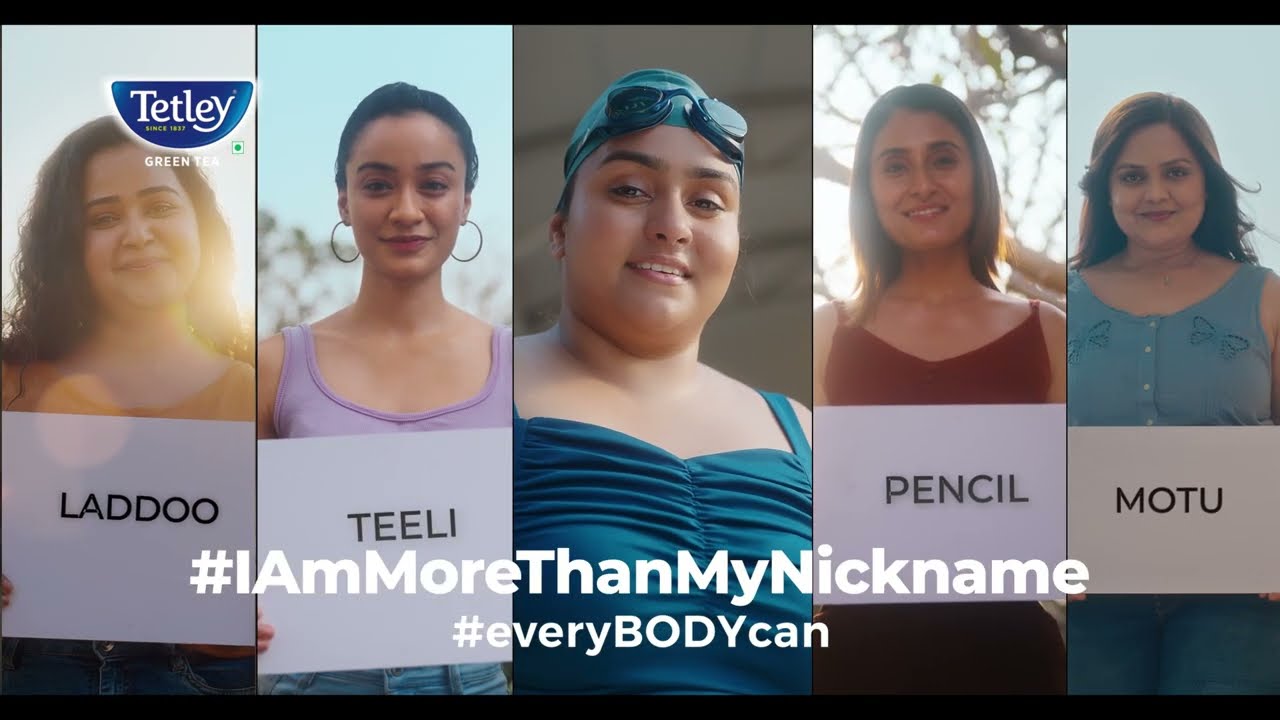
In March 2024, Tetley Green Tea Immune launched the “I Am More Than My Nickname” campaign in India to challenge a common social habit: labeling someone’s fitness based on how their body looks. In many communities, body-type nicknames are used casually. Some of them might sound harmless, but they can chip away at confidence and self-worth over time. Tetley’s point was simple: fitness isn’t a body size. It’s strength, health and well-being.
The campaign centered on a digital film featuring a young girl nicknamed “Golu”, a Hindi term often used to describe someone as chubby. Throughout the film, she’s judged before she even tries, with people deciding what she can and cannot do based on her appearance. As the story unfolds, she pushes back. The film closes with women of different body types holding placards displaying various nicknames, ending with a clear line: “My Body Can, Your Body Can, Every Body Can”. It’s a strong example of a brand taking a familiar social habit and giving people a new way to see it.
Startup takeaway: Look for one small, common behaviour your audience sees every day. Then give people a simple way to engage with it, whether that’s sharing a story, rethinking a phrase or calling out a habit. When participation is baked into the idea, the campaign spreads naturally.
For International Anti-Street Harassment Week 2025, L'Oréal Paris launched its “Never Your Fault” campaign as part of its Stand Up Against Street Harassment program. The campaign drew on L’Oréal Paris research with Ipsos showing the scale of the problem: 75% of women reported experiencing harassment, and 60% said they adjust their clothing or appearance in public.
The message was clear: harassment is never the victim’s fault, and public spaces should feel safer for women. That matters because a lot of women still end up internalizing blame and changing how they dress just to lower the risk.
The campaign also came with a clear next step. It builds on L’Oréal’s partnership with Right To Be, an international NGO focused on stopping harassment, which began in 2020. Through Right To Be’s 5D framework—Distract, Delegate, Document, Delay and Direct—the program teaches bystanders simple, practical ways to intervene safely in the moment.
Startup takeaway: If you’re addressing a sensitive issue in a Women’s Day campaign, don’t go about it alone. Work with experts who bring trust, depth and real tools. It makes your message stronger fast.
.jpg)
In 2025, Van Heusen Innerwear marked Women’s Day with a single visual that many women immediately recognized. The poster showed a crumpled shirt with a bra placed over it, capturing that end-of-day moment of relief.
The slogan on the poster—“Happy Women’s Day has nothing to do with us”—makes the point that real comfort is personal, not performative. The message wasn’t really about taking off a bra, but about the pressure women carry all day, including the expectation to look a certain way, feel a certain way and still keep going. By leaning into a real, everyday experience, Van Heusen positioned itself as a brand that listens rather than lectures.
Startup takeaway: Skip the predictable in Women’s Day slogans. Find an honest, lived moment and build around it. When your campaign reflects real life, it feels relevant instead of seasonal.

In 2025, Mattel celebrated International Women’s Day by honoring real-life female friendship duos with one-of-a-kind Barbie Role Model dolls made in their likeness. The campaign focused on the idea that strong friendships help women grow, succeed and support each other. Instead of spotlighting individual achievement, it highlighted collective strength—women empowering women.
By featuring duos such as Alicia Keys and Ann Mincieli, Jordan Chiles and Jade Carey and other global pairs across sports, entertainment and advocacy, the campaign framed friendship as a source of confidence and ambition from girlhood onward. To make it practical, Mattel partnered with psychologist and best-selling author Dr. Marisa G. Franco, who shared simple advice for girls: take initiative in making friends, assume people will like you, express appreciation openly, try new activities together and prioritize quality over quantity in relationships.
Startup takeaway: If your Women’s Day campaign is built on a social insight, make it actionable. Storytelling helps, but tools, education and frameworks are what make it useful.
Across these International Women’s Day campaigns, the playbook is consistent: choose one real, everyday behaviour and shift it. Whether it’s the way we compliment girls, the labels we use, how bystanders intervene, what comfort feels like or how we nurture friendships, each brand anchored its message in something tangible and built action around it.
For startups, the lesson is straightforward: be precise in what you’re addressing, be credible in how you show up and make your message usable. Attention is easy to grab, but relevance is harder to earn and far more valuable.
Keep Reading
How startups can use nostalgia marketing to build trust, spark loyalty and stand out with storytelling, vintage design and emotional connections.
Updated
January 8, 2026 6:35 PM
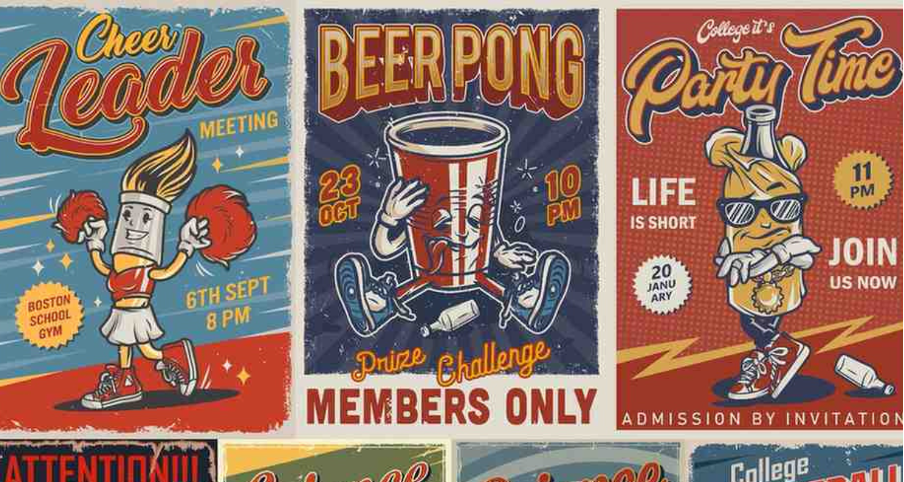
Vintage beer pong posters showcasing colorful, diverse designs from different eras in one collection. PHOTO: FREEPIK
Turning the subtle power of nostalgia into meaningful marketing.
Think of nostalgia as a time machine for brands—it doesn’t just take people back; it brings their emotions forward. And emotions sell. For those who are unfamiliar, nostalgia marketing is a strategy where brands use elements from the past—like familiar sights, sounds, or stories—to evoke warm memories and emotional connections with their audience.
This emotional pull isn’t just anecdotal—research shows its real impact: according to The Team and Forbes via The Drum, 80% of millennials and Gen Z are drawn to brands tapping into nostalgia, while 92% of consumers say nostalgic ads feel more relatable. And for startups competing in noisy markets, this is a goldmine.
In this article, we’ll explore why nostalgia marketing can be a game-changing strategy for your company.
Out of all the popular marketing methods—like influencer partnerships or attention-grabbing ad campaigns—nostalgia is unique because its impact starts intrinsically, in the brain. By triggering the release of dopamine, a reward-system neurotransmitter, Nostalgia evokes feelings of warmth, happiness and comfort. Consequently, people don’t just remember a moment—they relive it. Take, for instance, your favorite cereal brand bringing back childhood cartoon characters or using retro fonts and colors. You might choose it over a healthier breakfast option simply because it reminds you of the mornings you enjoyed as a kid. Similarly, speaking of stirring fond memories, Coca-Cola has mastered this effect, using classic holiday ads, vintage packaging, and iconic imagery. Those associations make people see Coke as more than a drink—it’s a familiar feeling they’re willing to pay extra for.
New marketing campaigns can spark curiosity but often trigger skepticism—especially when audiences lack prior connection to the brand. Nostalgia marketing breaks down this barrier by tapping into familiarity, using retro jingles, vintage fonts, pastel colors, or familiar packaging that immediately resonate. This recognition builds an emotional connection and trust with the brand. More importantly, it fosters social connectedness by making consumers feel part of a larger community—giving that reassuring “others remember this too” feeling. As a result, this sense of belonging reduces loneliness, strengthens warmth and trust, and encourages word-of-mouth sharing, naturally amplifying the campaign’s reach and impact.
While luxury brands can afford massive campaigns, startups and small businesses can tap into nostalgia as a cost-effective storytelling tool. In a world where marketing often chases the “next big thing”—from AI to futuristic tech—nostalgia offers the opposite: a chance to revisit the past. More importantly, nostalgia allows brands to stand out in a crowded, fast-scrolling feed by delivering something comfortingly familiar with a fresh twist. Think of Polaroid: in an age where smartphones boast crystal-clear cameras, it wins hearts with pastel hues, a vintage lens, and the tactile charm of instant prints—selling not just images, but a moment that feels straight out of the past.
The same principle worked brilliantly for Tiffany & Co., whose 185-year-old brand refresh featured Jay-Z and Beyoncé in a Breakfast at Tiffany’s-inspired campaign, blending timeless charm with contemporary star power and racking up millions of views. In essence, when done right, nostalgia doesn’t just market a product—it invites people to relive a story they already love.
Nostalgia resonates across generations speaking to diverse audiences. For Millennials, it’s a chance to relive the cultural touchpoints of their youth, while Gen Z approaches it with curiosity, eager to explore eras they never experienced firsthand. This crossover creates a unique marketing sweet spot: one group is driven by memory, the other by discovery. Pokémon proves this power by keeping lifelong fans engaged through retro trading cards while introducing younger audiences to its history. Similarly, Nike used nostalgia to bridge two different generations by reissuing retro classics, keeping both longtime fans and new sneakerheads excited. By appealing to both memory and curiosity, brands can create lasting connections that keep different generations engaged at once.
Nostalgia can be your startup’s non-cliché marketing mantra. Imagine a small bookstore that offers handwritten recommendation cards designed like vintage library checkout slips. This simple touch invites customers to slow down and rediscover the joy of reading. Or picture a local coffee shop serving drinks in mugs inspired by classic diner ware, evoking comforting memories of simpler times. Overall, the lesson is clear: combining nostalgic design with stories that connect people to shared moments creates emotional warmth and trust. Thoughtful nostalgia turns everyday products into meaningful experiences—building loyal communities eager to return.